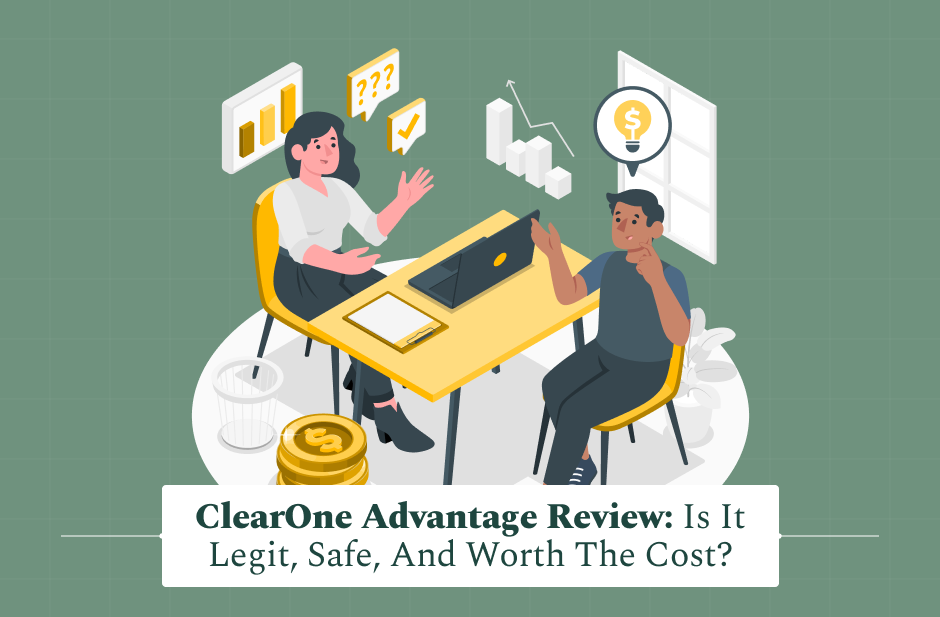
Debts can drain out all your peace, leaving you overwhelmed, exhausted, and messed up – and nobody really likes that.
The worst part? You can almost never point out how you are falling into debt – it starts with a single missed payment. And before you know, it’s a few missed payment deadlines.
Meanwhile, interest keeps growing. Collection calls start arriving. Before long, many people begin looking for a way out.
That is often how consumers discover ClearOne Advantage.
The company markets itself as a debt settlement provider that helps people reduce unsecured debt through negotiations with creditors. To be honest, the entire process sounds simple and easy: Enroll in a program, make monthly deposits, and allow professionals to negotiate lower payoff amounts.
But there is a bigger question most consumers want answered. Is ClearOne Advantage legitimate, and is debt settlement actually worth the risks?
The short answer is yes, ClearOne Advantage is a legitimate debt settlement company. It has been in business for years and operates as a real debt relief provider.
However, just because a debt settlement company is legit and safe does not mean it’s the right company for everyone.
Debt settlement can help some consumers reduce debt. At the same time, it can affect credit scores, trigger collection activity, and create challenges that many people do not fully understand before enrolling.
This review takes a closer look at how ClearOne Advantage works, its costs, advantages, drawbacks, and the situations where debt settlement may or may not make sense.
Stay tuned.
Quick Answer: Is ClearOne Advantage Legit?
Yes, ClearOne Advantage is a legitimate company in the debt settlement industry – it’s safe to say the company has not been accused of scam or fraud.
The company focuses on helping consumers negotiate settlements on unsecured debts, such as credit card debt, personal loans, and certain private debts. Instead of making payments directly to creditors, clients typically deposit funds into a dedicated account during negotiations.
Having said that, it’s crucial to understand that there is a major difference between being legitimate and risk potential.
So, a company can be legitimate while its services still carry risks.
This is particularly true in the debt settlement industry. Even reputable companies cannot guarantee that creditors will agree to settlements. Also, they cannot prevent all collection efforts during the negotiation process.
As a result, consumers should evaluate both the company and the debt settlement strategy before making a decision.
What Is ClearOne Advantage?
ClearOne Advantage is a debt settlement company that works with consumers struggling with unsecured debt.
The company’s goal is straightforward: to negotiate with debt collectors and creditors to reduce the total amount of money that someone owes to them.
In this context, it is essential to distinguish between debt settlement, consolidation, and management.
FYI, debt consolidation is all about combining several debts into one collective loan. And debt management deals with repaying the total amount of money, but under revised payment contracts.
But debt settlement takes a different approach. The objective is to negotiate a reduced payoff amount that satisfies the debt for less than the original balance.
Because of this difference, debt settlement carries both potential benefits and significant risks.
How Does ClearOne Advantage Work?
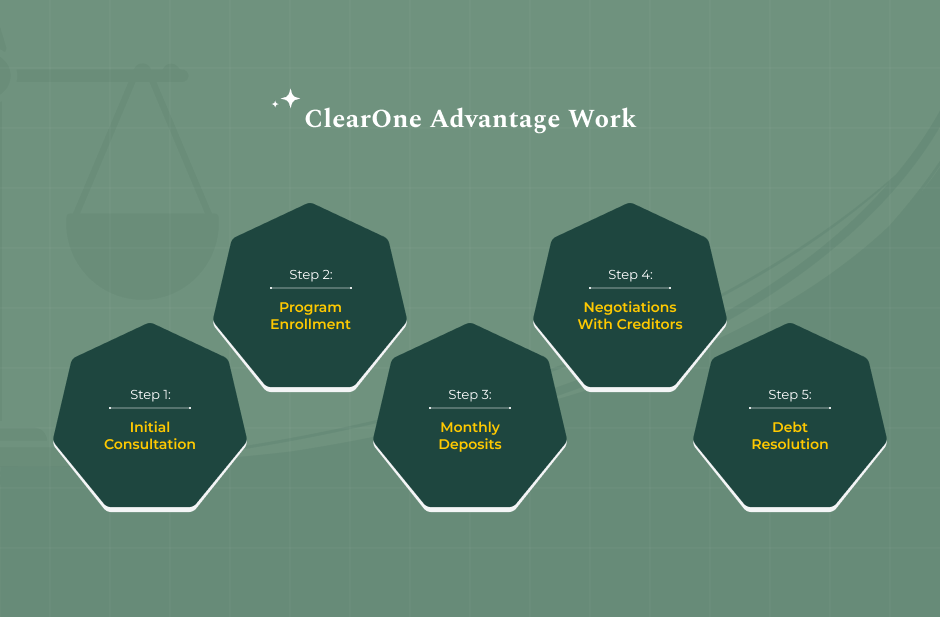
The process generally follows several steps.
Step 1: Initial Consultation
The first step is usually an in-depth consultation session with the professionals from the company. Obviously, the consultation will focus on reviewing your overall financial situation.
During this stage, the company evaluates:
- Total debt balances
- Monthly income
- Existing expenses
- Types of debt
- Financial hardship factors
The goal is to determine whether debt settlement appears to be a realistic option.
Step 2: Program Enrollment
If you qualify, you enroll in a debt settlement program. Then, the company develops a plan based on your debt amount and financial circumstances.
Step 3: Monthly Deposits
Instead of paying creditors directly, clients generally make monthly deposits into a dedicated account.
These funds accumulate over time and may later be used to fund settlement agreements.
Step 4: Negotiations With Creditors
As funds build, negotiations begin with the company reaching out to your creditors and debt collectors.
The purpose? To convince your creditors to accept a lesser amount than what was initially borrowed.
However, success in such cases depends on more than one factor, including:
- The creditor involved
- Account status
- Available settlement funds
- Consumer financial hardship
Step 5: Debt Resolution
If a creditor accepts a settlement offer, the accumulated funds are used to satisfy the agreement. The account is then resolved according to the settlement terms.
How Does The Process Look?
| Stage | What Happens |
| Consultation | Financial review |
| Enrollment | Program setup |
| Deposits | Funds accumulate |
| Negotiation | Creditors receive settlement offers |
| Resolution | Settlement agreement completed |
What Types Of Debt Can Be Included?
Not every debt qualifies for settlement.
Debt settlement companies generally focus on unsecured debts because creditors have fewer collection options compared to secured debts.
| Debt Type | Usually Eligible? |
| Credit card debt | Yes |
| Store credit accounts | Yes |
| Personal loans | Often |
| Medical debt | Often |
| Collection accounts | Frequently |
| Mortgage debt | Usually No |
| Auto loans | Usually No |
| Federal student loans | Generally No |
Also, eligibility may vary based on the creditor and individual circumstances.
Why Consumers Consider ClearOne Advantage
Many people turn to debt settlement because they feel trapped.
Monthly payments become difficult to manage. Interest continues to grow. Moreover, minimum payments barely reduce balances.
In those situations, settlement may appear attractive. Also, to make this even easier to understand, the potential advantages are as follows:
- Reduced overall debt balances
- Structured repayment plans
- Professional negotiations
- Relief from overwhelming debt burdens
- A possible alternative to bankruptcy
For some consumers, these benefits can be meaningful. However, you need to understand that each of these benefits usually comes with some sort of trade-offs. And that is why having information about these trade-offs is considered to be essential even before the enrolling process begins.
The Biggest Risks Of Debt Settlement:
Many reviews focus heavily on potential savings. And that is fine. But it is also crucial that you, as a consumer, don’t forget about risks.
1. Credit Score Damage:
This is one of the most important considerations.
Debt settlement programs often involve accounts becoming delinquent before settlements occur. Also, late payments and missed payments can negatively affect credit reports.
For consumers trying to preserve excellent credit, this can be a major drawback.
2. Collection Calls May Continue:
Some consumers assume collection efforts stop immediately after enrollment. That is not always the case.
Creditors may continue collection activities while negotiations are ongoing.
3. Lawsuits Remain Possible:
This point surprises many consumers. Enrollment in a debt settlement program does not prevent a creditor from filing a lawsuit.
Also, while settlements may eventually resolve debts, creditors are generally not required to participate.
4. Tax Consequences:
Forgiven debt can sometimes create tax obligations.
Consumers should discuss potential tax implications with a qualified tax professional before enrolling.
5. Program Fees:
Debt settlement services are not free.
Fees are typically based on the amount of debt enrolled or resolved. As a result, consumers should carefully review all fee disclosures before signing any agreement.
ClearOne Advantage Pros And Cons:
No debt relief solution is perfect. The following comparison highlights some of the primary strengths and weaknesses.
| Pros | Cons |
| May reduce debt balances | Can damage credit scores |
| Structured repayment process | Creditors are not required to settle |
| Professional negotiations | Collection efforts may continue |
| Alternative to bankruptcy for some consumers | Potential lawsuits remain possible |
| May simplify debt resolution | Program fees can be significant |
So, one thing is clear – the right choice depends largely on a consumer’s financial situation and goals.
How Much Does ClearOne Advantage Cost?
Cost is often one of the biggest concerns for consumers considering debt settlement. The exact amount varies depending on several factors:
- Total debt enrolled
- State regulations
- Number of accounts
- Settlement outcomes
Most companies in the debt settlement industry usually charge an amount depending on how much debt they are able to settle successfully. Also, some companies can charge based on the amount of debt enrolled.
Since regulations tend to differ from state to state, the payment structures automatically vary. As a result, before you enroll, it is best to ask for a detailed breakdown.
This includes:
- Settlement fees
- Account maintenance costs
- Administrative charges
- Any additional program expenses
A reputable company should explain these costs clearly.
Example Cost Breakdown:
The following example is for illustration only.
| Debt Enrolled | Possible Settlement Amount | Estimated Fees | Total Cost |
| $20,000 | $12,000 | $4,000 | $16,000 |
| $30,000 | $18,000 | $6,000 | $24,000 |
| $50,000 | $30,000 | $10,000 | $40,000 |
Of course, the actual results might differ – and that too significantly. As a result, the primary thing to understand from here is pretty simple.
While a debt settlement company can help you reduce your debt, it is best to evaluate the total expenses instead of only taking into account the settlement amount.
Can Creditors Still Sue You While You Are Enrolled?
Yes.
This is one of the most misunderstood aspects of debt settlement. Many consumers assume that joining a debt settlement program automatically prevents legal action.
It does not. Creditors generally retain the right to pursue collection efforts while negotiations are ongoing.
Moreover, in some cases, creditors may choose to:
- Continue collection calls
- Send collection letters
- Transfer accounts to collection agencies
- File lawsuits
Whether that happens depends on the creditor, account history, and individual circumstances. This does not mean lawsuits are inevitable.
However, consumers should understand that enrollment alone does not create legal protection from creditors.
Anyone considering debt settlement should discuss this possibility before signing up.
Alternatives To Debt Settlement:
Debt settlement is only one solution. Depending on your situation, another option may be a better fit.
- Debt Consolidation Loans: Debt consolidation combines multiple debts into a single loan. With this option, you can simplify the entire payment structure and reduce your interest significantly. However, qualification often depends on creditworthiness.
- Debt Management Plans: Debt management plans are commonly offered through credit counselling agencies. With debt management plans, you can repay your debts but under revised terms.
- Direct Negotiation: Some consumers choose to negotiate directly with creditors. If you choose to negotiate directly, then you can save some fees. But, it’s super time-consuming, not to mention requiring instance negotiation skills and persistence.
- Bankruptcy: Generally known as the last option, bankruptcy offers relatively more relief than debt settlement for anyone with significant debt. A bankruptcy attorney can explain whether this option makes sense in your circumstances.
Comparing Your Options:
| Option | May Reduce Debt? | Credit Impact | Professional Assistance |
| Debt Settlement | Yes | Significant | Yes |
| Debt Consolidation | No | Usually Lower | Sometimes |
| Debt Management Plan | No | Usually Moderate | Yes |
| Direct Negotiation | Sometimes | Varies | No |
| Bankruptcy | Yes | Significant | Yes |
So, this table makes one thing very clear – there is literally no option that will work out universally.
In fact, the best option almost always depends on your current income, assets, debt levels, and definitely long-term goals.
Who Should Consider ClearOne Advantage?
Debt settlement may make sense for consumers who:
- Have substantial unsecured debt
- Struggle to make minimum payments
- Face ongoing financial hardship
- Want to avoid bankruptcy if possible
- Understand the risks involved
These situations do not guarantee that debt settlement is the right choice. Also, they simply represent circumstances where consumers often explore this option.
Who Should Avoid Debt Settlement?
Debt settlement may be less suitable for people who:
- Can comfortably manage their debt payments
- Want to protect excellent credit scores
- Qualify for lower-risk alternatives
- Have primarily secured debts
- Expect immediate results
Consumers in these situations may find better solutions elsewhere.
Questions To Ask Before Enrolling:
Before committing to any debt settlement program, ask the following questions:
- How are fees calculated?
- How long does the program usually take?
- What happens if creditors refuse to settle?
- How might this affect my credit score?
- Can creditors continue collection efforts?
- What happens if I leave the program early?
- Are there alternative options available?
The answers can help you make a more informed decision.
Read Also: Is Lazada.com.ph Legit? A Consumer Protection Guide For Online Shoppers
Final Verdict: Is ClearOne Advantage Worth It?
ClearOne Advantage appears to be a legitimate debt settlement company rather than a scam.
The company offers a real service that has helped many consumers address significant unsecured debt.
To be honest, if you are facing some serious financial trouble, then you can consider debt settlement since it opens up the road to balancing the situation.
It might seem impossible to get out of this situation at the moment – but with the right settlement company, you can leave this behind.
Having said that, you cannot completely depend on debt settlement as a solution which comes free of risks.
Yep, there are risks. Credit scores can suffer. Collection activity may continue. Also, creditors are not required to settle. And fees can reduce overall savings.
That is why consumers should focus on more than marketing promises.
The most important question is not whether ClearOne Advantage is legitimate. Instead, you need to ask whether debt settlement actually fits your situation.
For some consumers, the answer will be yes.
But for others, debt consolidation, credit counselling, direct negotiation, or even bankruptcy may offer a better path forward.
In the end, the smartest thing that you can do is to compare all the options at your disposal with an understanding of trade-offs.
That way, you can decide which option will serve your long-term goals financially instead of focusing on short-term relief only.
Read Also: