First Advantage Debt Relief is a licensed debt-relief company with its registration verifiable through state regulators and the Better Business Bureau.
However, the First Advantage Debt Relief reviews often present a different perspective on its effectiveness.
While the company may present a polished image, it does not guarantee resolutions for all debt issues.
First Advantage offers a structured program aimed at negotiating lower interest rates or waiving fees for borrowers.
The results of these negotiations vary based on individual creditors, the type of debt, and the borrower’s credit profile.
Before enrolling in their program, it is essential to verify the company’s state licensing.
Additionally, you must also carefully read the contract, and confirm any promises, such as fee reductions, directly with lenders.
If the terms appear vague or if upfront costs seem unusually high, it may be advisable to consider other options.
What Does First Advantage Debt Relief Do?
First Advantage Debt Relief assists consumers in negotiating with credit card companies to achieve lower interest rates, fee waivers, or reduced monthly payments on existing balances. (Source – The Credit People)
It is important to note that this service does not eliminate debt, guarantee specific reductions, or promise expedited repayment.
The success of their negotiations largely depends on the creditor’s policies and the borrower’s credit profile.
Typically, a borrower with a $10,000 balance at a 22% APR would engage First Advantage, which would then reach out to the card issuer on the borrower’s behalf.
Possible outcomes could include a reduced APR to 15%, waiving a $200 late fee, or extending the payment term, thus lowering the monthly payment.
However, it’s also possible that the creditor may deny any changes, leaving the original terms intact.
Borrowers must review any written agreements and verify modified terms with the issuer before signing.
How Does First Advantage Debt Relief Work: A Step-By-Guide Guide
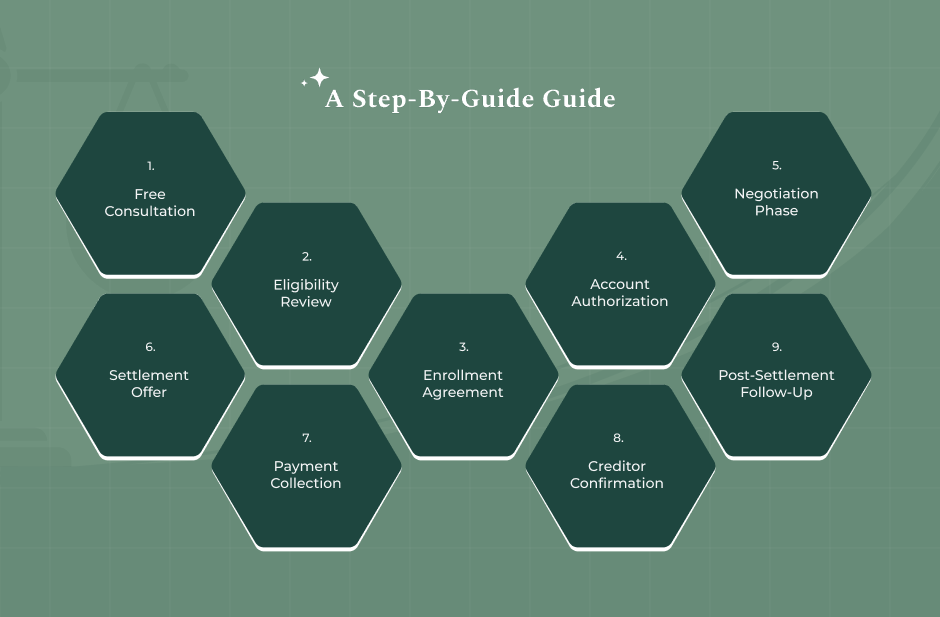
The program begins with an initial free consultation, guiding you through various stages, including enrollment, account setup, negotiation, and ultimately, settlement or payment completion. (Source: legalcasereview)
1. Free Consultation:
You start by contacting First Advantage, where you’ll provide a brief overview of your debt situation.
A specialist will then assess whether their service is suitable for you, and importantly, no credit check is conducted at this stage.
2. Eligibility Review:
Next, the company collects detailed information about your debts, such as balances, creditors, and interest rates.
They will verify the eligibility of your accounts for settlement and ensure that you meet any specific requirements that may vary by state.
3. Enrollment Agreement:
If you are deemed eligible, you will sign a contract that outlines the entire process, your responsibilities, and the fees payable once a settlement is achieved.
It’s advisable to keep a copy of this agreement for your records.
4. Account Authorization:
To proceed, you will need to provide written authorization for First Advantage to communicate with your creditors on your behalf.
This typically involves either signing a letter or completing a form through an online portal.
5. Negotiation Phase:
During this phase, a negotiator will reach out to each creditor to propose a reduced payoff amount and work towards an agreement.
The duration of this phase can vary depending on the creditor and the number of accounts involved.
6. Settlement Offer:
Once a creditor accepts a reduced amount, First Advantage will present this offer to you.
You must approve the payment before it is submitted.
7. Payment Collection:
You will then need to fund the agreed-upon settlement amount.
Also, this can be done through a single lump-sum payment or a short-term payment plan as detailed in your contract.
8. Creditor Confirmation:
After the payment has been made, the creditor will confirm that the debt has been settled and will update your account status accordingly.
You should receive written confirmation for each account that has been resolved.
9. Post-Settlement Follow-Up:
Finally, First Advantage may provide a summary of the settlement and offer guidance on steps to help you rebuild your credit.
This could include obtaining a new credit report or establishing a budget to manage your finances moving forward.
How Much Does First Advantage Debt Relief Cost You?
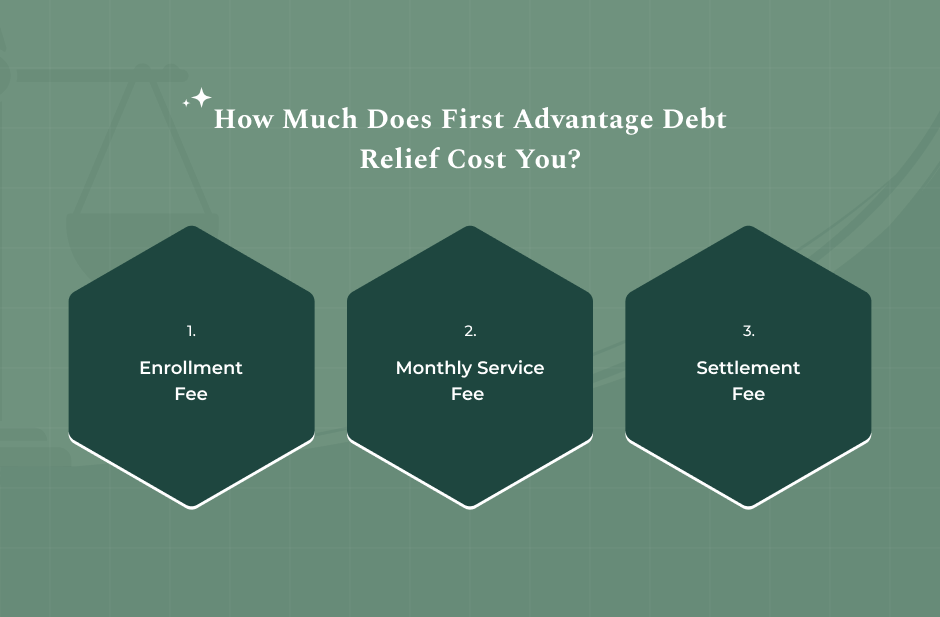
Before we dive into what the First Advantage Debt Relief reviews are, let us take a quick sneak peek at this.
This will let us know how much money we need to spend to save money through this platform:
You will need to pay a one-time enrollment fee and a monthly management fee.
The program claims it can negotiate a lower balance for you, but the exact amounts depend on your creditor and the rules in your state.
Here’s how First Advantage typically charges fees:
1. Enrollment Fee
This is a one-time cost that you pay before negotiations start.
The fee is stated in the contract and can range from a few hundred dollars to a higher amount based on how much debt you have.
2. Monthly Service Fee
You will be charged this fee each month while you are in the program.
It may be a percentage of what you still owe or a flat rate, and it continues until your agreed-upon settlement is paid.
3. Settlement Fee
This is a portion of the amount saved that the provider keeps after the creditor agrees to a lower payment.
It is usually a percentage of the discount on your debt.
You may see potential savings as the difference between your current balance and the reduced amount the company negotiates.
However, savings are not guaranteed. They depend on the creditor’s willingness to settle, the kind of debt you have, and your payment history.
Sometimes, you might pay fees without achieving a lower balance, especially if the negotiations do not go well or the creditor refuses to settle.
Before signing up, check the exact fees in the written agreement.
Ask for a detailed estimate of how much you might save based on your specific debts, and find out if the fees are refundable if the program does not secure a settlement.
Always read the contract carefully and think about getting advice from a financial counselor before you commit to any debt-relief service.
What Are The First Advantage Debt Relief Reviews Saying?
After reviewing over 400 reviews on Trustpilot, it seems that most customers were disappointed with their experience. (Source – Trustpilot)
Many found the customer service unhelpful and had trouble reaching a real person.
They faced issues with the service itself, which was often slow and inefficient, causing significant delays.
Customers frequently reported difficulties in contacting the company.
They noted a lack of easy-to-find phone numbers, email support, or effective chat options.
The staff was often seen as unhelpful, and response times for inquiries were consistently poor.
This left many feeling frustrated and without a solution. Let us look at some of these:
“Horrible company. After filling out the form, my information is listed incorrectly, and asking for a W-2 from a traveling company from over 4 years ago. This place should be shut down!”
“There’s only one chance to scan the QR code – shame it doesn’t tell you that not choosing this option will mean a highly inconvenient in-person document check. I would have used this option if I had known, but they don’t help users in this way.”
Read Also: How to Answer a Debt Collection Lawsuit and File a Motion to Dismiss
Final Verdict: Is First Advantage Debt Relief Legit?
First Advantage is not necessarily a scam, but it raises some concerns regarding transparency and customer feedback.
The company has no customer reviews available, and its website appears quite basic, lacking detailed information on its services.
The language used on the site can be misleading; phrases like “we will help you get out of debt” and “our certified debt specialists can negotiate and settle your debt for less than you owe” suggest that the company directly offers debt relief services. (Source: Finder)
However, it primarily functions by selling customer information to other companies that provide these services, rather than delivering the promised assistance itself.
Disclaimer: The information provided in this article is for general informational purposes only. It does not, and is not intended to, constitute legal advice. Please consult an attorney for legal help.