What is a registered agent for LLC status is a query that every new business owner must answer before they file their formation documents.
Legally speaking, a registered agent serves as a bridge between a company and the state government. This is a standard requirement in every state across America, including all 50 states.
This is to ensure that the legal entity of a company can always be reached for legal purposes. Without a registered agent, a company could theoretically evade legal processes such as lawsuits or tax notices, which would essentially create a loophole in the legal system.
With new state laws such as Colorado’s HB 24-1137, which took effect as of early 2026, individuals must present state IDs to prove they reside in a particular place. (Source: Clark Hill.com)
Moreover, the 2024 Corporate Transparency Act continues to shape the way agent information is reported to the federal government.
Therefore, the need for accuracy is more imperative than ever. If you fail to respond to a legal summons or notice because of the unavailability of your agent, it can result in a “default judgment” for the opposing party.
In this article, we will discuss the following:
- Exact meaning of the term “registered agent” in the context of corporate law.
- The mandatory state requirements for the physical presence of the agent.
- The duties of the agent in the management of the service of process and state mail.
- A detailed comparison of hiring a professional agent vs. being your own agent.
What Is A Registered Agent For LLC?
A registered agent is an individual or a dedicated business organization you appoint to receive your LLC’s most sensitive legal and government correspondence.
This is one of the non-negotiable requirements of the “What is a registered agent for LLC” law in the United States.
For business owners exploring international corporate structures, compliance requirements differ across jurisdictions.
When looking to reduce the setup time of a new entity abroad, understanding how to purchase a shelf company in the BVI provides a faster route to starting global operations.
We recommend consulting with offshore corporate specialists to ensure the transfer is handled legally and the business remains in good standing.
Legal Definition
The registered agent of your business is the “recipient for service of process.” This implies that in the event of a lawsuit filed against your business, the documents will be delivered to the registered agent, rather than searching for them in your home or store. (Source: Wolters Kluwer)
Why LLCs Need A Registered Agent
The state requires a means of locating you at all times. An LLC is a separate legal entity and thus requires a reliable human or company to sign for documents within standard business hours.
Registered Agent Responsibilities
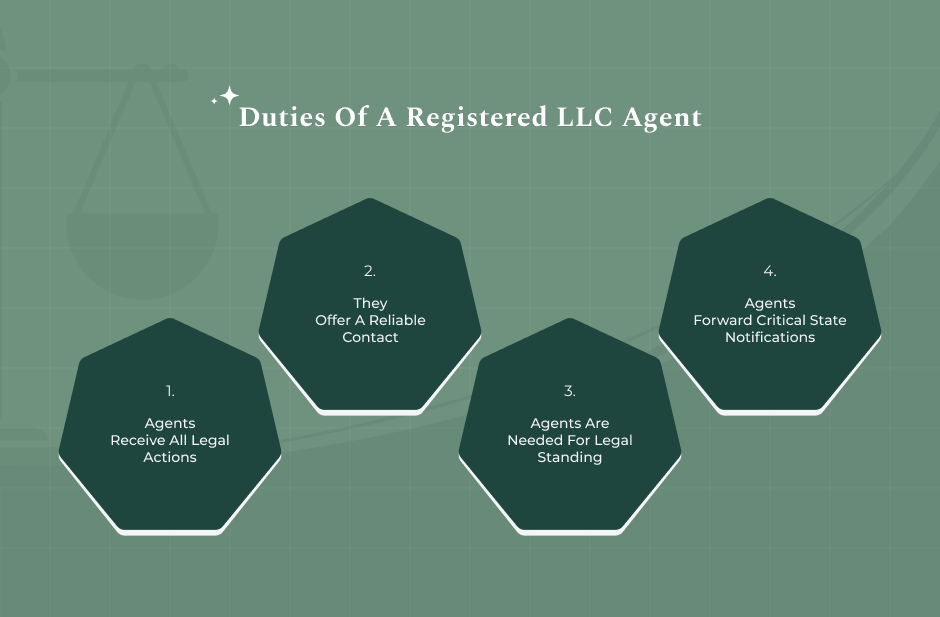
To answer the question of what is a registered agent for LLC and what are their duties, one has to consider the workflow of the compliance process. The agent does not run your business. Rather, he runs your availability for lawsuits.
Receiving Service Of Process
This is the most important responsibility of the registered agent. This person should be available to accept service of process from a server and then immediately contact the business owners so they do not forget court dates. (Source: Forbes Advisor)
Forwarding Official Correspondence
In addition to lawsuits, registered agents receive tax notices, reminders for annual reports, and wage garnishment notifications. They filter “compliance mail” so that it does not get lost among other junk mail.
Legal Requirements
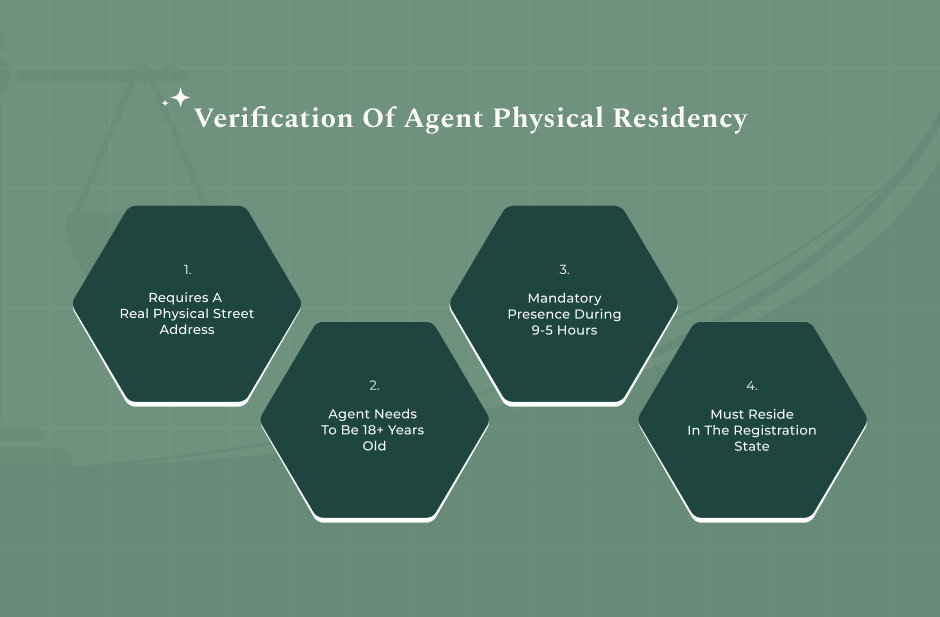
All states have their own set of ‘credentials’ that an agent must fulfill. These are taken very seriously because the legal system relies on the agent’s physical presence and accessibility.
Physical Address And Availability
You cannot use a P.O. Box for a registered agent. According to Nolo, you need a physical street address within the state where you registered your LLC so that documents can be hand-delivered to you.
Eligibility And Residency
What is a registered agent for LLC? What are its requirements? The individual agent needs to be 18 years or older.
In Colorado, for instance, as of July 2025, a valid state ID or a 45-day verification process is required for an individual agent to prove their state residency (Source: Parasec).
Choosing A Registered Agent
Many founders ask, “should i be my own registered agent for an LLC?” While the DIY route is free, it creates a public record of your home address and requires you to be at home all day.
DIY Vs. Professional Service
If you are the agent on your own behalf, then your name and address will be on the public database, which can result in an endless amount of junk mail. Professional services keep your personal information off the public record.
Multi-State Compliance
If you have an operation in three different states, then you need an agent for each state. A professional service can provide an account for all 50 states.
Costs And Fees
In your search for what is a registered agent for LLC costs, you’ll see that there are different prices available. Budgeting for the cost of a registered agent is a small price to pay for the legal protection it provides.
Annual Service Pricing
The cost of professional services is around $100 to $300 annually. This cost is generally inclusive of same-day scanning of documents, as well as other services that can be accessed online.
State Filing Costs
Changing your agent is not free in most cases. The cost of filing a change of registered agent varies by state, ranging from $10 to $50.
Common Misconceptions
There is some confusion as to what the difference is between a registered agent for an LLC and a business owner. The agent is simply the recipient of the mail, not a partner in the business.
No Decision-Making Power
The registered agent has no authority to enter into a contract on behalf of the business, nor can they make financial decisions for the business. Their only responsibility is to forward to the business anything sent by the state or the court system.
Not An Attorney
Even if the registered agent is a law firm, it does not mean that the business has access to free lawyers to defend it in the lawsuits that the agent receives on behalf of the business.
Read Also: How Virginia Business Entity Search Can Help You Evade Corporate Issues Legally
Expert Tips And Best Practices
Now that we have talked about what is a registered agent for LLC, let us learn about some best practices and expert tips on the matter.
In order to make the most out of your agent, it is important that you are organized and take a proactive approach in your relationship with a registered agent. This will ensure that you are not administratively dissolved.
Maintain A Compliance Calendar
Don’t just wait around for your agent to call you! Keep a secondary calendar, such as a biennial report in Indiana, so that you are always in “Good Standing”.
Use A Dedicated Service For Privacy
If you are a home-based business, it is best to hire a service to keep your address from appearing on the Internet, so that “process servers” do not show up at your front door in front of all your neighbors.
Conclusion
Understanding what is a registered agent for LLC requirements is the first step towards the success of your business, even after years of operation. This is what makes your business remain visible as a “person” before the law.
Whether you decide to go for the less expensive route of being your own agent or pay for the service of a company for privacy, you should always keep in mind that you should be reliable.
One misplaced letter may cause you to lose your business license or be slapped with a huge amount of money in court.
Read Also: Johnson Mark LLC: How to Settle Debt in Easiest Steps?
Frequently Asked Questions (FAQs):
The legal requirements for a registered agent can be quite confusing for a U.S. citizen. The following questions pertain to the most popular queries about what is a registered agent for LLC status.
Yes. Even if your business is a completely virtual or online business, you still need a registered agent. In fact, if you do not have an office, it is likely that you will need to get a professional registered agent service because of the requirement to have a physical address.
A registered agent is only required to handle government documents and legal papers. Most professional services will not accept your personal correspondence, bank statements, or packages. You should not use your registered agent’s address as your business mailing address.
Yes, you can change your registered agent as often as you wish by filing a “Statement of Change” form with your state’s Secretary of State. You should make sure the new agent has agreed to the position before filing the necessary papers to avoid incurring penalties.