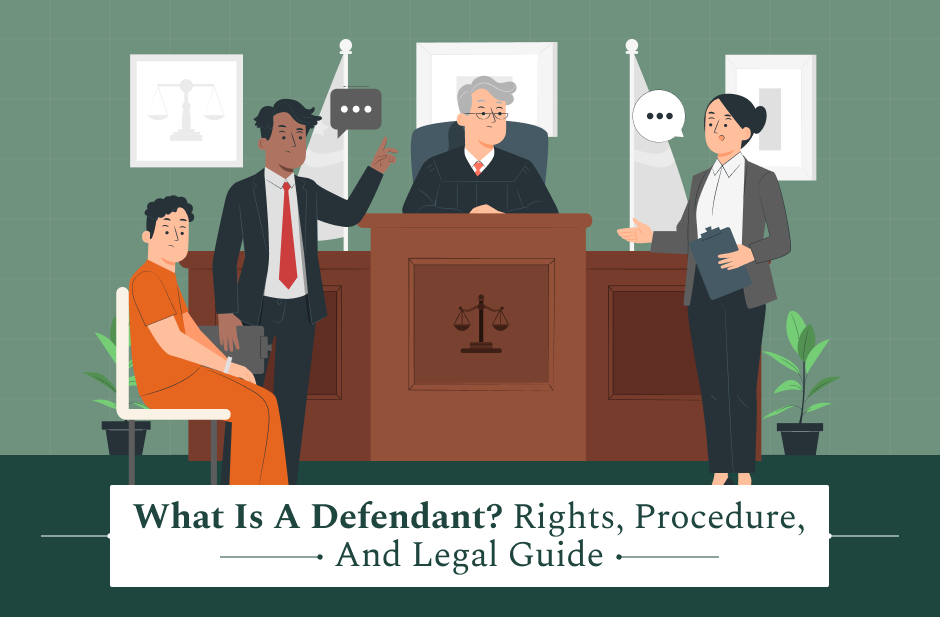
The characteristics of company structures explain how modern businesses function in relation to the law.
For instance, when you incorporate a company, you are creating a new “person” under the law. This new entity is separate and distinct from those who actually run it.
Knowing these characteristics is essential for protecting one’s wealth as an entrepreneur and investor.
If you have decided to acquire a shelf company in Lithuania, we recommend that you check out this platform.
This company provides incorporation services across Europe. Also, their local representatives focus on company formation and tax advice.
They also offer legal advice on some areas of commercial and corporate law.
Corporate law is similar throughout the United States, though there are minor differences from state to state. However, the principles are similar across the board.
Today, corporate law is all about what is coming out of the Delaware Court of Chancery regarding corporate governance and shareholder rights. This is redefining what we know of these structures and what it might mean for 2026.
In this article, we will elaborate on the following:
- What is the legal concept and purpose of a company?
- The main characteristics of a company?
- Concept of limited liability and perpetual succession.
- Comparing and contrasting with partnerships.
What Is A Company?
It is a legal vehicle that people use for conducting business, owning property, and managing risks. It operates as an artificial person created by law to attain certain business objectives.
Because these laws vary by country, the exact process depends on your chosen jurisdiction.
For example, learning how to set up a Danish company highlights this structure. There are several organizations, like BridgeWest Denmark, that assist international investors in doing so. And it is important to be careful during the process.
That’s because Denmark requires entrepreneurs to choose between specific legal vehicles like an ApS (private limited company) or an A/S (public limited company) to establish this artificial legal persona.
Legal Definition
According to the characteristics of company law, a company is an incorporated association. It is a “juridical person,” which means it has similar rights and duties as those of a human being.
Purpose Of Forming A Company
In most cases, investors generally select the form of the company. This is because it helps them to minimize their risk. Additionally, it also facilitates the management of the business without the owners operating the business.
Also, as per Irish specialists in company incorporation matters, choosing this structure also provides distinct tax advantages and enhances credibility with international trading partners, particularly within the European market.
Core Characteristics Of A Company
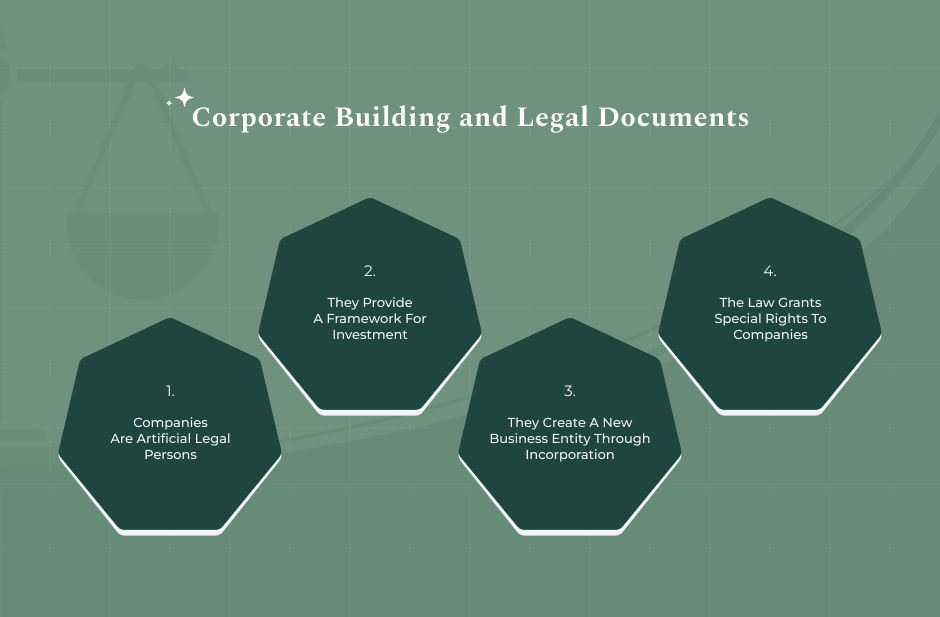
The characteristics of company under company law guarantee that the business endures and succeeds on its own.
1. Separate Legal Entity
This is arguably one of the most famous characteristics of company law. The jury held in the landmark case of Salomon v. A. Salomon & Co. Ltd. [1897] that a company is a separate legal entity from its shareholders.
2. Limited Liability
The debts of the company will not be borne by the shareholders of the company. If the company becomes bankrupt, the shareholders will lose only the amount of investment made by them in the company as shareholders.
3. Perpetual Succession
A company has the characteristic of perpetual succession. It means that a company will not be said to have died unless it has been wound up under the law.
Besides, it does not matter that all the shareholders and directors of the company have a tragic end in a plane crash – the company will still be alive.
4. Transferability Of Shares
The ownership of a company is shared by the shareholders of the company in the form of shares, which can be sold and bought without affecting the stability of the company.
Comparison With Other Business Structures
If you are asking yourself what the characteristics of company forms are compared to partnerships, it can be said that partnerships are lacking in this respect compared to companies.
Corporate Vs. Partnership Liability
Partnerships have the liability for debts incurred in the business. In a corporation, personal residences and bank accounts will be protected from corporate creditors via the “corporate veil.”
Governance And Control
Companies have a Board of Directors. In a partnership, all partners must agree on matters. This can be detrimental to business because the number of partners will eventually grow.
Advantages Of Company Structure
The characteristics of company design have many advantages for growing a business. For this reason, venture capitalists will invest in companies because they can grow to huge proportions.
Capital Raising And Scalability
The capacity of a company to issue different classes of shares makes it possible for it to raise millions of dollars. This is not easily possible for a sole proprietorship or a partnership.
Transfer Of Ownership
The ease with which shareholders of a company can sell shares of its stock makes it a “liquid” asset. The shares of stock are sold on stock exchanges such as the NYSE and NASDAQ.
Disadvantages Of Company Structure
Although the characteristics of company law provide adequate protection, they are also associated with greater burdens. Companies are taken very seriously by the government, unlike other types of businesses.
Compliance And Regulation
Companies have to present annual reports, undergo audits, and have meetings. However, should they fail to comply with this, they are at risk of being charged high fines or having their “corporate veil” removed.
Double Taxation
For C-corporations in the U.S., they are taxed on the profits earned. After this, they are taxed on the dividends they receive as shareholders.
Legal Compliance Requirements
Companies must adhere to state and federal laws while maintaining the characteristics of having company status. It is not just “set it and forget it” after incorporation.
Registration And Filings
All companies must be registered with the Secretary of State. You must also file an “Articles of Incorporation” document, which must include the purpose and business structure of the company.
Board Meetings And Minutes
Experts suggest that you keep records of all major business decisions. Additionally, it is best that you keep “minutes” of your board meetings. Otherwise, the court might consider your company as just a “sham” for your ownership.
Real-Life Examples Of Company Characteristics
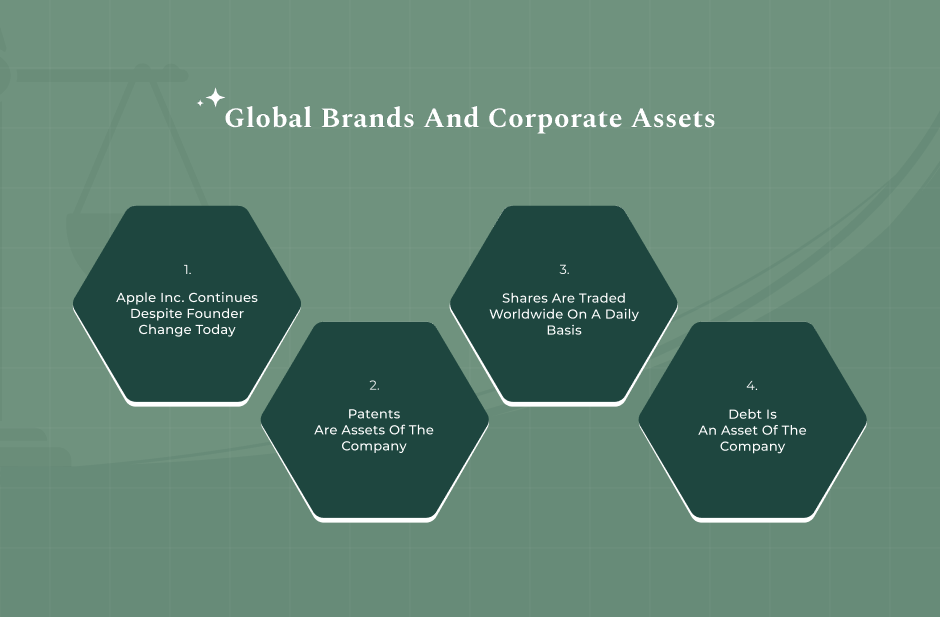
The best example of the characteristics of company law is major companies like Apple Inc. or Microsoft. Despite the death of the founder of Apple Inc., Steve Jobs, the company still continues to progress and innovate.
Succession In Action
If the CEO leaves a major company, the company does not fall apart. It is because the Board will appoint another CEO to run the company. Despite this, the company will still remain the same.
Separate Property Ownership
The major companies in the world have billions of dollars in real estate and patents. These are not assets of the shareholders. These are assets of the company itself.
Expert Tips For Forming A Company
If you want to benefit from the advantages of the characteristics of company law, you should lay the groundwork first because “a mistake in the first month will affect a company for years to come.”
Choosing The Right Type Of Company
Choosing between S Corp, C Corp, and LLC will define the tax characteristics of company law that will eventually affect your paycheck and your capacity to generate funds.
Separation Of Funds
It is advisable not to use your own funds to fund your own company and to have a separate bank account for your own corporation.
The features of company law provide the basic framework for the modern economy. The law provides massive potential for innovation and risk-taking with the introduction of a separate legal entity with limited liability and perpetual life.
Though the cost of compliance and taxation is high, it is worth it as it provides unparalleled benefits and security. Whether you are a law student or an aspiring entrepreneur, the key to success starts with these features of company law.
Frequently Asked Questions (FAQs):
The importance of corporate law is a daunting task for any U.S. citizen. The following questions will throw light on the vital features of the legal aspects of companies that people are facing today.
The feature of “perpetual succession” will ensure that the company will not dissolve. There will be a transfer of ownership of the company, i.e., shares of the company, to the legal heirs of the owner of the company.
Yes, a company can face criminal charges despite being an artificial person. However, as you cannot send a company to jail, the judiciary generally punishes it by imposing huge fines on it or withdrawing its business license.
People use this term when the court ignores the corporate entity of a corporation. For example, if an individual uses a corporation as their own piggy bank and does not adhere to all the formalities, they will be responsible for all the debts.