A triple net lease (NNN) is a common arrangement for commercial properties that places the financial responsibility for various ongoing property expenses on the tenant, in addition to their base rent. (Investopedia)
Under this type of lease, tenants are responsible for paying three main components: real estate taxes, building insurance, and maintenance costs.
This is different from single net (N) or double net (NN) leases, where tenants only cover either property taxes or both taxes and insurance.
The structure of a triple net lease allows tenants to manage property-related expenses while often benefiting from lower rental payments.
How Does The Triple Net Lease Work?
In a triple net lease, the tenant is responsible for the following: (Re-Leased)
1. Taxes: The tenant pays the real estate taxes assessed on the property.
2. Insurance: The tenant is responsible for maintaining required insurance coverage and paying associated premiums.
3. Common Area Maintenance (CAM)/Operating Expenses (OPEX): The tenant reimburses their share of costs for shared areas, which can include landscaping, parking, security, and common utilities.
Since operating expenses can vary, triple net leases typically implement an estimate-and-true-up cycle.
Landlords will budget for annual expenses related to CAM, taxes, and insurance, and will collect monthly estimates from tenants.
At the end of the year, they reconcile these estimates against actual expenses, supported by appropriate documentation.
This meticulous documentation is important as it enhances confidence among lenders and investors.
What Are The Beneficial Triple Net Lease Clauses?
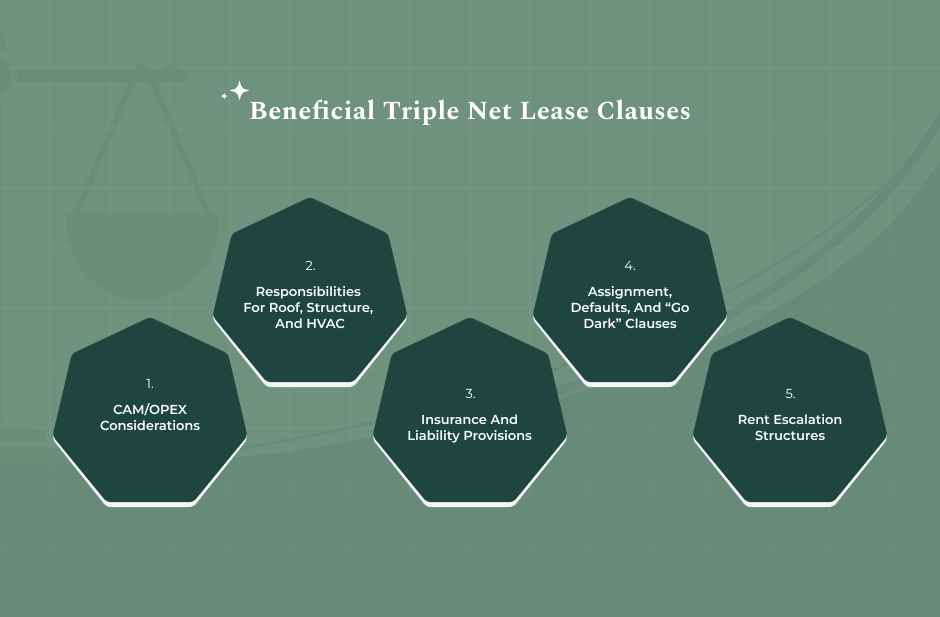
These are all the benefits that you will get after you choose to work with a triple net lease.
1. CAM/OPEX Considerations
In commercial leases, the language surrounding Common Area Maintenance (CAM) and operating expenses (OPEX) plays a critical role in a landlord’s net operating income (NOI).
To safeguard interests, it’s essential to draft comprehensive inclusions and explicit exclusions as advised by legal professionals.
Property management fees may often be pass-through expenses.
This depends on lease terms, so it’s important to clearly define how these fees are calculated.
Additionally, you must be clear whether there are any caps to enhance predictability and minimize disputes.
Also, you must include audit provisions as key to balancing transparency and efficiency.
Clearly outline the scope of audits, timing, notice periods, and how costs will be allocated to prevent lengthy reconciliations among parties.
2. Responsibilities for Roof, Structure, and HVAC
Standard Triple Net (NNN) leases typically assign routine maintenance to tenants.
However, all the major structural repairs, including roof replacements, remain the landlord’s responsibility.
Absolute NNN leases may shift these responsibilities entirely to the tenant.
To avoid issues related to deferred maintenance, it’s vital to detail inspection frequencies, service standards, and replacement thresholds.
3. Insurance and Liability Provisions
It’s important to set minimum insurance coverage levels, clarify deductible responsibilities, and outline how insurance proceeds will be handled after a casualty event.
Additionally, consider how rent might be abated during the restoration period, as clear terms in these areas help preserve cash flow.
For environmental liabilities, it is essential to delineate responsibilities and indemnities and to require appropriate insurance coverage, particularly for higher-risk activities such as fuel and automotive services.
4. Assignment, Defaults, and “Go Dark” Clauses
Landlords should retain consent rights over any assignments and subleases, taking into account the incoming party’s creditworthiness and operational capabilities.
Default provisions must include cure periods, late fees, attorney fees, and potential termination rights.
Implementing “go dark” restrictions is important for maintaining site viability and ensuring better prospects for future tenancies.
5. Rent Escalation Structures
Rent escalations are a fundamental aspect of NNN pricing.
Fixed annual increases are straightforward, while Consumer Price Index (CPI)-linked adjustments keep pace with inflation, though they require effective index management.
Hybrid models that incorporate both fixed increases and CPI adjustments—complete with floors and caps—can offer a balanced approach.
Well-defined escalation clauses are often tied to stronger pricing, particularly in times of inflation.
Triple Net Lease Pros And Cons
I have given you a comprehensive table below that will give you a clear idea of the strengths and drawbacks a triple net lease has on both the tenants and landowners.
Let’s check these out:
| Feature | Tenants | Landlords |
| Benefits | • Freedom to alter and customize space. • Avoids massive upfront property purchase costs. • Leverage to negotiate lower base rent. • Potential tax benefits from paying property taxes. • Protection via caps on tax/insurance spikes. | • Low-risk and reliable income stream. • Minimal overhead costs. • Attracts committed, long-term occupants. • Free from daily property management duties. |
| Drawbacks | • Higher monthly operational costs. • Liable for all tax fines and penalties. | • Rent caps limit future upside earnings. • Must absorb all NNN costs during vacancies. • Persistent risk of tenant default. • Potential high costs for roof and structural fixes. |
Drafting A Triple Net Lease: Important Sections To Add
Drafting a Triple Net Lease involves several essential elements to ensure clarity and legal soundness. (Fynk)
Here are some key steps and components to include in your document:
1. Introduction:
Begin by clearly identifying the parties involved in the lease, the property being leased, and the term of the lease.
2. Rent Payment Structure:
Detail the base rent amount and specify how frequently payments are due.
Additionally, outline any extra costs that the tenant is responsible for, such as property taxes, insurance, and maintenance fees.
3. Expense Obligations:
Include comprehensive sections that cover each type of expense, including property taxes, insurance, and maintenance.
Clearly define the procedures for handling these expenses, detailing how estimates are calculated and any adjustments that may occur.
4. Maintenance and Repairs:
Explicitly state the tenant’s responsibilities regarding routine maintenance and repair work.
It is also important to address expectations regarding capital improvements and upgrades to essential systems on the property.
5. Term and Renewal Options:
Clearly outline the lease term and any renewal or extension options.
Be sure to specify the notice periods required and the conditions under which the lease can be terminated.
6. Legal Provisions:
Incorporate essential clauses regarding defaults, dispute resolution, and liability.
It is important to ensure that the lease complies with both local and national rental and property laws.
Common Risk Factors (And How To Mitigate Them)
As you start to deal with triple net lease, you will be facing certain risks that are quite common. Here’s how you can identity and fix them:
1. Expense Leakage
Expense leakage occurs when recoverable costs are overlooked, documentation is missing, or expense allocations are inconsistent.
Make the operating expenses and common area maintenance language clearer and precise, keep accurate records, and reconcile accounts on schedule.
2. Tenant Credit Default
Having a single tenant in triple-net leases increases income risk.
To reduce this risk, review financial statements and the industry outlook, request guarantees or letters of credit when needed, and be prepared to find a new tenant if sale-leaseback rents exceed the market rate.
3. Deferred Maintenance
Vague maintenance standards can lead to poorly maintained properties.
Include clear service requirements, inspection rights, and steps for intervention in leases.
Set aside emergency funds for urgent issues.
4. Regulatory Compliance and Environmental
Ensure tenants maintain required permits, comply with safety and accessibility standards, and have appropriate insurance coverage.
Not following these rules can lead to fines and reputational damage.
5. Property Tax Reassessment
Reassessments can significantly change operating costs.
Include language in the lease requiring notice and cooperation during reassessments, keep track of important deadlines, and appeal when necessary.
6. Vacancy and Market Risk
Compare rents and concessions to avoid long vacancies. Building strong relationships can increase the chances of lease renewals.
To prevent downtime, manage rollover risk by planning your weighted-average lease expiry (WALE).
Contracts That Typically Include A Triple Net Lease
Triple Net Leases (NNN leases) are prevalent in various commercial property contracts.
Additionally, it provides a structured approach to cost management and the distribution of responsibilities between landlords and tenants.
Here are some common examples of properties that typically utilize NNN leases:
1. Retail Properties
Shopping centers, malls, and standalone retail stores often use NNN leases due to the nature of single-occupancy and long-term rental agreements.
This arrangement allows tenants to manage operating expenses while providing landlords with a stable income stream.
2. Office Buildings
NNN leases are frequently found in office spaces, particularly those leased by large corporations.
This structure helps distribute the costs of property management, maintenance, and taxes, making it an attractive option for both parties in long-term leases.
3. Industrial Properties
Warehouses, manufacturing facilities, and large distribution centers commonly utilize NNN leases.
These leases benefit landlords and tenants alike by minimizing variable costs and enhancing management efficiency.
As per legal experts, both are important in the industrial sector.
4. Specialty Properties
Properties such as auto dealerships, restaurants, and banks often prefer NNN leases to gain greater control over their operating environments and associated costs.
This flexibility allows tenants to tailor their space to their specific needs while managing expenses effectively.