The difference between annulment vs divorce is that these are two different ways of ending a marital relationship in the United States. Although people use these terms to refer to the end of a relationship, they are used differently.
Divorce is a declaration that a valid marital relationship has been terminated. On the other hand, a legal annulment is a declaration that a valid marital relationship never existed from the beginning.
In the United States, if the wrong choice is made, property and spousal support claims are forfeited.
Currently, state court filings are becoming more complex due to the ongoing development of “no-fault” divorce laws, which are changing in 2026.
For example, discussions about changing divorce laws in Missouri are ongoing, although no major changes have been made this year.
In this article on Annulment Vs Divorce, we shall discuss the following:
- Legal definitions and the general purpose of each process.
- Particular grounds that should be present to qualify for annulment.
- Financial consequences, including property and alimony.
- Custody and child support in both processes.
What Is Annulment?
Annulment is a legal proceeding in which a marriage is terminated and declared null and void. In other words, the court simply declares to the parties involved that the marriage was never valid to start with.
Legal Definition
Civil Annulment is a declaration made by the court stating that a union between two people is either void or voidable. This is in contrast to a religious annulment, which only applies to your religious institution. (Source: FindLaw)
Grounds For Annulment
You have to prove a particular legal ground to qualify. According to Nolo, some grounds include fraud, bigamy, and lack of mental capacity to give consent at the time of the marriage.
What Is Divorce?
The formal termination of a marriage that was previously valid and legally recognized is referred to as divorce.
Legal Definition
The formal termination of a marriage contract is referred to as a divorce decree. This process gives both partners the opportunity to go back to being “single” and also determines their future responsibilities to one another.
Grounds For Divorce
Currently, the majority of states have “no-fault” options that require only that irreconcilable differences be stated. Fault-based options, such as adultery or desertion, are also available in certain states. (Source: Wex Law).
Annulment Vs Divorce – Key Legal Differences
The main difference between annulment vs divorce comes down to the legal standing of the parties once the process has concluded. One clears your record, and the other one marks you as “divorced.”
Status Of The Marriage
When you divorce, you are a “divorced person.” When you have an annulment, you are considered “single” the entire time because, from a legal standpoint, the marriage did not exist.
Requirements For Proof
It is also easier to divorce because you do not have to prove that your spouse did something wrong, while an annulment requires clear and convincing evidence of a specific legal defect, which can be more difficult to prove.
Now, let’s compare the two legal status paths.
- Status changes from divorced to single.
- Proof is harder for an annulment.
- Divorce is much more common legally.
- Legal history differs for each person.
Financial Implications And Property Issues
One of the major differences in annulment vs. divorce is the financial implications. For one party in a marriage, the laws regarding divorce protect the lower-earning spouse in property issues and spousal support.
Asset Division
When a marriage dissolves in a divorce, the law divides assets in a community property state or through equitable distribution in other states. Since in an annulment the marriage was never valid, there are no “marital assets,” and each party retains their own.
Spousal Support
Spousal support, also known as alimony, is a major factor in divorce agreements. Most states prohibit spousal support in an annulment because you cannot be a “spouse” in a marriage that never existed.
Child Custody, Support, And Legitimacy
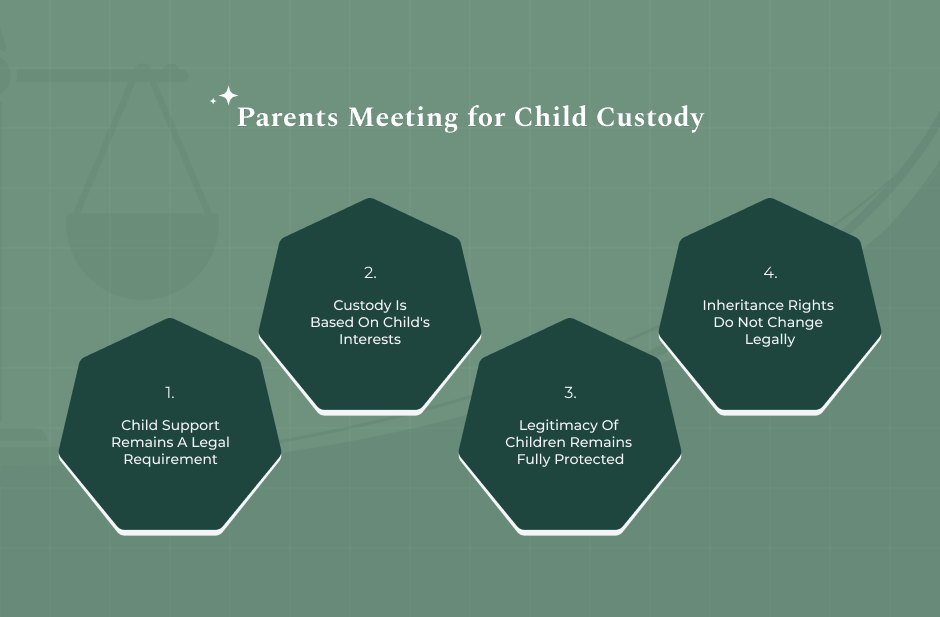
Many people have concerns that if they have their marriage annulled, their children will be considered “illegitimate.” However, today’s laws protect children and ensure that they retain their rights regardless of the decision to divorce or annul.
Custody And Support Rules
The “best interests of the child” are always the first concern in any divorce vs annulment. Regardless of whether you decide to have your marriage annulled or divorced, a judge will still order custody arrangements and require monthly child support.
Rights Of The Child
Children born during a marriage that is to be annulled are legitimate in all 50 states. Children retain their rights to inheritance from their parents and to any government assistance, including Social Security. (Source: Child Welfare Information Gateway)
Annulment Vs Divorce Laws In Different Jurisdictions
It’s interesting to note that the rules for annulment Vs divorce differ across the globe, especially between the West and South Asia. It’s vital to grasp the distinction between the two.
United States
The U.S. places significant emphasis on equitable distribution and no-fault divorce. Annulments are not common, and when they do occur, they are usually at the beginning of the marriage, within the first few months.
The Indian Legal System
The Hindu Marriage Act of 1955 specifies the grounds for void and voidable marriages. Indian law offers strong protection for a child’s legitimacy, even when the parents’ marriage is declared void.
Read Also: Understanding Common Law Marriage: Legal Recognition Without Ceremony
Expert Tips And Best Practices
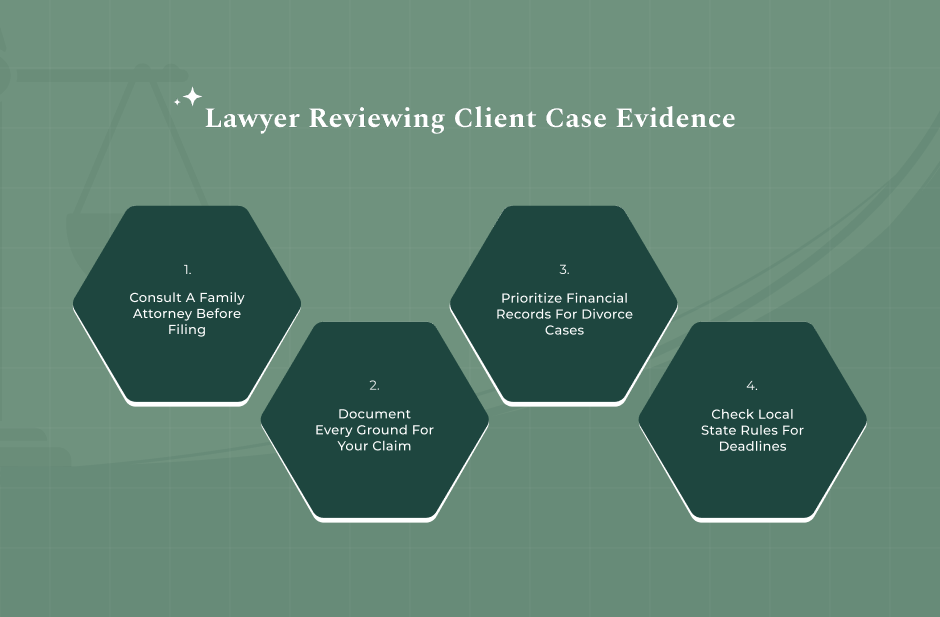
You will have to make a thoughtful decision on which of the two options in Annulment vs Divorce to choose. Switching from one option to the other in the middle of the case can prove to be very expensive and time-consuming.
Consult An Attorney Early
Family law cases can be very complex and depend on the county. An attorney can aid you in deciding whether your evidence for fraud or incapacity is solid enough to pass the test of scrutiny before a judge to grant your annulment.
Gather Your Evidence
You will need evidence, such as medical records or evidence of an existing marriage, if you are seeking an annulment. For a divorce case, you will mainly need financial records to ensure a fair division of your assets.
Conclusion
The final decision on whether to go with annulment vs divorce should be based on what you want to achieve and what the circumstances of your marriage are.
While annulment gives you a fresh start, it is more difficult to qualify for and does not offer as many financial protections as divorce does.
On the other hand, divorce is a simple process that dissolves a relationship and ensures that both parties receive a fair share of the assets that were accumulated together.
Frequently Asked Questions (FAQs):
The details of dissolving a marriage can be confusing at times, and knowing the answers to the following questions will help you make the best choice.
It is very difficult, but not impossible. Most annulments occur quickly because it is difficult to prove “lack of intent” after living together for many years. However, bigamy never expires because the marriage was invalid from the very beginning.
Not necessarily so. Although an annulment may spare you the long and costly struggle to divide assets, proving the “grounds” on which you are seeking an annulment can be very costly. In fact, a simple no-fault divorce is usually the most economical way to go.
If you are granted an annulment, the IRS will require you to amend all the tax returns that you filed under the status of “married.” In fact, you will have to claim that you are “single” on those amended tax forms, which may subject you to a tax payment or refund.