Judicial restraint is one of the cornerstones of conservative thought, ensuring that the U.S. remains stable and constitutional. The idea behind this philosophy is that judges will be reluctant to strike down unconstitutional laws as unconstitutional.
This, in essence, shows that the court system has a high level of respect for the checks and balances system that has been put in place, and those elected to ensure laws are made.
The current court cases that are being observed, particularly those that have been taken to the Supreme Court for the 2025-2026 term, are putting judges to the test, determining whether they should intervene or step back and allow legislation to be carried out.
It should be noted that this is one of the most important issues that any American should be aware of, and we will discuss this further.
- The core definition and dimensions of judicial restraint.
- The historical evolution of the theory in American law.
- A comparison of judicial activism vs judicial restraint.
- Federal and state laws that govern judicial power.
What Is Judicial Restraint In American Law?
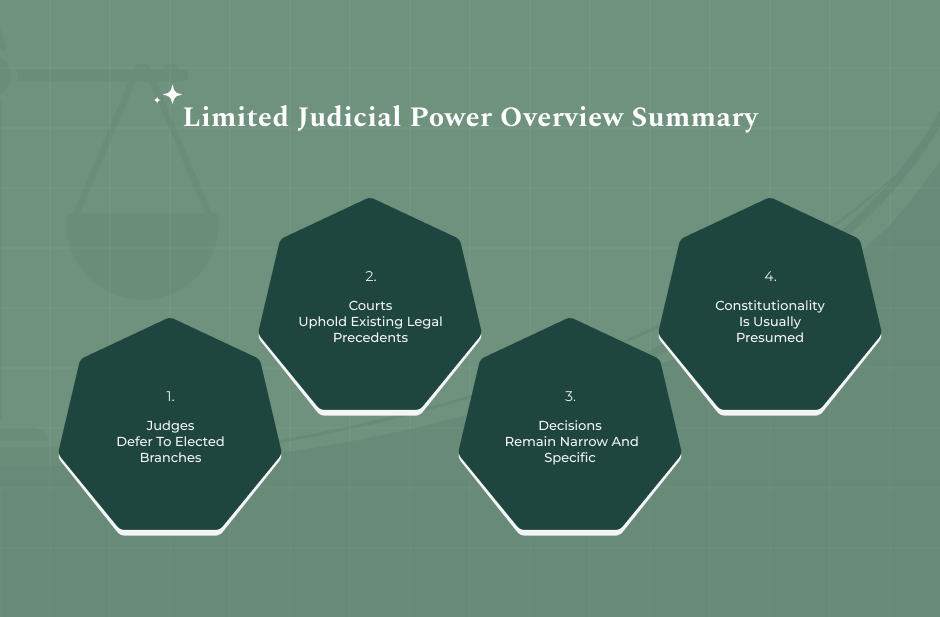
The judicial restraint definition is an explanation of the theory of interpretation that reminds judges to be cautious in the use of their power. The definition also explains that the courts are not to make any new social policy.
Defining The Legal Concept
In order to answer the question of what judicial restraint is, the perspective of the judge must first be understood when dealing with legislation.
The perspective of the restrained judge is that the legislative branch is within its rights as long as the Constitution is not being violated.
This is done in order to continue the democratic process and to continue to give power to the representatives of the voters.
Procedural Versus Substantive Dimensions
Procedural judicial restraint is when the courts decide what cases they will even hear. This is called substantive judicial restraint. The two types of judicial restraint are used in conjunction with each other to continue the judiciary as the “passive” branch.
Federal And State Laws Concerning Judicial Power
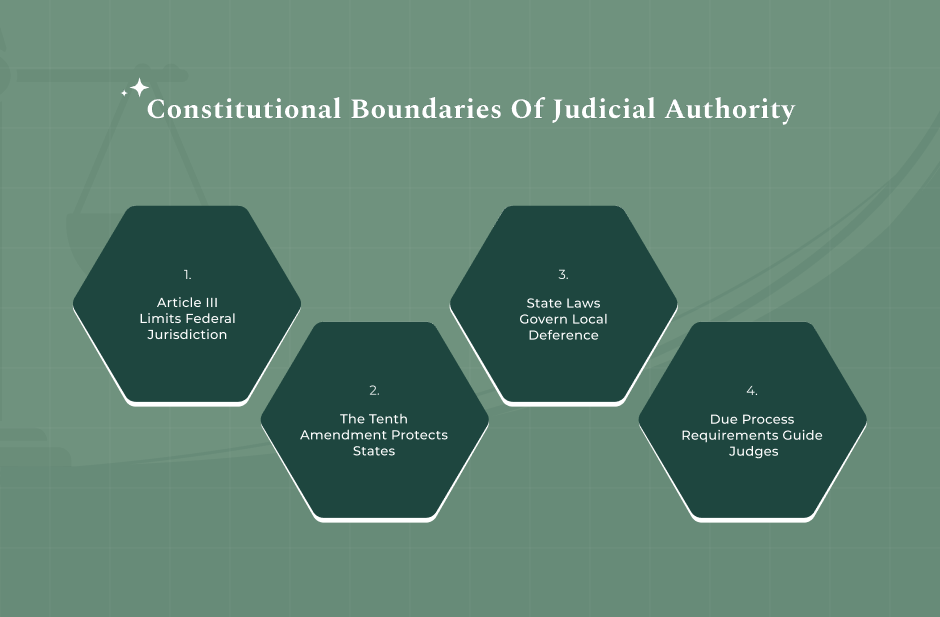
Judicial restraint is part of the highest laws of the land and is primarily set forth in the United States Constitution and similar documents at the state level.
The Role Of Article III
Article III of the Constitution clearly indicates that “cases and controversies” are all that the courts can address. In other words, the judges cannot make decisions on hypothetical cases.
This is an example of judicial restraint so that the courts do not interfere with the legislative process until a problem arises.
The Supremacy Clause And State Rights
The federal government is at the highest level of government, and its laws are supreme, but the states have been granted rights under the Constitution, specifically under the Tenth Amendment.
A judicial restraint approach would allow the states to run at a local level regarding safety and health issues, so that the federal government would not be intruding on the lives of citizens in various states. (Source: Britannica.com)
The Historical Evolution Of Restraint
The concept of judicial restraint goes back to the early days of the American Republic and developed through the 20th century. The great legal minds have developed this legal philosophy to ensure that the court does not become too political.
Origins Of The Common Law
The early American judges got their guidance from the English Common Law. The early judges believed that the court was to settle the law, not to change society. This was the beginning of the concept of the restrained American court.
The Influence Of Justice Felix Frankfurter
In the 1900s, Justice Frankfurter was the proponent of the concept of judicial restraint. Justice Frankfurter believed that the court should avoid “political thickets.”
Justice Frankfurter believed that if the court got too involved in politics, it would cease to be an independent and respected arm of the government in the eyes of the American people.
Judicial Activism Vs Judicial Restraint Debate
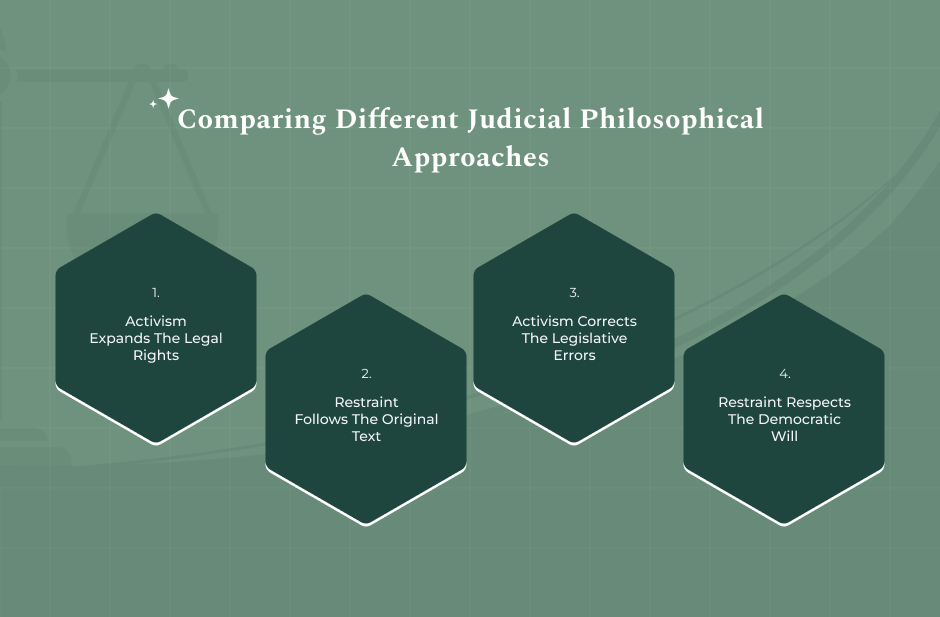
Perhaps the most debated topic in any law school classroom is judicial activism versus judicial restraint, with one side taking a conservative approach and the other side believing that judicial activism is necessary to protect minority groups.
Understanding Judicial Activism
In the struggle between judicial activism and judicial restraint, judicial activists believe that the Constitution is a “living” document, and when society changes, so too must the Constitution to reflect these changing times.
This is why judicial activists are so quick to make blanket rulings, often overturning time-honored traditions or state laws.
The Case For Restraint
Judicial activism opponents, those supporting judicial restraint, believe that judicial activism is necessary only when the Constitution explicitly requires intervention by the court.
This, they believe, has created an unelected group of judicial activists who, in essence, become a “super-legislature” and result in a loss of public trust in the government.
Landmark Case Laws And Precedents
There are a few landmark case laws that illustrate the effects of the implementation and non-implementation of judicial restraint on the protection and non-protection of citizens’ rights.
Plessy V. Ferguson (1896)
In this case, the Supreme Court was extremely lenient, and this case has often been cited as an example of the negative effects of the application of the concept of judicial restraint.
The Supreme Court did not overturn the segregation laws, and the “separate but equal” doctrine was allowed to prevail.
West Coast Hotel Co. V. Parrish (1937)
This case was an example of the positive effects of the application of the concept of judicial restraint.
The Supreme Court decided to stop overturning the minimum wage laws and other laws protecting workers, and the crisis was averted.
The Modern Focus On Agency Deference
In modern times, the “Chevron Deference” doctrine has dominated a court debate, and this principle has previously asked judges to demonstrate “judicial restraint.”
This means that the judges are asked to defer to the experts in the federal agencies. However, the recent court decisions are changing this and are asking judges to take a more active role in interpreting laws.
Frequently Asked Questions
The legal system is a complicated system, and it is crucial to comprehend it and its judges. The following are answers to some of the frequently asked questions regarding judicial restraint and its position in the legal system.
Judicial restraint is a philosophy where judges do not make new laws, but instead, they rely on others who have been elected.
Judicial restraint helps and harms individual rights, as it is a protector of democracy and voters.
Judges rely on the Constitution’s actual text, past decisions, and intent of law authors.
Read Also: