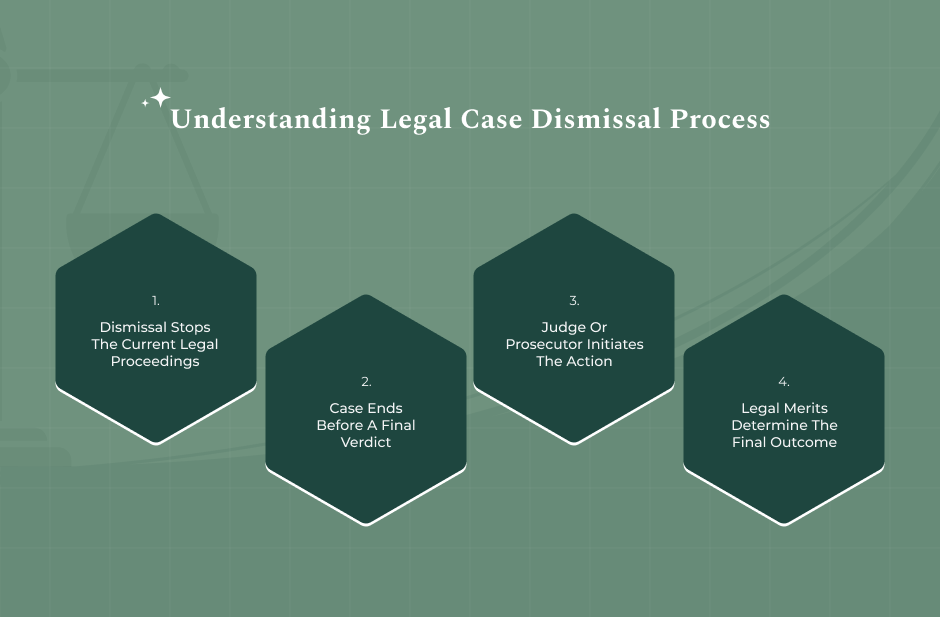
The signs that your case is likely to be dismissed may occur even before the final ruling of the judge in the courtroom. Regardless of whether the case is a civil lawsuit or a criminal offense, the dismissal of the case is the end of the proceedings before the verdict is given.
The legal system in the US is very demanding and needs a higher standard of proof before the case is allowed to proceed.
The FRCP, specifically Rule 12(b)(6), states that the case may be dismissed if the plaintiff fails to state a claim upon which relief may be granted (Federal Rules of Civil Procedure, 2026).
Today, some of the prominent corporate cases filed in 2026 have motions seeking dismissal of the cases due to jurisdiction and standing. The signs of dismissal of your case may be useful in guiding you on the next course of action.
In this article, we will elaborate on the following:
- The fundamental differences between dismissals with and without prejudice.
- Common indicators of weak evidence and inadmissible testimony.
- The impact of procedural errors, such as improper service or missed deadlines.
- How prosecutorial discretion and statutes of limitations trigger a case closure.
What Does It Mean When A Case Is Dismissed?
When a case is dismissed, it begins with a court order. It ends a lawsuit or crimSinal prosecution. This means that this dismissal ends the case without the full trial based on the merits of the case.
A dismissal can actually happen at different stages of the case. However, it will always begin with a motion from the defense or the prosecutor.
Dismissal With Vs. Without Prejudice
Most of us want to know what are the signs that a case will be dismissed. For that, we all must understand what exactly is prejudice.
Dismissing a case with prejudice usually means that the plaintiff is unable to sue for the case. Therefore, dismissing a case without prejudice is the option to be able sue again.
Voluntary Vs. Involuntary Dismissal Cases
The plaintiff has the option to dismiss the case voluntarily since he knows that he doesn’t have enough evidence to support his claim.
The involuntary dismissal of a case in court occurs when the judge dismisses the case. In these scenarios, the case doesn’t qualify to be in court.
Thus, it is essential in looking out for signs that your case may be dismissed. (Source: US Code)
Common Signs Your Case Might Be Dismissed
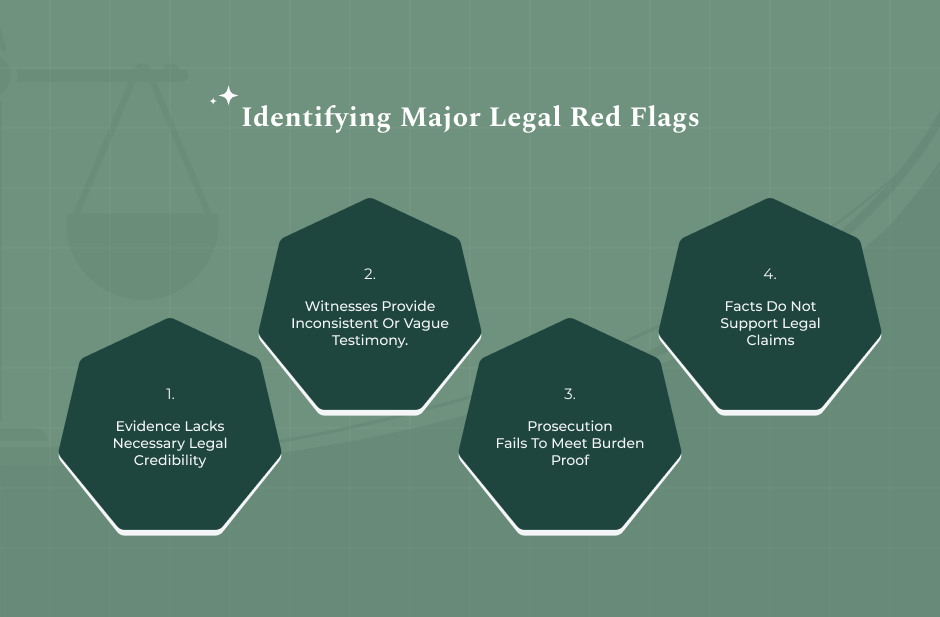
There are a number of red flags that suggest a case is no longer moving or is no longer viable in the eyes of the court. These signs that your case will be dismissed include:
Insufficient Or Weak Evidence
Without any evidence or witnesses to support your case, the case will most likely be dismissed.
Moreover, whether your case is going to be dismissed is pretty clear during the pre-trial stage.
Additionally, the court will have to find the case plausible before it can get to the discovery stage.
Inadmissible Or Illegally Obtained Evidence
There is a criminal law that is referred to as the “exclusionary rule.” This is a criminal law that prohibits evidence that was obtained and/or collected illegally from ever being allowed in any courtroom.
In cases where you are not able to come up with enough evidence, the judge will rule it inadmissible.
Thus, the case becomes automatically unwinnable. This is definitely one of the signs that your case is going to be dismissed. (Source: Cornell Law School, 2026)
Procedural Errors And Legal Deadlines
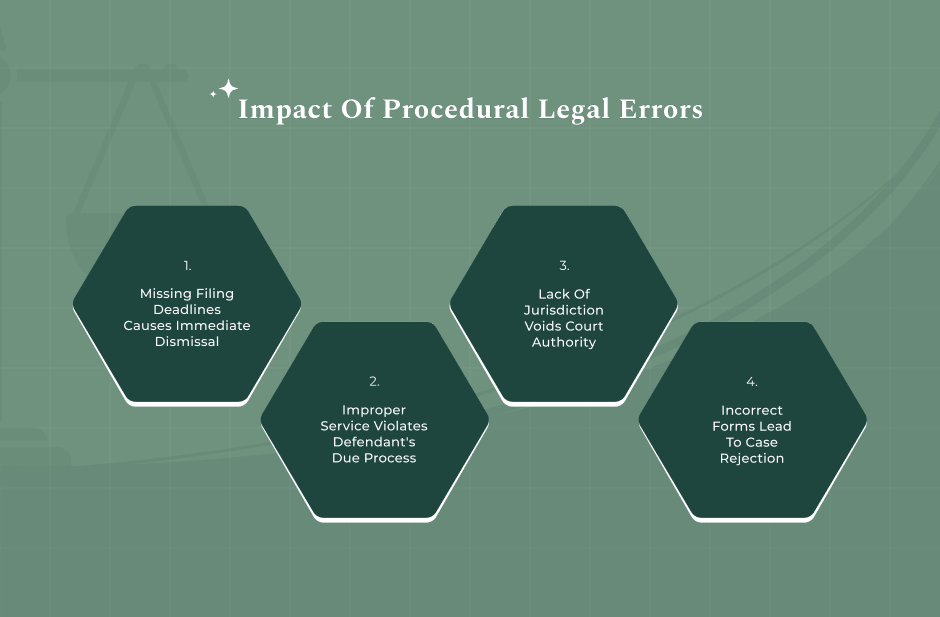
The system works according to set rules and timelines. When you break these rules, you are presented with clear signs that your case is going to be dismissed, despite the merits of your case.
Statute Of Limitations Has Expired
Every case in court has a certain amount of time during which it should be filed, referred to as the statute of limitations. When you file your case after this period has passed, you are automatically moved to dismiss. This is because you are essentially out of time, and this is one of the most unfixable signs your case will be dismissed.
Lack Of Personal Or Subject Matter Jurisdiction
There are certain types of cases that are supposed to be heard in certain types of courts. When you file your case in the wrong court, you are automatically moved to dismiss by the judge because of this lack of jurisdiction. This is one of the main signs your case will be dismissed.
Civil vs. Criminal Case Dismissals
Even though civil and criminal cases can be dismissed, there are different reasons for each. Being able to recognize signs that your case will be dismissed requires knowledge of whether you are in civil or criminal court.
The Role Of Nolle Prosequi In Dismissing Cases
For criminal cases, the prosecutor registers an entry into the “nolle prosequi.” According to that, there will no longer be a case against the defendant. This category is a sign that your case is likely to be dismissed.
Failure To State A Claim In Civil Cases
For civil cases, defendants normally file a “Motion to Dismiss” under Rule 12(b)(6). They do this because they feel that even if they have been able to state facts that are true according to the plaintiff’s claims, they are still unable to state facts that break any law.
By observing how the judge responds to this, you are able to identify signs that your case is likely to be dismissed.
How Courts Decide Dismissal Motions
Like all decisions regarding a case, when a judge considers dismissal motions, they take matters very seriously.
There are guidelines in these cases that ensure justice for parties. In these cases, all “four corners” of the case are taken into consideration.
The Standard Of Review
In reviewing a motion to dismiss, the judge will assume all facts alleged in the complaint are true, but will not assume that legal conclusions are facts.
The absence of legal logic will be one of the signs that your case will be dismissed that lawyers pay attention to during court hearings.
Probable Cause And Preliminary Hearings
In reviewing a criminal case, the judge will hold a preliminary hearing to determine whether there is sufficient evidence to proceed to trial.
If the judge finds there is no probable cause, the case will be dismissed immediately. A poor showing by the prosecution will be one of the signs that your case will be dismissed.
What Happens After A Dismissal?
After a dismissal, the next course of action is heavily reliant on the judgment of the judge in categorizing the dismissal. The consequences are just as vital as the signs your case will be dismissed.
Consequences Of Dismissal With Prejudice
This is a total victory for the defendant and a total defeat for the plaintiff. The case is considered “dead” and cannot be reopened in the same court or in any court.
The dismissal is considered a permanent state and is usually reserved for extreme cases of misconduct or lack of evidence.
Refiling After A Dismissal Without Prejudice
If the court determines that the dismissal is due to a minor infraction, like a misspelling in the court documents, the plaintiff may be able to fix the problem and refile the case.
The signs that your case will be dismissed may be a minor setback rather than a total dismissal. (Source: Justia)
Expert Tips To Help You Avoid Case Dismissal
As a plaintiff, you must avoid at all costs giving the judge any impression of case dismissal. To succeed, you must be meticulous and have a good plan.
• Verify all the deadlines
Use a professional calendar to keep track of all the dates.
• Find credible witnesses
Find witnesses early and make sure their stories remain the same even when subjected to pressure.
• Verify service
Make sure the defendant gets the notice of the case as required by law.
• Clearly state your claim
Clearly link your case facts with the law you claim has been violated.
FAQs Regarding Case Dismissals
The process of closing a case early creates many questions for individuals in the justice system. The questions pertain to general concerns about signs your case will be dismissed.
The judge only needs one good legal reason to dismiss a case. Even if you have plenty of evidence, one procedural error, such as missing a deadline, can terminate the case instantly.
If the prosecutor dismisses the case without prejudice, they can technically refile charges if new evidence becomes available prior to the expiration of the statute of limitations. However, if the dismissal becomes final with prejudice, the case is over forever.
Yes, a settlement will result in a voluntary dismissal. Once the parties agree to a settlement, they will request the judge to dismiss the case, as there is no longer a need to argue. This is a good and normal way for a case to end.