Today’s topic: Social Security Group 1 direct deposit!
Direct deposit is now the standard way Social Security sends benefits straight to your bank or credit union.
No more waiting for paper checks in the mail – everything lands in your account automatically.
It’s safer, quicker, and you don’t have to worry about checks getting lost, stolen, or stuck somewhere in the postal system.
But how does it work for Group 1?
For starters, if you started getting benefits before May 1997, or if you also get Supplemental Security Income (SSI), you are in this group. That means you get your money on the 3rd of every month, like clockwork.
Federal law – specifically 31 CFR Part 208 – mentions that all federal payments have to go out electronically, according to the Legal Information Institute.
So, direct deposit isn’t just a good idea – rather, it is now a requirement. This move helps the Social Security Administration fight fraud and cut costs.
In this guide, we will break down the following things:
- What is Social Security Group 1?
- About Social Security Group 1 Direct Deposit.
- Group 1 Direct Deposit Payment Schedule.
- How to set up the Social Security Group 1 Direct Deposit?
- What to do if direct Deposit is late or missing?
- Statutory mandate for electronic payment for group 1 direct deposit.
Therefore, if these are what you want to know, keep reading!
What Is Social Security Group 1?
Before we head over to explaining the process and eligibility for Social Security Group 1 Direct Deposit, let us take a while to understand what Social Security Group 1 is.
Primarily, Group 1 under the SSA covers people who always get their payments on the 3rd of each month.
They don’t follow the newer Wednesday payment schedule. Most people in this group started getting benefits before May 1, 1997.
It also includes people who get both Social Security (OASDI) and Supplemental Security Income (SSI), those living outside the U.S., and anyone whose state helps cover their Medicare premiums.
The Social Security Administration sets these payment rules under 20 CFR § 404.1807. (Source: Code of Federal Regulations.)
Group 1 is a bit different from everyone else because the schedule makes sure federal and state benefits line up.
Besides, the primary goal for having this group is to get money out to low-income or long-term recipients right at the start of the month. In that way, they can cover essentials without having to wait.
What Is Social Security Group 1 Direct Deposit?
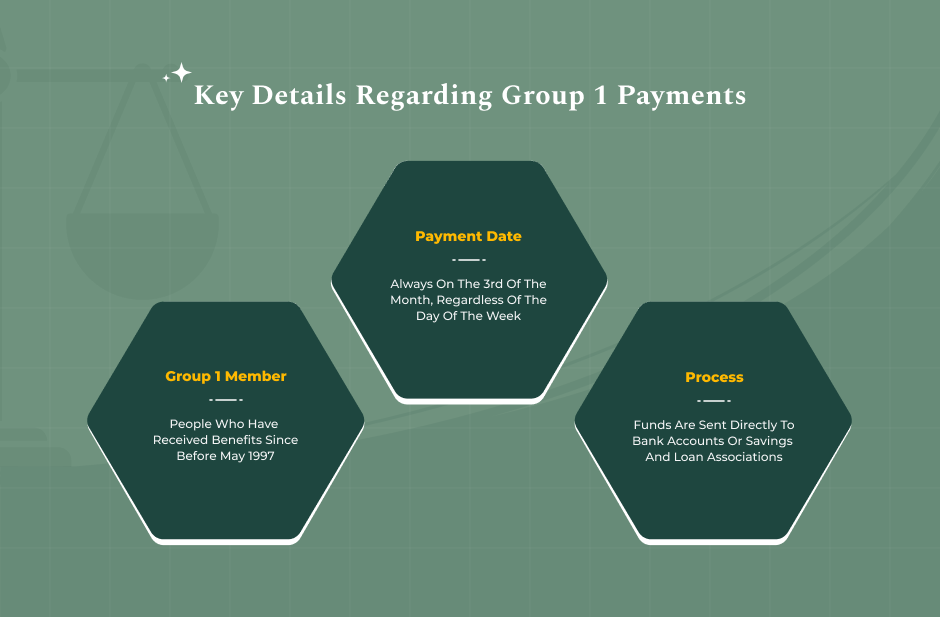
As we said earlier, Social Security Group 1 direct deposit means you get your money on the 3rd of every month if you started getting benefits before May 1997, or if you get both Social Security and SSI.
It’s honestly the quickest and safest way to get your payments. Besides, most banks show the money pretty early on payday.
Now, let’s get into the details:
History Of Social Security Group 1 Direct Deposit
Group 1’s story actually goes all the way back to the very beginning of Social Security. Back then, everyone got their monthly benefits on the 3rd of the month – without any exceptions.
That system worked for a long time. However, as more and more people started collecting Social Security, the Social Security Administration started running into some real logistical headaches.
In May 1997, the authorities decided to change things a little. The SSA launched a program called “payment cycling,” spreading payments throughout the month to lighten the administrative load.
New applicants switched to a staggered schedule: which Wednesday you got paid depended on your birthday.
But people who were already getting benefits decided to stick to the 3rd – they were “grandfathered” into the old way, and that’s how Group 1 came to be.
Around the same time, the Debt Collection Improvement Act of 1996 and new federal rules pushed everyone away from paper checks and toward direct deposit.
Electronic transfer became the rule for everyone, Group 1 included, to keep payments safer and more efficient.
Social Security Direct Deposit Basics
The Social Security Administration sends monthly benefits straight to your bank account using an Automated Clearing House (ACH) system – most people just call it direct deposit.
That means your money shows up right on schedule, no waiting on the mail, no worrying about lost or stolen checks.
If you don’t have a regular bank account, they offer the Direct Express Debit Mastercard. It’s a prepaid card made for federal benefits, so you still get your payments securely.
Switching to electronic payments isn’t really a choice – it’s the law. The Department of the Treasury requires all federal non-tax payments to go through electronic funds transfer (EFT), according to 31 CFR Part 208.
The main reason behind this was to cut down on paperwork and costs, and to make sure the Social Security Trust Fund stays safe from check fraud and the hassle of replacing lost payments.
Who Qualifies For Social Security Group 1 Direct Deposit?
You won’t see the Social Security Administration (SSA) call it “Group 1” in its ads or websites, but that’s the go-to term in legal and industry circles.
As we have already mentioned above, Group 1 covers people who always get their benefits on the 3rd of each month.
They are set apart because their payment date sticks to an old policy, while most others now get paid on dates tied to their birthdays.
Here’s who are eligible or qualified to be a part of the SSA Group 1 direct deposit:
- People who started getting benefits before May 1, 1997.
- People who get both regular Social Security and SSI at the same time.
- Anyone whose state pays their Medicare premiums.
- Beneficiaries living outside the U.S.
It’s easy to mix up the different groups. But Group 1 works differently – that makes it stand out. If you filed for benefits after 1997, you’re probably paid on the second, third, or fourth Wednesday of the month instead.
Also, SSI on its own always comes on the 1st. But if you get both Social Security and SSI, the SSA lines up your Social Security payment with the Group 1 schedule to make sure you get your money at the start of the month.
Group 1 Direct Deposit Payment Schedule Explained
Now that you have a clear understanding of what Social Security Group 1 Direct Deposit is about, let us talk about the timing and schedule of the payment.
Official SSA Payment Timing Rules [Weekends & Federal Holidays]
The Social Security Administration (SSA) has a set way of sending out payments. Most people these days get their checks on the second, third, or fourth Wednesday of the month, all depending on when their birthday falls.
But Group 1 is exempt from following this birthday rule. If you filed your claim before May 1997, or if you get both Social Security and SSI, you are naturally a part of Group 1. Thereby, you stick to the old schedule.
In such a case, your payment always comes on the 3rd day of the month. The idea is pretty simple – people who have been on benefits the longest, or who have extra financial needs, get their money right at the start of the month.
However, one question that a lot of people learning about this rule have is what happens if this date falls on a weekend or on holidays – days when the banks are closed, and transaction of money are close to impossible?
According to the rules, in such a case, the SSA has to send your payment early on a preceding date. In that way, you will not have to wait in case the banks are closed.
For example, if the 3rd is a Sunday, you’ll usually see your deposit show up on Friday the 1st. This way, you never get stuck without your funds just because of a bank holiday.
“If the regularly scheduled payment date falls on a Saturday, Sunday, or a legal Federal holiday, Treasury dates the checks for the first day before that date that is not a Saturday, Sunday, or legal Federal holiday” (Source: SSA POMS GN 02401.001).
Group 1 Vs. Other Groups
Take a look at this chart that explains how Group 1 is different from other groups when it comes to SSA direct deposits:
| Beneficiary Group | Criteria | Payment Date |
| Group 1 | Claims filed before May 1997, Dual SSI/Social Security, or living abroad. | 3rd of the Month |
| Group 2 | Birth date falls on the 1st – 10th (filed after May 1997). | Second Wednesday |
| Group 3 | Birth date falls on the 11th – 20th (filed after May 1997). | Third Wednesday |
| Group 4 | Birth date falls on the 21st – 31st (filed after May 1997). | Fourth Wednesday |
| SSI Only | Supplemental Security Income recipients. | 1st of the Month |
How To Set Up Or Change SSA Direct Deposit? Step‑by‑Step Setup For Banks
The Social Security Administration gives you three main ways to set up or update your electronic fund transfer instructions. It’s on you to make sure they have the right banking information – that’s the rule under federal law 20 CFR § 422.501.
- Online: First, the easiest and safest option is to log into your personal “my Social Security” account online. Just head to the “Benefit & Payment Details” section and enter your new bank details.
- Telephone: If you would rather talk to someone, you can call the SSA’s national toll-free number at 1-800-772-1213. Or you can also contact TTY 1-800-325-0778.
Apart from this, you can also stop by your local Social Security office. Offices can get crowded, so it’s smart to make an appointment ahead of time. Furthermore, do not forget to bring your banking documents so you can give them directly to a claims rep.
What You Need (Checklist)
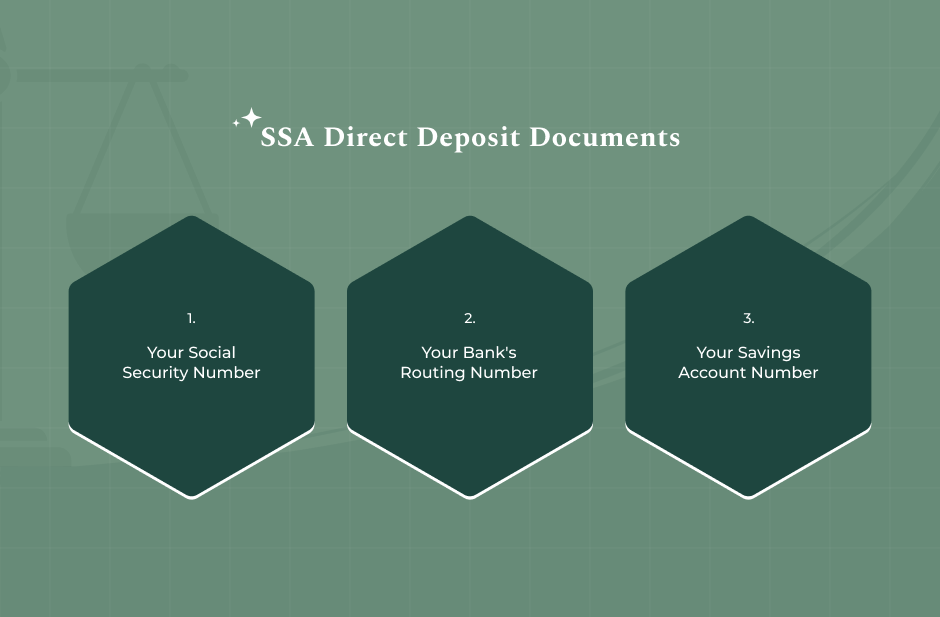
To prevent processing delays or identity theft flags, you must have the following information ready for verification:
- Personal Identification: Your Social Security Number and proof of identity.
- Bank Routing Number: The nine-digit code identifying your specific financial institution.
- Account Number: Your personal checking or savings account number.
- Account Type: Specification of whether the account is checking or savings.
- Verification Tip: Use a voided check or an official bank “Direct Deposit Sign-Up Form” to ensure the numbers match the bank’s electronic records exactly.
How Long Changes Take
Changing your direct deposit details with the SSA is not an instant process. In most cases, it usually takes about 30 to 60 days for them to switch things over.
The agency can generally advise you to keep your old bank account open until you actually see your payment show up in the new one.
Additionally, if you send the change after the monthly cutoff date (usually around the middle of the month), your next payment will still be posted to your old account.
What If Your Direct Deposit Is Late Or Missing?
There are a few times when the direct deposit might be late – or even missing. Before you take the steps to deal with that, it is important that you know what the reasons behind this are.
Common Reasons For Delay
Even though the SSA’s electronic system works well most of the time, delays still happen. Here’s why:
- Banking Processing Windows: Banks process deposits on their own schedules. Thanks to the Electronic Fund Transfer Act, there’s no single rule for when a payment actually shows up in your account. The SSA might send money at midnight, but you might not see it in your balance until much later that day.
- Inaccurate Account Data: Wrong account info also causes problems. If someone gives the SSA the wrong routing or account number, the bank just bounces the deposit back to the Treasury.
- Federal Holidays: Federal holidays throw things off, too. If the 3rd lands on a holiday, the SSA tries to pay you early on a preceding date. However, banks don’t always process these payments at the same speed – especially over long holiday weekends.
What To Do When You Don’t Get Direct Deposit?
If your money isn’t there on the day it’s supposed to be, start with your bank.
- Contact Your Bank: Ask if they see a pending deposit – sometimes, the holdup comes from their end, not the SSA.
- Check Your “my Social Security” Account: Next, log in to your “my Social Security” account. Make sure your direct deposit info is still correct and check for any messages about your benefits getting suspended.
- Wait For 3 Days: If everything looks right but the money’s still missing, give it three business days before calling the SSA. Sometimes banks just need a little extra time to process things.
When To Raise A Formal Issue?
If three days go by and you still haven’t received your payment, call the SSA at 1-800-772-1213 to report it.
When you call, jot down the date, time, and the name of whoever you talk to – just in case you need it later.
If the agency made a mistake and sent your payment to the wrong place, the SSA can start a “Critical Payment.” Or they can get a replacement from the Treasury’s Bureau of the Fiscal Service.
Statutory Mandate For Electronic Payments For Social Security Group 1 Direct Deposit
The transition to electronic benefits goes back to the Debt Collection Improvement Act of 1996. That law gave the Treasury Department the power to require all federal non-tax payments to be made via electronic funds transfer (EFT).
So, if you get benefits, you have to use direct deposit or the Direct Express Debit Mastercard – no more paper checks.
For people in Group 1, this rule keeps the Social Security Trust Fund safer. Paper checks can get lost, stolen, or even forged, so going digital really cuts down on those risks.
There aren’t many exceptions here. The only people who can stick with paper are those who cannot physically or mentally use electronic systems. Or people living way out in places without banks.
The Social Security Administration, under Section 205(i) of the Social Security Act, has the power to send payments in whatever way makes sure everyone gets their money on time and keeps the books straight.