Today’s topic: Is Quince legit?
Quince (operated by Last Brand Inc.) is a rather popular business model Manufacturer-to-Consumer (M2C) brand. As most of us are well aware, it has disrupted the e-commerce market with its concept of “affordable luxury.”
However, considering the product quality, consumers and legal professionals are concerned with the “Is Quince legit?” question.
According to most legal experts, concerns should not only be about product quality but also about regulatory compliance, intellectual property integrity, and consumer protection statutes.
Quince is a verified, San Francisco-based company. However, its business methods have led to considerable legal review.
The company is currently involved in lawsuits, including a class-action suit for deceptive “strikethrough” pricing and a trade dress infringement claim by luxury brands such as Coach.
In this blog, we will talk about the following things:
- Is Quince legit?
- The M2C business model of Quince.
- Lawsuits Quince has faced regarding false advertising, deceptive marketing, and IP.
- Consumer rights and recourse.
Therefore, if these are what you want to know, keep reading!
Is Quince Legit?
Quince is a San Francisco-based retailer, and the business is legitimate. However, the company’s “factory-to-door” scheme to cut the middleman while aggressively pricing products usually makes people skeptical.
People around tend to question the authenticity of the company mainly because of its extremely low prices – like $50 cashmere – which makes them think, “if this is a luxury material, how can it be so cheap?”
Adding to the uncertainty, the company has been the target of lawsuits by brands such as Coach and Williams-Sonoma for allegedly copying the designs. (Source: The Fashion Law)
Besides, a class-action complaint has been filed against them, asserting that they used the original prices marked up in strike-through in their “MSRP” comparisons so as to deceive people into thinking that they were really getting a good deal through the savings.
One of the reasons why people get suspicious is that the company keeps the information about specific factories secret. As a result, such a lack of transparency has led to accusations of “greenwashing” by environmentalists.
Though the items are genuine, the brand’s “dupe” culture and delay in international shipping are the ones giving rise to these “is it a scam?” searches.
The M2C Business Model: Legal Implications Of Factory-Direct Shipping
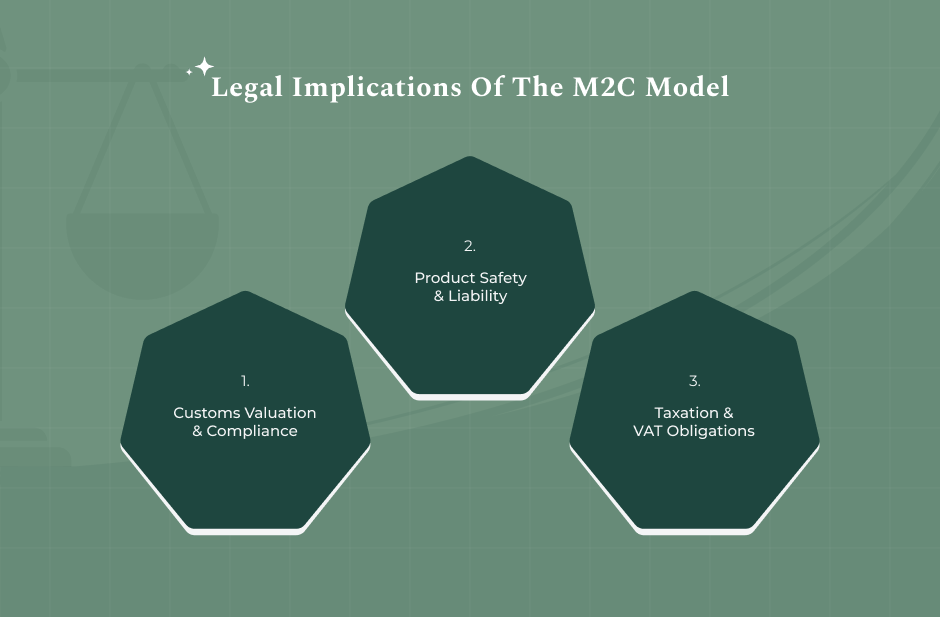
As we have already mentioned above, Quince uses a Manufacturer-to-Consumer (M2C) model. This basically allows the company to skip the traditional domestic warehousing and ship goods directly from overseas factories to end-users.
Although this very efficient supply chain helps in reducing the costs for consumers, it brings about a different set of legal and regulatory issues related to import liability and consumer protection.
Customs Compliance And De Minimis Exceptions
One very important legal issue tied to the M2C model is the implementation of the Section 321 “De Minimis” entry.
According to the very latest U.S. customs regulations, imports with a value of less than $800 normally do not have to go through formal entry procedures nor be subject to payment of duties.
If Quince sends individual orders from different countries directly to the customers, then it will trigger very few taxes, whereas a traditional retailer that buys a bulk of goods will end up paying more taxes.
On the other hand, the lawmakers themselves have now become a little bit more doubtful about this model.
This is because they want to ensure the proper addressing of the issue of forced labor. And that no safety inspections of the products are bypassed simply because their value is low.
Jurisdiction And Consumer Recourse
When it comes to lawsuits, sending goods factory-direct gets rid of the chain of liability.
Now, let’s say the product in question causes harm to a person or does not comply with safety standards; it will be extremely important to identify who the “seller of record” is.
Even though Quince is a company registered in the US, it will operate from overseas most of the time. And that factor alone may make it difficult to track down hard evidence for a product liability case.
What’s more, international shipping naturally causes certain delays. Additionally, if sellers want to get away with them, they have to be quite precise about the FTC’s Mail, Internet, or Telephone Order Merchandise Rule.
The rule requires that sellers must have a sound reason for their shipping claims and, if there are any delays, the sellers must follow the notice-and-consent procedures.
Is Quince Legit? Legal Battles That Gave Rise To The Question
Though Quince runs as a legitimate San Francisco company, its “affordable luxury” business model has provoked major legal challenges. This has called into question the honesty of its marketing and the authenticity of its designs.
The conflicts revolve around whether the brand’s main appeal is based on genuine price reductions. Or misleading comparisons and unauthorized use of creative work.
False Advertising & Deceptive Pricing: The Mandel v. Last Brand Inc. Case
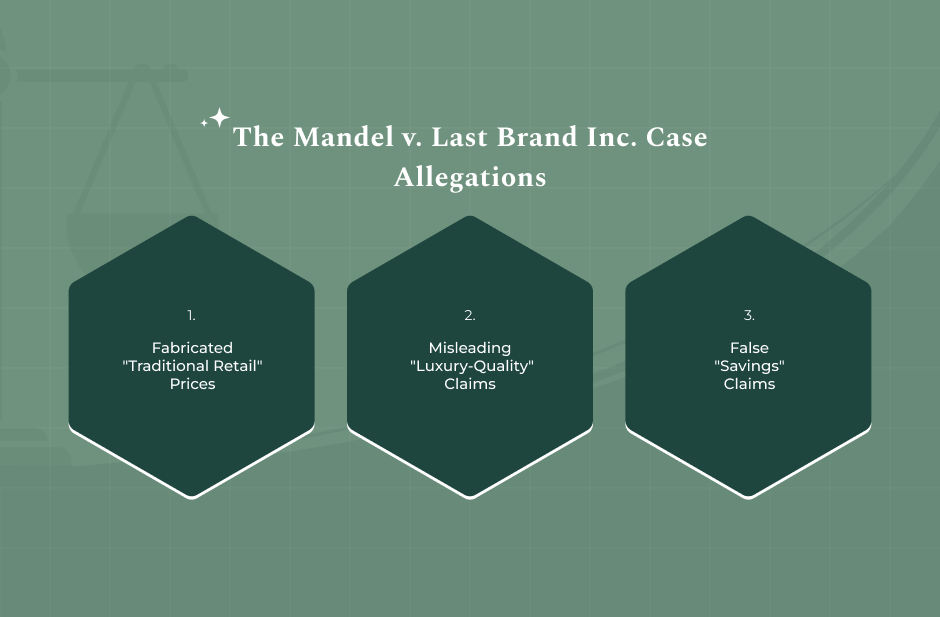
In November 2025, a class-action lawsuit, Mandel v. Last Brand Inc., Case: d/b/a Quince, 3:25-cv-09780, was filed in the U.S. District Court for the Northern District of California. (Source: Law Radar)
The plaintiffs accuse Quince of running a deceptive “strikethrough” pricing scheme that falsely suggests the presence of large discounts.
They claim that Quince’s “traditional retail” reference prices are made up or inflated. And that’s because the products allegedly have never been sold at these higher price levels. (Source: Top Class Actions)
There’s more. The company uses phrases like “radically low prices” and likens its products to high-end luxury houses such as Loewe and Toteme. The lawsuit says that, by doing so, Quince is in breach of California’s False Advertising Law and the Consumer Legal Remedies Act.
In another 2025 case, Williams-Sonoma (WSI) also disputed Quince’s “Beyond Compare” charts. It asserts that they use deceptive data to wrongly represent Quince items as on par with premium brands like Pottery Barn.
Intellectual Property Battles: Analyzing Coach’s Trade Dress Infringement Claims
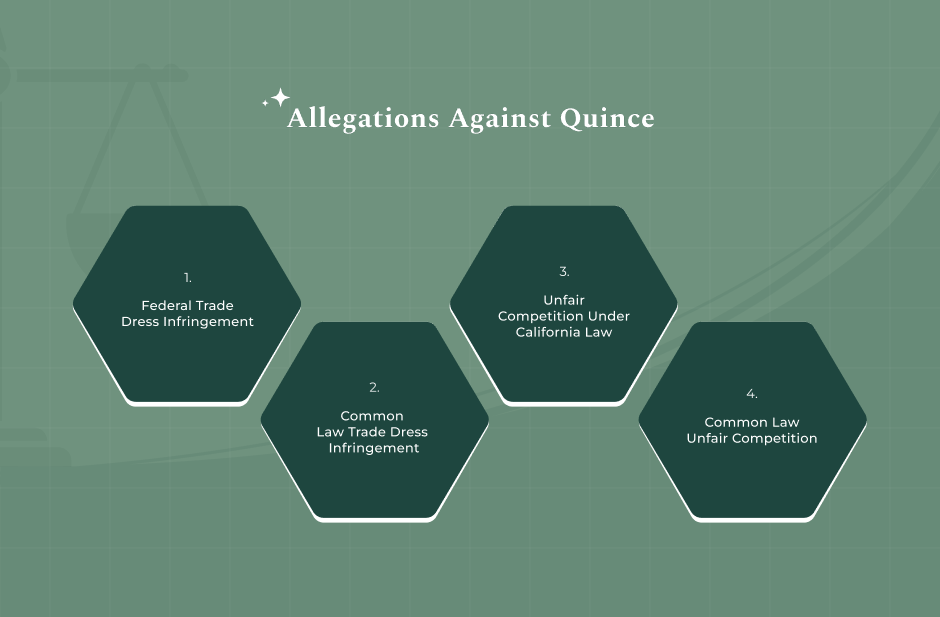
Besides their pricing, Quince might be in trouble for the way their products look as well. In April 2025, Tapestry Inc. (the parent company of Coach) filed a lawsuit in federal court against Quince.
They claimed that the “Italian Leather Medium Convertible Satchel” and “Buckle Detail Shoulder Bag” by Quince are almost identical to Coach’s Rogue and Soho Flap bags. And those latter two are very famous.
Under the Lanham Act, Coach insists that the unique shapes, sewing patterns, and placements of the bag components constitute the kind of non-functional, source-identifying “trade dress.” And that is something which warrants legal protection. (Source: Tapestry, Inc. et al v. Last Brand, Inc. et al, Justia.)
The luxury brand believes that Quince’s “dupe” approach deliberately seeks to benefit from Coach’s renowned reputation. And it does so in a way that causes consumer confusion.
Quince was even able to fend off a trade dress claim by UGG in late 2025. The judge thought certain boot styles were too “generic” and needed no protection.
However, the Coach matter is a much more serious fight. It raises the question of whether designer-inspired “dupes” can be legally considered intellectual property infringement.
Answering “Is Quince Legit” Through Consumer Rights And Recourse
Now that you are aware of is Quince legit or not, let us talk about its interface. Exploring Quince’s consumer interface is like uncovering a well-thought-out plan.
It is where the company offers big advantages to customers and gives an extensive set of legal defenses to the brand.
Despite giving customers top-level freedom, the company uses the fine print to sharply cut buyers’ chances of the usual court procedures.
Mandatory Arbitration And Class Action Waivers
According to Quince’s Terms of Service, by using the service, the user agrees to a binding individual arbitration of all disputes under the FAA. (Source: Federal Arbitration Act (FAA), 9 U.S.C. §§ 1-16)
That very point takes away from the consumers the possibility of suing in a court. Or being part of class actions.
In fact, the plaintiffs are looking at these waivers as one of their main obstacles in the ongoing deceptive pricing lawsuits.
The 365-Day Return Policy And “Final Sale” Limitations
The 365-day return policy is what sets Quince apart. On a legal level, this is a type of warranty that the seller voluntarily makes part of the contract.
Still, the policy does not apply to “Final Sale” items. Additionally, it assumes that the buyer will return the products in “original packaging.”
We would like to highlight that, under the Magnuson-Moss Warranty Act, any ambiguity in widely publicized terms or service promises is usually considered against the person who wrote them. And in this case, it is Quince.
Read Also: Is TruthFinder Legit: What Are The Legal Implications?
Quince Supply Chain Disclosures: Sustainability Claims vs. Legal Transparency Mandates
Quince is marketing the production of “ethical” and “sustainable” clothing strongly. However, from a legal point of view, they must acknowledge such claims within the mandatory disclosure frameworks.
These frameworks are specifically for the prevention of greenwashing and forced labor.
Compliance With The California Transparency In Supply Chains Act (SB 657)
Quince is a firm subject to California law, with over $100M in annual global gross revenue. Therefore, it is obligated by law to disclose its anti-slavery and anti-human trafficking measures in its direct supply chain under SB 657.
However, Quince offers mostly top-level summaries of its factory audits; legal analysts note a shortage of very detailed data on specific factory locations.
This is becoming a requirement of the Uyghur Forced Labor Prevention Act (UFLPA). This ensures that products are not sourced from high-risk areas.
The Legal Risk of “Greenwashing”
According to the FTC’s Green Guides, environmental claims should be “clear, prominent, and understandable.”
Quince’s has relied on words like “sustainable” and “ethical” without thorough third-party certifications (e.g., GOTS or Fair Trade for all product lines). It exposes the brand to the risk of a “greenwashing” lawsuit.
Additionally, the law can interpret the variations in material disclosures as “unfair or deceptive acts” under Section 5 of the FTC Act. These include those regarding recycled polyester blends.