Today’s topic: EZDriveMA scam.
Presently, the shift from email scams to text-based “smishing” shows a major change in online fraud.
These days, attackers use how often people open texts and the trust they place in government agencies to build pressure that skips normal caution – bypassing traditional skepticism
In the EZDriveMA case, fraudsters pretended to be the Massachusetts Department of Transportation (MassDOT). Additionally, they sent fake notices about unpaid tolls to push people into paying through malicious links.
For lawyers, this isn’t just about security anymore. Rather, it’s also a big issue in protecting consumers and handling legal liability.
Under M.G.L. c. 93A, acts that are unfair or deceptive can lead to legal penalties. (Source: General Court of the Commonwealth of Massachusetts.)
Additionally, using personal contact data without permission raises privacy concerns and questions about whether agencies must warn the public.
This situation brings together the TCPA, federal wire fraud laws, and state tort rules on a duty to warn when managing public infrastructure.
In this blog, we will be breaking down the following things:
- About the EZDriveMA Scam.
- The regulatory and statutory framework.
- Liability in the EZDriveMA text scam.
- Consumer remedies and litigation strategies.
Therefore, to know about these, keep reading!
An Overview Of The EZDriveMA Scam

Scammers are hitting Massachusetts hard with a sneaky SMS phishing scheme, pretending to be the Massachusetts Department of Transportation.
They send texts that look legit – sometimes even using the EZDriveMA logo – telling people they owe toll money and threatening penalties if they don’t pay.
The moment you click the link, it takes you to a fake website designed to steal your credit card details. Usually, they ask for small payments like $6.99, hoping you won’t notice anything weird.
However, MassDOT stepped up and cleared the air, stating that they never ask for payment through text messages. And whenever any form of payment is required, the notification will come from the official website: www.ezdrivema.com.
Additionally, after the EZDriveMA scam, the FBI is investigating. However, till now, what they have found out is that the scammers are just sending texts to random phone numbers – not hacking into any government systems.
Regulatory & Statutory Framework: The Legal Foundations Of Smishing Litigation
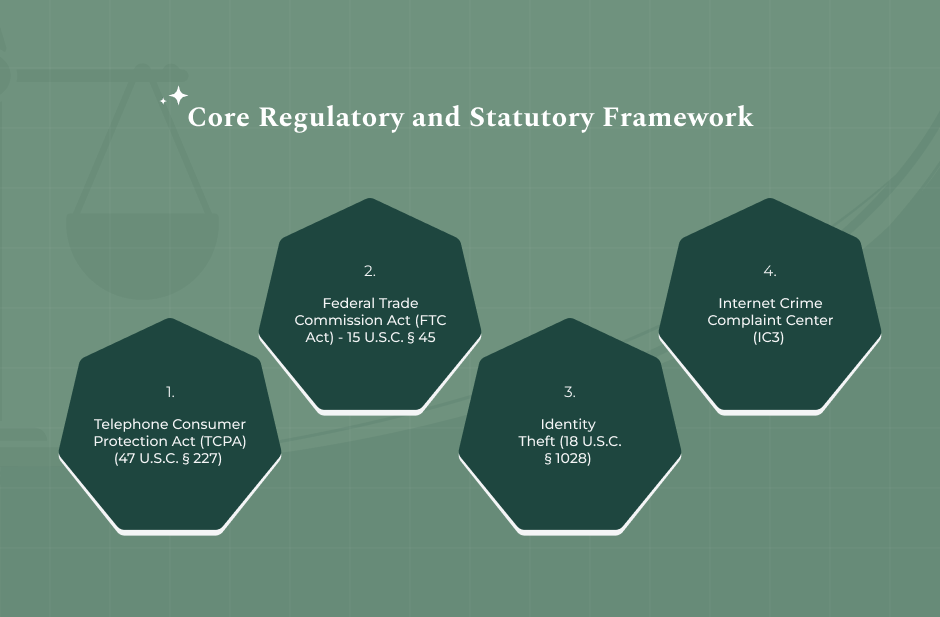
The EZDriveMA smishing campaign operates at the intersection of federal telecommunications law and state-level consumer protection.
To effectively litigate or advise on these incidents, one must navigate a layered statutory landscape designed to curb deceptive digital practices.
Federal Statutes: TCPA And The FTC
The 47 U.S.C. § 227 (TCPA) blocks unsolicited text messages at the federal level. It began targeting telemarketing but now covers SMS through the FCC’s interpretation of “autodialed” calls. (Source: Federal Communications Commission)
Smishing schemes such as EZDriveMA use automated systems to send messages without prior express consent, a direct violation of the law. These campaigns often mimic official communications to gain trust.
The FTC Act, 15 U.S.C. 45, forbids unfair or deceptive acts and practices. The FTC uses this rule to take legal action against those who enable fraud.
Impersonating government agencies such as MassDOT is considered inherently deceptive by the FTC. That action damages public confidence and weakens business trust.
State-Level Protections: Massachusetts Chapter 93A
The Consumer Protection Act in Massachusetts allows victims to sue. (Source: (M.G.L. c. 93A))
Smishing constitutes unfair or deceptive conduct under Chapter 93A because it misstates a debt owed to the state. The false claim tricks people into paying money.
If scammers acted willfully and knowingly, courts may award triple damages. They can also order payment of lawyers’ fees.
The Massachusetts Data Privacy Act could apply if the scam used phone numbers taken from a data breach.
That data was stored in a regulated personal information database. The scammer might be held liable for how the information was used.
Data owners could face responsibility for what happened after the breach. This shifts legal focus from the fraud itself to how the data was handled.
A data breach does not excuse the deception; those who collected the info must act responsibly.
Cybercrime Classifications: IC3 And Multi-State Coordination
One way the FBI’s Internet Crime Complaint Center tags the EZDriveMA case is through Government Impersonation, along with Smishing. (Source: Internet Crime Complaint Center.)
Not seen as random scams, such threats get labeled as coordinated infrastructure attacks since they weaken confidence in official services. Basically, that label makes it possible to group minor financial hits into larger federal charges.
Across the country, efforts to track where those $6.99 late payments land rely heavily on the National Cyber Crime Portal, together with the Secret Service’s Electronic Crimes Task Forces.
Furthermore, from a legal standpoint, having these categories helps show public impact. Besides, this is something that courts often look for when handling major consumer lawsuits.
Read Also: CNLawBlog: Is It a Legit Site for Legal Assistance and Insights?
Assessing Liability: Who Is Responsible In The EZDriveMA Scam?
One of the tasks that truly requires a lot of patience and alertness in investigating smishing campaigns is determining liability. And that is primarily because of how nuanced the roles of government agencies, digital intermediaries, and the nature of the intrusion are.
Agency Liability And The “Duty To Warn”
Firstly, MassDOT did not legally have to pay for scams run by outside actors. However, when a danger can be predicted, the agency has a responsibility to inform the public.
In the EZDriveMA scam case, MassDOT sent out broad warnings that they never ask people to send money via text message.
So, if the agency had known about the fake impersonations but didn’t act, it might face claims of not doing enough.
That silence could cause harm to consumers who didn’t get the warning. Public alerts were widely shared through social media and official channels.
Furthermore, without early notices, agencies could be seen as negligent. The damage to trust in public services is serious and requires clear steps to verify online information. (Source: Netcraft)
Proactive digital verification reduces risks and prevents future scams.
Third-Party Merchant Liability
Presently, courts are holding payment processors and domain registrars to a higher standard. The thing is, if these companies don’t comply with basic E-KYC requirements, they might lose their legal protection.
Additionally, a failure to act on obvious signs of fraud can lead to liability. A domain registrar can’t just sit back and watch bad activity happen.
They must take action when domains mimic government brand names. The legal argument is clear: passive behaviour isn’t acceptable anymore.
Data Breach vs. Social Engineering
Data breaches usually come from system flaws, not human error. That kind of failure can lead to strict liability under the DPDP Act.
Social engineering, like smishing, tricks people instead of exploiting software. It relies on manipulating how users think, not breaking technical defenses.
If attackers accessed MassDOT’s internal data without permission, the agency could be at fault for not securing personal info.
However, if scammers picked random phone numbers – like MassDOT says – then it’s a social engineering case.
In that scenario, responsibility lies with the attackers or banks offering fraud alerts. The public or the courts are not yet holding the agency liable for such smishing attacks. Therefore, this distinction is important when deciding who bears responsibility.
Read Also: Post Lake Lending Review (2026) – Legitimacy, Interest Rates, Complaints & Alternatives
Consumer Remedies And Litigation Strategies
If you have been a victim of the EZ Drive MA scam, you have several avenues of redress. This would range from the immediate financial mitigation to the long-term litigation options. And it is completely up to you which step you would want to take:
Class Action Potential And Direct Redress
The main question when it comes to a class action lawsuit is whether you can prove a systemic leak.
A breach of a state or vendor repository resulting in the harvesting of phone number databases would be the basis for collective damages under M.G.L. c. 93H.
Individual consumers who faced issues with the EZDriveMA scam can first and foremost look at the Electronic Fund Transfer Act (EFTA) and Regulation E. These will provide you with the necessary legal backing to contest charges without proper authorization with banks.
On top of that, if a privacy violation is proven, the victims may be entitled to pursue statutory damages under Chapter 93A for unfair trade practices.
Corporate Compliance And Best Practices
To control and mitigate the risk of impersonation, companies and government agencies will have to implement what experts call a “defense-in-depth” approach. This method involves a number of layers or levels of protection.
One of these layers is strict notice requirements – informing the users very clearly that they should not expect any sensitive transaction to take place through SMS.
Besides, another layer is to make sure that you are adhering to the Personal Data Privacy and Protection (PDPP) law.
Therefore, setting up Brand Indicators for Message Identification (BIMI) and using verified SMS senders are not just good practices; they are essential.
It is the minimum requirement for compliance if one wants to protect the brand from misuse. Besides, it helps you shield yourself from negligence claims.