By choosing to pursue ABA Approved paralegal programs, you are assured of getting a quality education with rigorous guidelines set forth by the American Bar Association.
In the year 2026, the legal field requires competent lawyers capable of undertaking difficult cases and conducting digital discovery.
At present, many state bar associations are evaluating the educational criteria of legal paraprofessionals.
In this article, we will elaborate on the following:
- The definition and value of American Bar Association approval for legal studies.
- Federal and state standards for paralegal education and practice.
- A breakdown of the different types of programs available today.
- Current case law involving educational requirements in the legal field.
- The long-term career benefits of choosing a top-tier institution.
Understanding The Value Of ABA Approved Paralegal Programs
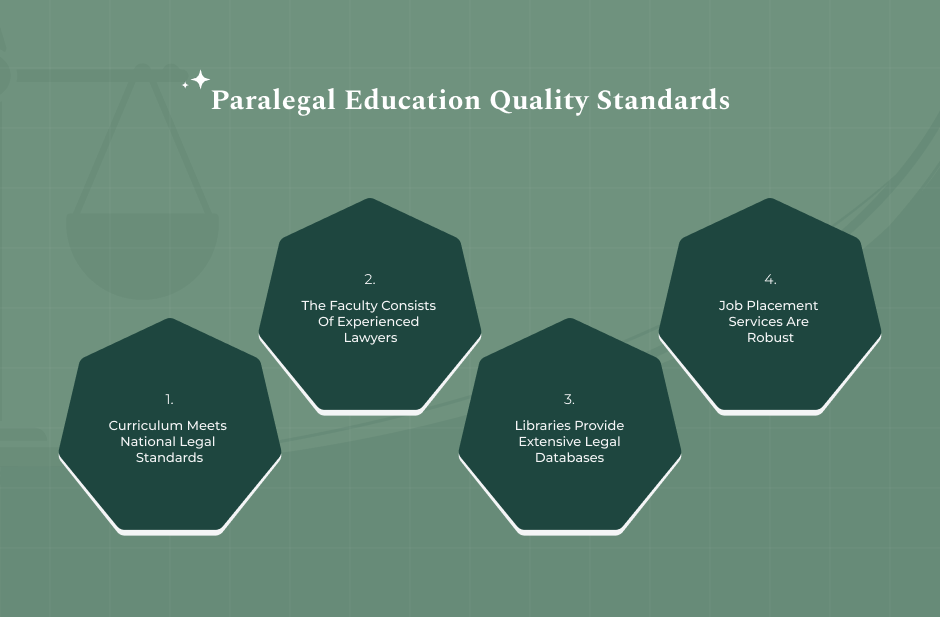
The American Bar Association has set a benchmark for law-related courses in the country. Getting into an ABA approved paralegal program signifies that your school has gone through an exhaustive analysis of its academic standards and its faculty members.
What Is The Actual Significance Of The Accreditation
The approval granted by the American Bar Association is entirely voluntary.
However, the association assesses the adequacy of its library, support facilities, and its theoretical and practical training (Source: American Bar Association).
As a result, there is likely to be more industry networking among such paralegal programs.
The Relevance Of The Accreditation In The Law Sector
Most elite law firms hire students from ABA approved paralegal programs because they believe that such candidates will have adequate knowledge about legal research methods and ethics. Therefore, such paralegals usually get higher entry-level salaries.
Federal And State Laws For Paralegal Practice
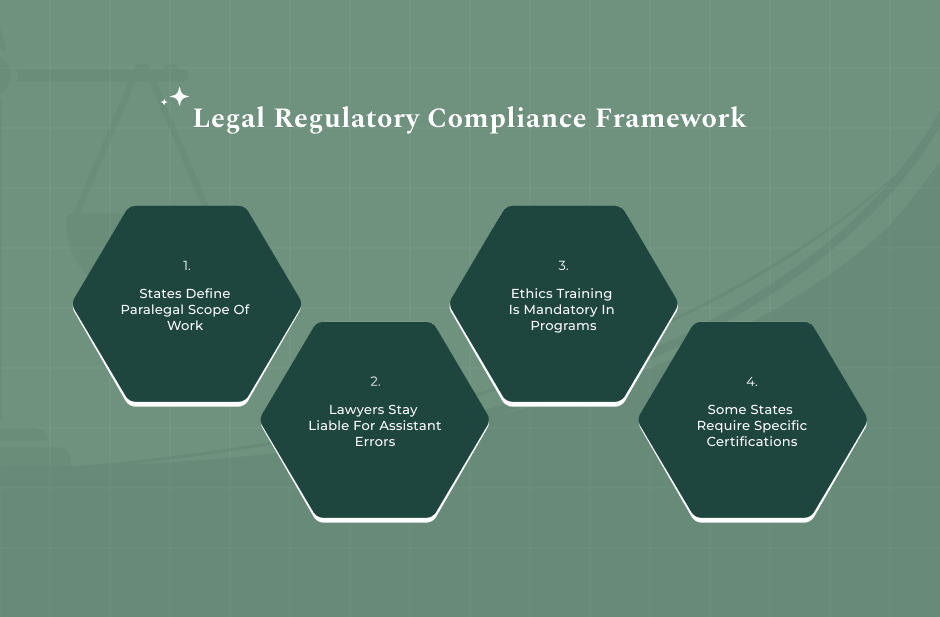
Although the law does not “license” paralegals in the United States governmentally, there are wide variations among individual states.
However, most states recognize the ABA Approved Paralegal Program as an indicator for professional credentials.
Rule 5.3 And Supervision Of Paralegal Professionals
Under the Model Rules of Professional Conduct, a lawyer is required to oversee any work done by the paralegal assistants.
Paralegal education that comes from the ABA approved paralegal programs gives these non-lawyers knowledge of the limits. The knowledge stops the unlawful practices of the legal profession.
Trends In State Requirements For Paraprofessional Licenses
In 2026, Arizona and Minnesota have shown increased responsibilities of legal professionals. For these states, a degree from the ABA approved paralegal programs is essential for limited independent practice.
Exploring Online ABA Approved Paralegal Programs
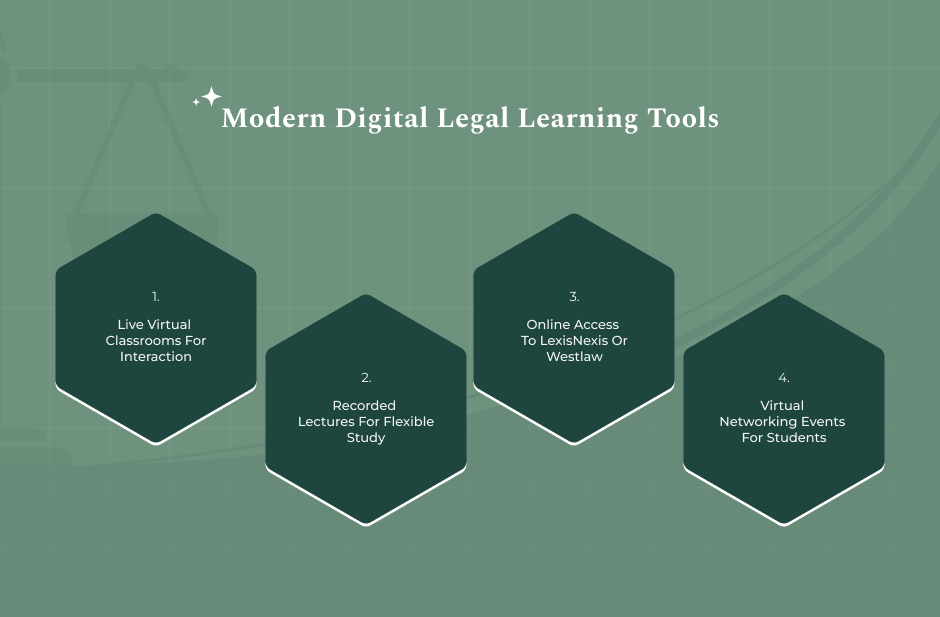
Digital learning is making it possible for students to have access to elite schools regardless of their geographical location. There are many schools that provide
Online ABA approved paralegal programs where students get similar opportunities to their peers studying in the traditional setting.
For Working Professionals
This category of paralegal programs is designed for individuals who wish to pursue further education while holding down full-time jobs.
Students enrolled in Online ABA approved paralegal programs do not sacrifice the quality of their education since most programs have live classes as per ABA guidelines.
How Can I Confirm If The Program Is Valid?
Students must verify if a program falls under the list of ABA-approved paralegal programs. There are many schools that claim to have accredited programs yet fail to prove so.
Significant Case Law Regarding Legal Education
It has happened that courts have had to handle cases that involve the standard of legal education and the position of paralegals as well.
This has made it all the more necessary for the legal system to consider the rigorous nature of the ABA-approved paralegal programs.
Florida Bar v. Furman
The case of Florida Bar v. Furman (376 So. 2d 378) revolves around the illegal practice of law. In this case, the respondent offered legal services without being an attorney.
The graduates of the ABA-approved paralegal programs are taught what exactly their job scope is, so that they can avoid any legal hassles in the future.
People v. Landlords Professional Services
The court examined “Legal Technicians” in the People v. Landlords Professional Services (215 Cal. App. 3d 1599).
It was determined that the offering of legal advice to the client was beyond clerical assistance.
This case makes one appreciate how important the difference between legal information and legal advice is to ABA-approved paralegal programs.
Analysis – What’s Missing From The 2026 Paralegal Guide
Whereas the article gives a comprehensive description of the advantages of ABA-approved programs, it falls short of mentioning important details such as the following:
- Mechanics behind approval vs accreditation.
- Exact requirements for distance learners in 2026.
- Financial aspect of such programs.
For the article to become a “complete” guide, the following sections need to be included:
Difference Between “Accreditation” And “Approval”
Students may often get confused about the wording of the two terms. ABA is responsible for accrediting law schools (the JD program) but only approves paralegal programs.
This is a crucial aspect that many may ignore. Many excellent paralegal programs can be accredited by regional agencies (HLC or SACSCOC), but they will avoid applying for ABA approval because of the hefty expenses and strict reports.
The “Synchronous Learning” Mandate
One of the critical ABA guidelines applicable to online learners is the requirement concerning synchronous credit hours. Starting from 2026, the ABA insists on the completion of not less than nine credits (or their equivalent) within law specialization courses through the “synchronous” mode of teaching.
Your guide highlights the flexible aspect, but your guide fails to inform students that “synchronous” implies that students should attend live digital classrooms at certain times, a crucial aspect for many working students.
Financial Analysis – The Cost Of Approval
The process of attaining ABA approval is costly and time-consuming, as institutions will pay for site visits and other annual costs. Therefore, ABA-approved institutions cost more than the non-approved institutions.
Missing Data
An example demonstrating that an ABA-approved extension certificate (UCLA or UC San Diego), for instance, could cost around $8,000-$10,000.
Whereas a community college certification would cost around $3,000-$5,000. Students require such financial data to assess return on investment.
Federal Government Hiring Standards
Aspiring public service candidates should note a specific detail regarding federal employment.
For example, the U.S. Federal Government prioritizes certain credentials for GS-0950 Series positions.
Specifically, it views ABA-accredited programs as the most important way to meet education prerequisites.
Consequently, this provides a unique benefit for the Paralegal Specialist career path. Furthermore, this valuable information is currently missing from the article.
Requirements For Emerging Technologies (AI And Ethical Considerations)
The legal profession now places a heavy emphasis on Generative AI and prompt engineering.
As a result, ABA-approved programs are expected to include “Technology Competency” in their curricula by 2026.
In addition, these programs are actively preparing students for the complexities of AI-based e-discovery.
By doing so, they ensure that future graduates are ready for modern legal research. Ultimately, adding this discussion would make the article much more up-to-date.
The Non-ABA Alternative – Under What Circumstances Is It Acceptable?
A fair and unbiased guide should also address scenarios under which students do not require an ABA-accredited program.
For example, if the applicant has completed a bachelor’s degree and comes from a state without paralegal legislation, a non-ABA accredited certification could suffice.
Notable ABA Approved Paralegal Programs In The USA
For locating an accredited state paralegal degree or certificate program, the official ABA Approved Paralegal Programs through the ABA Standing Committee on Paralegals is the resource one should consider.
1. Famous University Paralegal Programs
Several elite universities award paralegal degrees or certificates bearing the stamp of approval from the ABA. They tend to be favored by prestigious “Big Law” firms.
- University of California (UCLA Extension): Awards a distinguished post-bachelor certificate.
- New York University (NYU): Offers outstanding legal education with various professional certificates.
- Georgetown University: Provides a specialized paralegal program at the very center of law.
2. Popular Online ABA Approved Paralegal Programs
The online degree programs below will comply with ABA requirements in 2026 due to “synchronous” teaching which allows for interaction between students and teachers.
- Purdue Global: Features a suitable program for adult learners while retaining accreditation.
- University of Cincinnati: Known for incorporating legal technology into online learning.
- Liberty University: Offers a full-fledged platform for legal specialization classes online.
3. Regional And Community College Leaders
Often, these institutions are the least expensive entry point into the legal profession via Associate Degrees.
- Los Angeles City College (LACC): One of the principal providers of inexpensive legal education in California.
- Miami Dade College: Serves as one of the leading pipelines for the legal profession in South Florida.
- Community College of Philadelphia: Provides excellent connections to the Pennsylvania judiciary.
Criteria For 2026 Paralegal Education Programs
Choosing the appropriate educational program calls for a good knowledge of the distinction between ABA-approved paralegal programs and other non-approved educational programs.
1. Required Legal Specialty Credits
Although non-approved courses will differ, ABA-approved paralegal programs are required to offer no fewer than 18 semester hours in specialized legal specialty courses.
2. Required Live Learning Hours
As part of the approval process, ABA-approved paralegal programs must ensure that students participate in live learning for at least nine credits.
3. Preferred Employer
Major law firms and federal government organizations prefer graduates from ABA-approved paralegal programs because of their guaranteed training standards.
4. Library Access
Unlike other non-approved courses, ABA-approved paralegal programs must give students rigorous access to professional research libraries such as LexisNexis and Westlaw.
Read Also: Everything You Need To Know About Paralegal Salary In The US
How To Verify A Program’s Status
If your choice of law school is not listed here, it is imperative to confirm the credentials of the institution. While a program may be “accredited” by a regional accreditation agency, it may not necessarily be “approved” by the ABA.
1: ABA Directory Lookup
The ABA has an online directory that allows you to look up by state.
2: Look For “Synchronous” Credits
If the program is completely self-paced without synchronous classes, it is unlikely to be ABA-approved.
3: Ask Your Question
Ask specifically, “Is this particular paralegal program approved by the American Bar Association?”
Frequently Asked Questions (FAQs):
Here are some of the questions that people often ask about this topic. Take a look at them:
The answer is simple – quality. In many cases, employers are willing to employ only graduates from approved programs to avoid issues related to ethics and professionalism.
There are several options out there. Nevertheless, ABA insists that there must be at least nine credits of specialty in legal classes, which have to be taken either face-to-face or online in a synchronous manner.
Absolutely, you can check it out on the official ABA site.
These programs provide rigorous ethics training. Students are taught what activities are permitted only by a duly licensed lawyer for his/her clients.
The typical amount of credits is 60 per semester. That should be a combination of general credits and 18 credits on specialty courses.
Most likely yes because law firms see such graduates as well-prepared. It means less training costs for the firm and higher earnings for you.
Most ABA Approved programs have career services. They develop relationships with law firms in your area that believe in their curriculum quality.