“What would happen if your car were stolen and you didn’t have auto insurance?”
Parking your car and later discovering that its not there – someone has stolen it – can be really disturbing. However, what might make matters worse is not having car insurance.
This is something that can make the incident into a major legal and financial headache. Without insurance, you are basically without your most potent tool in getting your vehicle’s value back.
So, what really happens in such a case? And how can you protect yourself legally and reduce damages?
You see, it does not stop at immediate reporting. Rather, that’s just the beginning of the chain of events.
If you want to know all about it, keep reading!
What Would Happen If Your Car Were Stolen and You Didn’t Have Auto Insurance?
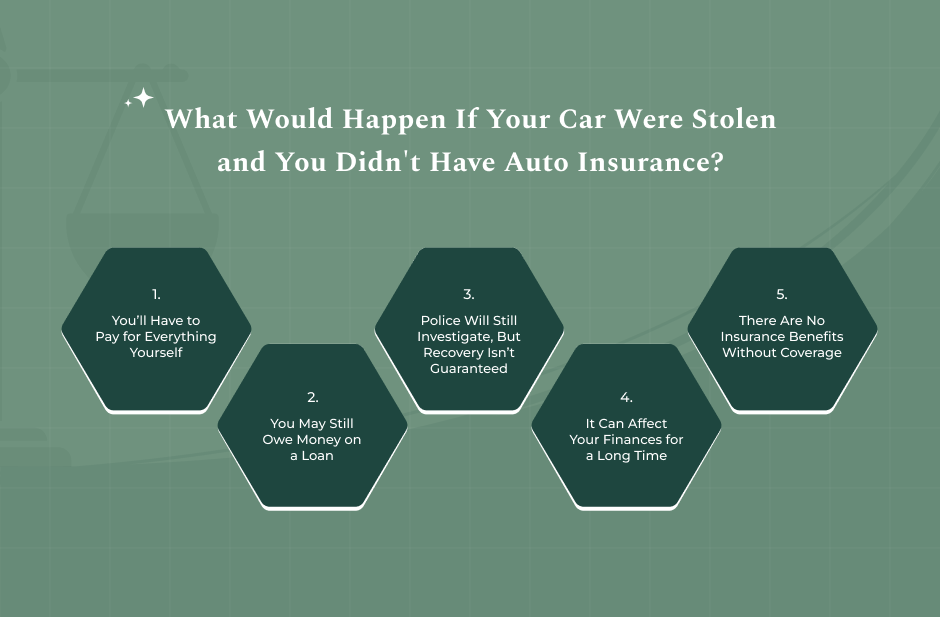
When your car is stolen and you don’t have insurance, things can get tricky. You’re left without a car, money to replace it, or help from an insurance company. Here’s what you can expect:
1. You’ll Have to Pay for Everything Yourself
If your car is stolen and not recovered, you’ll likely have to buy another car with your own money. Insurance usually helps pay for a stolen car—but without it, that help is gone.
2. You May Still Owe Money on a Loan
If you were paying off a car loan, you might still need to keep making payments—even if the car is gone. The lender doesn’t cancel your debt just because your car was stolen.
3. Police Will Still Investigate, But Recovery Isn’t Guaranteed
You should report the theft to the police right away. They’ll try to find your car, but sadly, many stolen cars are never found. Or if they are, they may be damaged.
4. It Can Affect Your Finances for a Long Time
Not having a car can make it harder to go to work, run errands, or pick up your kids. That loss of transportation can lead to lost wages or new expenses.
5. There Are No Insurance Benefits Without Coverage
If you had comprehensive car insurance, it could’ve helped you replace the stolen vehicle. Without insurance, you won’t get that financial cushion.
Immediate Consequences Of Uninsured Car Theft
When it comes to the immediate consequences, we would like to divide them into two: financial and legal. These are as follows:
Immediate Financial Impacts
- Total Asset Loss: In the event that your car gets stolen, you won’t have any financial recourse unless you have comprehensive coverage. Comprehensive insurance compensates you for the vehicle’s actual cash value (ACV), whereas if you are uninsured, you will get no money back.
- Continuing Loan Repayments: Even if someone has stolen your vehicle, and you are unable to use it, the theft of the car will not release you from debt. Therefore, you have a legal responsibility to continue making monthly loan payments to the lender even though you will no longer be in possession of the car.
- Dues of Recovery and Storage: Should the police get hold of your vehicle, all fees for towing and impound lot shall be borne by you. Also, you must bear any expenses related to the repair of damages or the replacement of missing parts.
Legal Issues And Liability
- Liability Received vicariously: It becomes essential that you report the theft as soon as possible if you are to be at any point infection-free from vicarious liability. A thorough police report acts as a legal safeguard and protects you from liability in the event the thief uses the car to cause an accident, property damage, or commit other crimes.
- Record Keeping for Administrative Purposes: To make sure that the administration has marked the title as “stolen”, you have to inform the DMV. This makes it impossible for the thief to legally sell or re-title the vehicle.
In the absence of the insurer’s assistance in handling these matters, a car owner has to personally deal with the complex maze of police, lenders, and state bodies.
Strategic Recovery And Liability Mitigation: What to Do When A Car is Stolen Without Insurance?
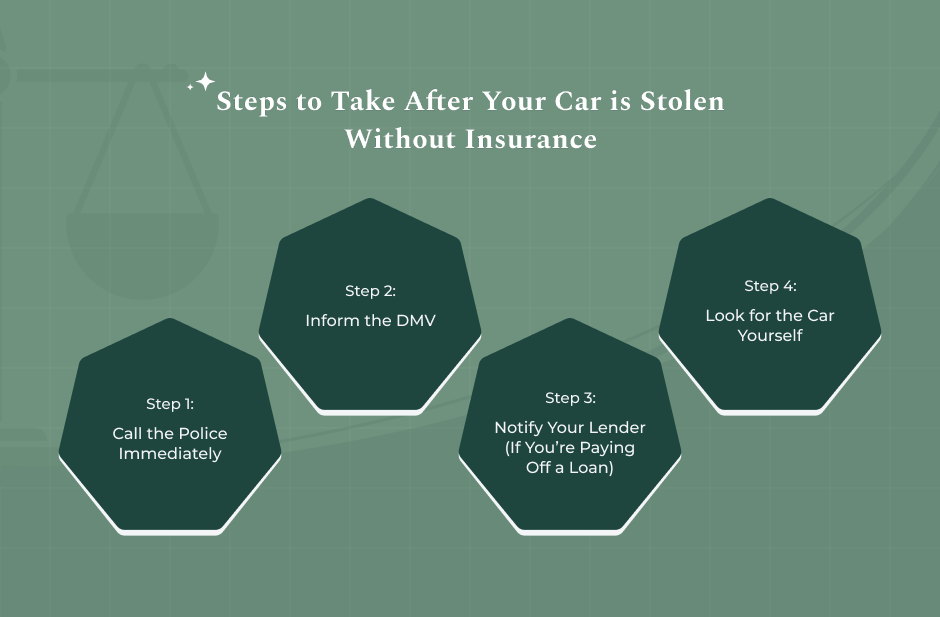
Even if you don’t have insurance, there are still steps you can take to protect yourself and increase the chance of getting your car back.
1. File An Immediate Police Report
First of all, reach out to your local law enforcement without any delay to register a formal complaint.
Share the vehicle’s identification number (VIN), license plate number, and any other features that can uniquely identify it.
Registering this complaint will be your foremost legal protection if a criminal uses the car to commit another crime. Or get involved in a collision, thereby freeing you from any indirect liability later on.
2. Formally Notify The DMV
Make the DMV aware that someone has stolen your car.
This is one of the most important administrative step in the chain that confirm the state officially considers the vehicle as a theft, thus blocks the thief from legally passing the title or changing the registration of the vehicle.
3. Contact Lienholders And Lenders
In cases of an unpaid car loan, alert your car finance company straight away. Incarceration does not mean that you have been released from your contract to repay the loan.
Initiating the conversation early can be your way to bargaining for a temporary suspension of payments or debt restructuring during the time of your loss.
4. Conduct Private Due Diligence
Finally, help the official inquiry by keeping an eye on the online markets and any local impound records.
Should you find the car, get in touch with the police instead of a private recovery, since a self-help repossession not only involves considerable physical and legal risks but also the possibility of criminal behavior.
What Car Insurance Coverage Includes Stolen Cars?
If you’re planning to get car insurance or wondering what kind of coverage helps in these situations, here’s what you need to know:
Comprehensive Insurance
This is the only primary coverage that pays you back in the event of vehicle theft. “Comprehensive coverage pays out for car theft and certain types of vehicle damage, up to the actual cash value of your car, minus your deductible.” (Source: Forbes)
It also pays for repairs if you find your car, but it is damaged – for example, with shattered windows or theft of the ignition.
Liability-Only Insurance
Secondly, there’s a liability-only insurance policy. However, such a policy will be of no help to you if someone steals your car.
What it will do for you is cover any legal and financial responsibilities to third parties for injuries or damage to property that you have caused.
Gap Insurance
Third, Gap insurance is great for cars that are either financed or leased. In case of total loss (such as theft), insurance compensation often does not cover the outstanding amount of the loan because of the car’s rapid depreciation.
Gap insurance fills in this particular monetary “gap” between the insurance payout and the loan amount.
Rental Reimbursement
Finally, the rental reimbursement is an optional extra. Typically, a standard comprehensive coverage will not include a rental car. So, you can add this to your existing comprehensive insurance.
It covers a daily amount for a rental car or other kinds of transportation (for example, ride-sharing or public transportation) while your theft claim is under review.
Read Also: