Types of lawyers in India are an essential part of keeping the massive legal system of the world’s largest democracy running.
As of 2026, the legal system is changing at a rapid pace with the implementation of new guidelines by the Supreme Court regarding the selection of senior advocates and the development of digital courts.
At present, the Bar Council of India is holding the AIBE XXI exam with a last date for registration as April 30, 2026, which is a prerequisite for all new lawyers (Source: Bar Council of India).
Moreover, the Full Bench of the Supreme Court has changed the criteria for senior designation to be more skill and experience-oriented and not merely points-oriented (Hindustan Times).
In this article, we will elaborate on the following:
- The primary classifications of legal practitioners in the Indian court system.
- Specialized legal roles ranging from criminal defense to corporate compliance.
- The current educational trends and technological shifts in Indian law.
- How foreign nationals can interact with the Indian legal market under the new 2026 rules.
Primary Categories Of Legal Practitioners
The Indian legal system classifies lawyers according to their area of specialization and their position in the Bar. Most people first consult a general lawyer before consulting the special types of lawyers in India to deal with complex issues.
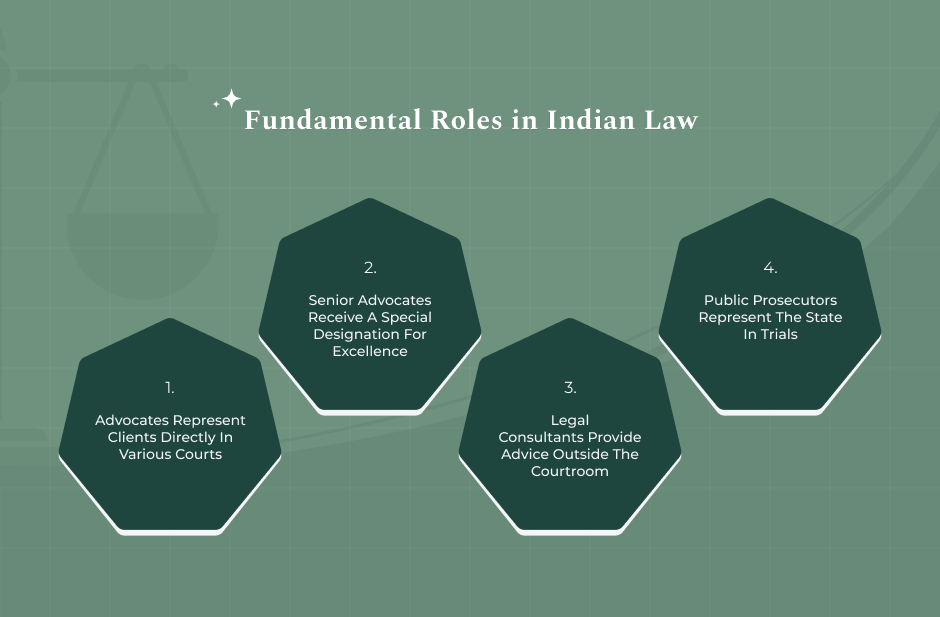
Advocates And Senior Advocates
An advocate is the most fundamental title given to anyone who has cleared the Bar exam and enrolled with the State Bar Council.
Senior Advocates are those who have been identified by the Supreme Court or High Courts for their outstanding knowledge and presence at the bar.
Solicitors And Legal Consultants
How do the words “solicitor” and “advocate” differ in the legal settings of India? Well, one could say that these are all different types of lawyers in India.
In metropolitan cities such as Mumbai and Kolkata, a solicitor is the type of lawyer who will carry on duties like drafting and dealing in advisory matters.
On the other hand, legal consulting firms or practice individually, advising on out-of-court settlements and contract management.
Criminal Defense And Prosecution Specialists
Criminal law is one of the most popular areas when it comes to the different types of lawyers in India because it is related to the protection of basic rights.
These lawyers practice the Indian Penal Code (IPC) and the Code of Criminal Procedure, which have undergone extensive procedural digitization in the last few years.
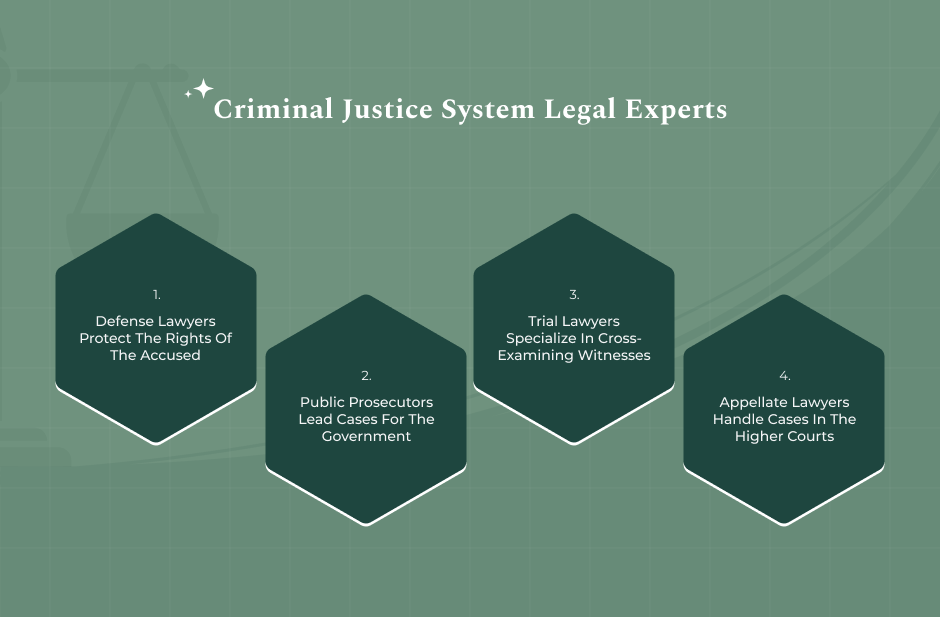
Criminal Defense Lawyers
A criminal defense lawyer is one of the most popular types of lawyers in India. These are professionals who help an accused with their defense when charged with criminal acts.
Once you hire them, their duties include carrying on investigations on the matter, preparing bail applications, and the like. Additionally, they accompany their clients to heated trial sessions to ensure a fair outcome.
Public Prosecutors
Public prosecutors are government officials appointed to handle criminal cases on behalf of the government.
They closely collaborate with the police department to build cases and ensure the conviction of the accused on the basis of the law.
Corporate And Commercial Legal Experts
The Indian economy has generated a huge demand for corporate lawyers in India who are aware of international business norms.
These lawyers help companies remain in compliance with the Companies Act and other laws related to industries.
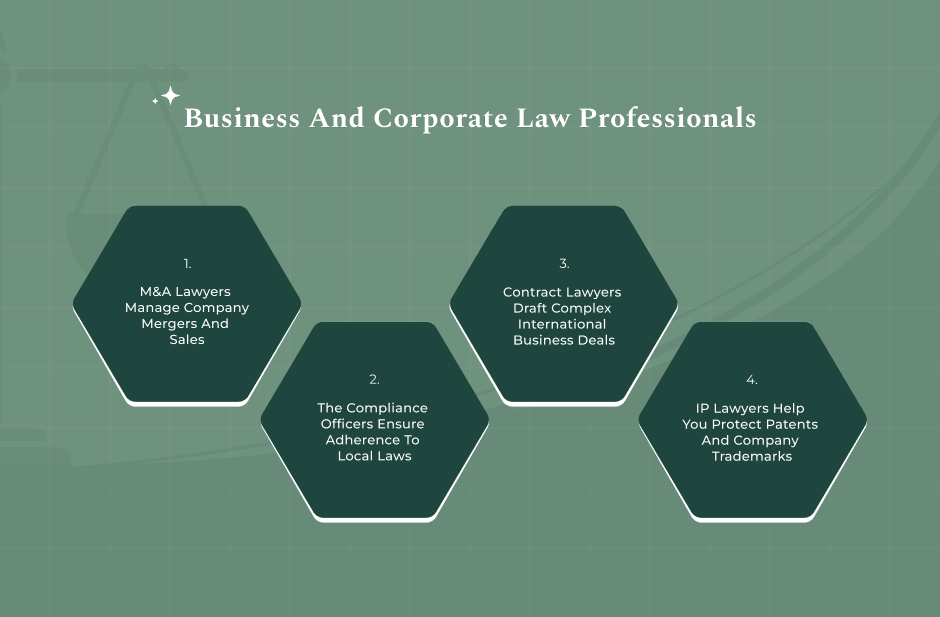
Mergers And Acquisitions (M&A) Lawyers
Mergers and Acquisition lawyers are one of the very important types of lawyers in India. They handle the purchase, sale, and merging of business entities.
Additionally, they also seek due diligence, making sure that the client is not being secretly burdened by hidden legal risks while taking a corporate deal.
Intellectual Property (IP) Lawyers
IP lawyers safeguard the artistic and scientific productions of artists, authors, and technology firms.
They assist in the registration of patents, copyrights, and trademarks, which is important in the developing startup culture of 2026 in India.
Civil Litigation And Family Law Lawyers
Civil law encompasses a broad spectrum of disputes that do not involve criminal offenses, such as disputes over property or the violation of contracts.
When searching for types of lawyers in India, families often turn to civil lawyers to help them with their long-standing disputes over ancestral properties.

Family Lawyers
Family lawyers are involved in dealing with very sensitive cases such as divorce, maintenance, and adoption.
They also work as mediators to settle the dispute by mutual consent before presenting it to a family court judge.
Property And Real Estate Lawyers
Because of the complexity involved in land records in India, property lawyers play a very important role in dealing with the verification of titles and the sale process.
They assist clients in preventing any fraud and ensure that all property transactions are valid and registered.
New Forms Of Specialized Lawyers
With the increasing advancements in technology, new types of lawyers are joining the legal fraternity to fight new challenges such as cybercrime and environmental issues.
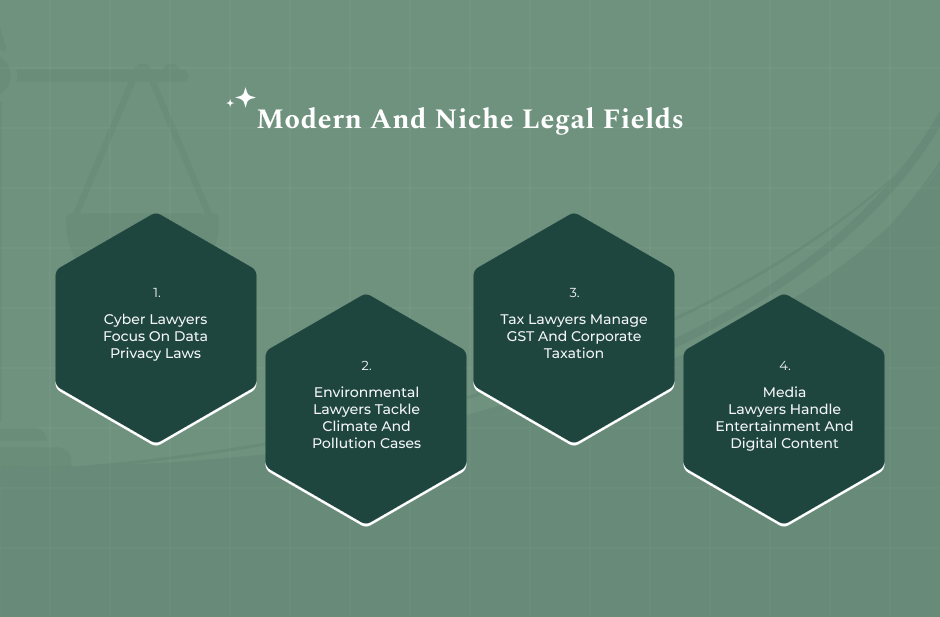
Cyber And Technology Lawyers
It is 2026, and it is time for new data protection laws. Thus, cyber lawyers are the types of lawyers in India that are in great demand.
They are here to protect you against data breaches. Cyber lawyers counsel tech companies and individuals on their rights in cyberspace and represent victims of cyber fraud.
Environmental Lawyers
These lawyers specialize in laws concerning conservation and environmental issues. They usually work with organizations or government agencies to ensure that industrial projects do not contravene the standards of environmental protection.
Legal Education And Technology Trends
By 2026, the manner in which types of lawyers in India are educated will have changed to a more practical and technology-infused method of learning.
Law schools incorporate AI-assisted research tools and simulated court hearings into their curriculum. (Source: Commercial Law Publishers)
Experiential Learning
Students now participate in mandatory internships and legal aid clinics to gain hands-on experience.
Virtual Courts
The Indian judiciary has expanded the use of virtual hearings, making it easier for lawyers to appear from different cities.
AI Research
Most top-tier firms now use artificial intelligence to scan thousands of previous judgments in seconds.
Global Integration
Indian law firms are increasingly partnering with foreign firms to handle cross-border arbitration.
Frequently Asked Questions (FAQs):
Indian or not, you may still have questions in your mind about the types of Lawyers in India- the kind that would best serve your legal need. In this FAQ section, we answer these questions on the types of lawyers in india and how they function.
No, an American lawyer cannot practice Indian law or represent clients in Indian courts. However, according to the 2025 BCI rules, foreign lawyers can now register to provide advisory services on international law and cross-border arbitration in India (India Briefing).
Although both are often used interchangeably in everyday language, “Advocate” is the actual legal term recognized under the Advocates Act, 1961. A “Vakil” was a former legal designation from the British colonial period, but currently, all lawyers practicing in court are required to be registered as Advocates.
Yes, there are lawyers who specialize exclusively in NRI (Non-Resident Indian) matters. These lawyers deal with property, repatriation of money, and family matters in which one spouse is living outside of India.