Legal malpractice is a kind of negligence. It is characterized by the absence of professional conduct by an attorney in terms of skill and competence.
Every person using the services of an attorney wants the latter to provide adequate, professional, and honest assistance. Unfortunately, attorneys may sometimes commit errors that can affect the client’s property or freedom.
Knowing what is legal malpractice will enable you to understand that a loss in court proceedings does not mean that an attorney did anything wrong.
Malpractice in law takes place when a lawyer fails to provide competent service and causes losses for his or her client due to poor service.
The former client is required to prove to the court that the attorney failed to fulfill its duties and that a particular loss was caused due to negligence and cannot be otherwise justified.
The key point for any litigation concerns whether the attorney provided the necessary “standard of care” for a lawyer under similar circumstances.
At present, as of April 2026, there is a special interest in the issues related to the mistakes made by AI systems. One of the cases currently discussed is Mata v. Avianca, Inc. (2023).
In this article, we will elaborate on the following:
- The four essential elements required to establish a valid claim.
- Common examples of attorney negligence in the modern era.
- The “but-for” causation rule and how to prove a loss.
- Financial aspects including insurance and case valuations.
The Four Elements Of A Legal Malpractice Claim
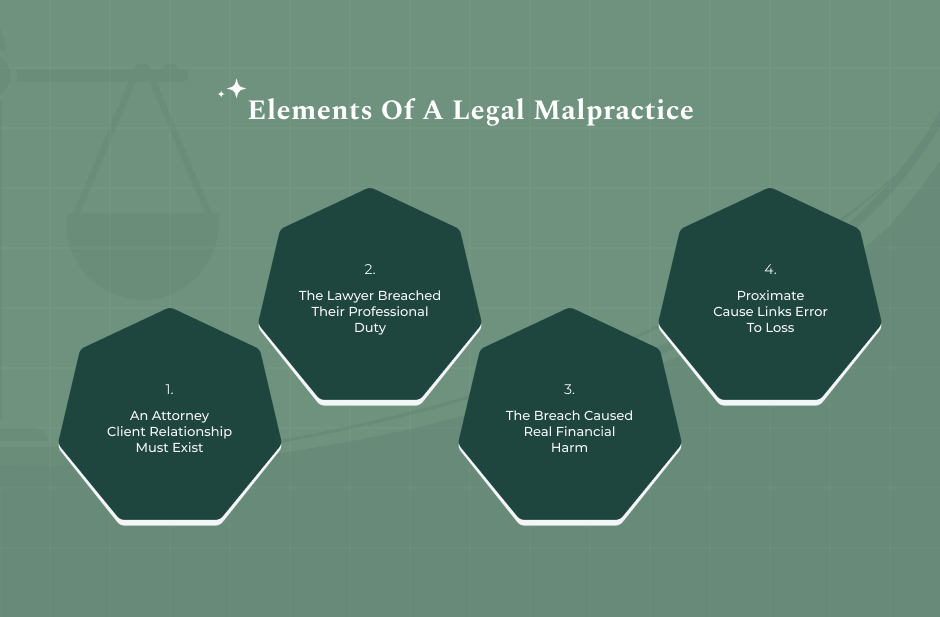
In order to succeed in a legal malpractice suit, the plaintiff must demonstrate four distinct elements, which, if not proven, will result in the case being dismissed by the judge before it goes to trial.
Proving The Attorney-Client Relationship
For one to sue for legal malpractice, it must first be established that the plaintiff hired the lawyer.
This relationship is usually established through a signed written contract, although a verbal agreement works as well.
Once an attorney agrees to work for a client, he or she is bound to act in the best interest of the client.
Duty To Meet Standard Of Care
The “standard of care” is a guideline set up for the evaluation of how competent the lawyer was. This standard basically determines what a reasonable lawyer should do in such a case.
Defining Professional Breach Of Duty
A breach takes place where the attorney commits an error that a reasonable peer does not make.
It may be as simple as failing to meet deadlines or as complex as failure to conduct proper research on a law applicable in your case (Source: Sacramento County Public Law Library).
Establishing Proximate Cause And Damages Caused
Mistake made by the lawyer should be what caused the loss suffered by the client. In particular, it should be demonstrated that you would have won the original suit without the mistake made.
The Proximate Cause
Proximate cause simply implies that the damage caused is related to the error committed.
Where there is some factor causing the damage, then the lawyer may not be liable for the act. The error made by the lawyer must have been the ‘but for’ cause of the damage.
Measuring The Financial Damage Incurred
The damages would be your financial loss arising out of the malpractice. The damages can be in the form of losses from not settling or even repairing the wrong done to you. Being upset about the attitude of the attorney does not constitute malpractice.
Professional Liability Laws
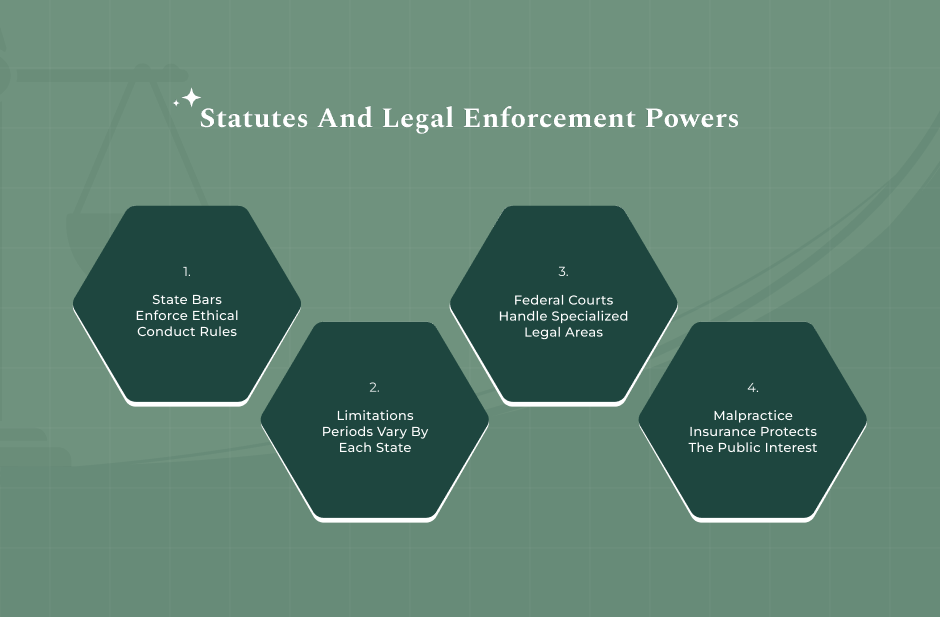
Malpractice lawsuits against lawyers generally take place in state courts, since the licensing of attorneys occurs on a state-by-state basis.
There are separate “Rules of Professional Conduct” for each state that all attorneys must adhere to without deviation.
For instance, the rules for lawyers in Colorado underscore their duty of loyalty and confidentiality, as mandated by the state’s unique laws. (Source: Colorado Bar Association)
Although there is no overall malpractice law at the federal level, federal courts deal with federal matters such as patent laws, bankruptcies, and federal taxation.
If an error occurs in any of these federal filings made by a lawyer, the affected party may file suit based on state negligence laws.
Role Of State Bar Associations
Each state bar establishes the code of ethics for every lawyer in its jurisdiction. Failure to adhere to such ethics would result in the suspension of the license.
The violation of ethics will also be a piece of evidence presented during a legal malpractice suit.
Filing Statute Of Limitation
Each state establishes time limits within which a claim should be filed against a lawyer. For example, some jurisdictions provide one or two years after knowing about an error made by a lawyer.
Failing to file within this period makes a case time-barred, and thus a lawyer cannot be sued anymore.
Compulsory Disclosure Of Legal Malpractice Insurance
A few states require that lawyers disclose whether they possess any malpractice insurance.
The purpose is to determine whether a person will get their compensation or not when making a claim.
One common question many people ask concerns how much legal malpractice insurance is.
Common Examples Of Attorney Negligence And Errors
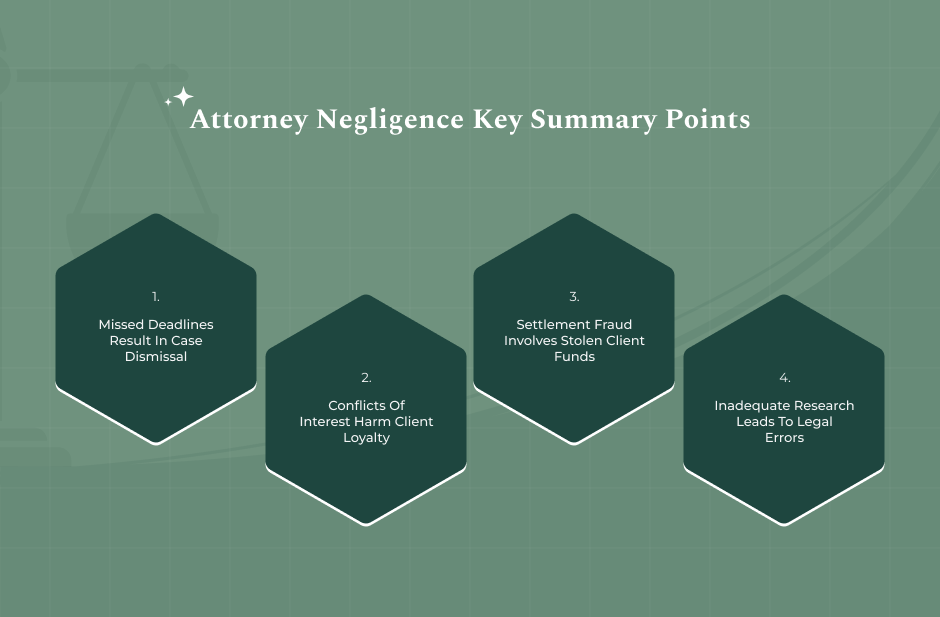
There are several causes for legal malpractice suits. In the majority of cases, the cause was due to administrative error or communication issues. But there are other cases that involve unethical conduct or conflict of interest that damages the plaintiff’s case.
Misdemeanor In Statute Of Limitations
A very common misdemeanor that qualifies as legal malpractice is the mismanagement of the statute of limitations.
If your attorney delays filing your case by just one day, it will be thrown out of court. It is nearly impossible to have a legitimate reason for such an administrative lapse.
Consequences Of Administrative Malfeasance
A simple oversight in scheduling the court proceedings can cause a case to fail. The negligence of an attorney on the administrative side will inevitably affect the client negatively, which means it is definitely a violation of the duty of diligence.
Failure To Adhere To Court Order
An attorney who fails to deliver evidence when ordered to do so will have consequences for his/her client.
The judge will issue sanctions that can prevent the use of some of the witnesses. This is certainly legal malpractice (Source: Stalwart Law Group).
Conflict of Interests and Ethical Violations
The lawyers are not supposed to act as advocates for two parties who have conflicting interests.
An attorney cannot handle both sides during a divorce process, such as being the attorney for both the husband and wife.
In such cases, the attorney has to inform the client and seek his or her consent.
Financial Malpractice
It is prohibited for a lawyer to exploit a client’s case and make financial gains from it. In addition, any deal-making that occurs between the lawyer and client without sufficient warning is a very dangerous indicator of malpractice.
Violating the Attorney-Client Privilege
Lawyers should protect client confidences against third party intrusions. Disclosure of the client’s confidential information by the lawyer will affect the reputation of the client or even ruin his case.
Proving The Case – The But For Causation Rule
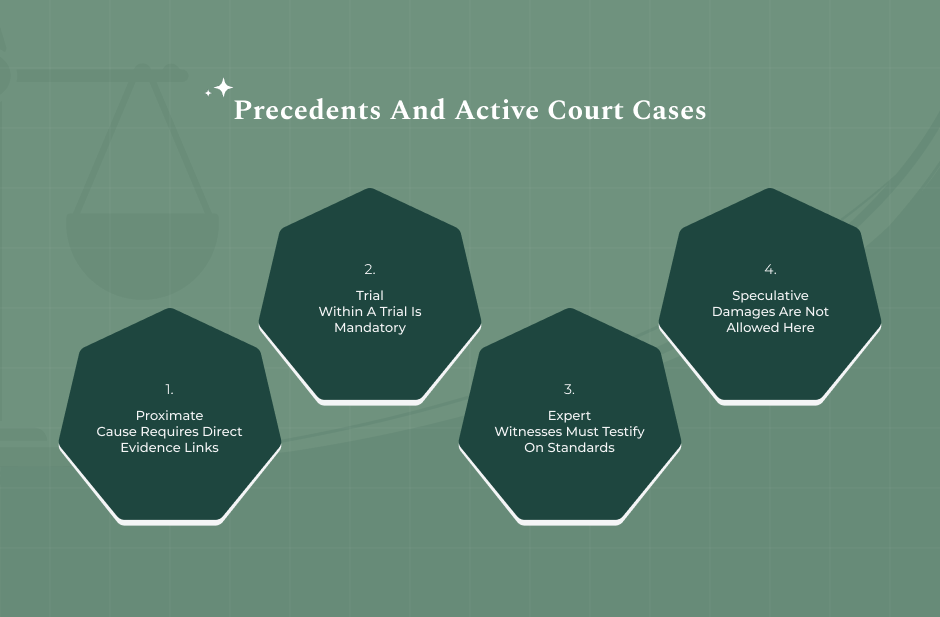
The main issue that the clients are interested in is how one can prove legal malpractice successfully.
According to the “but-for” causation rule that is used by courts, one needs to show that “but for” the negligence on the part of the attorney, they would have had a different outcome.
As opposed to other lawsuits, legal malpractice claims present a real challenge since one needs to undergo a trial within a trial process. One needs to demonstrate the actual case and at the same time to establish the negligence of the lawyer.
Navigating The Trial Within A Trial
To be able to succeed, one needs to adduce all the evidence that was gathered for his/her original case.
In other words, one will need to show the jury what the results should have been if the lawyer did not commit malpractice.
The Necessity Of Expert Testimony
One will need to invite an “expert” witness who will testify about the case in front of the jury.
This person will provide an explanation regarding the nature of the actions performed by the lawyer.
Proving That The Original Case Had Any Merits
In case your original case had little to no merit at all, then you may still have lost your case of negligence despite the errors committed by the lawyer. It is simply not in the law that clients be compensated for a meritless case.
The Financial Realities Of Malpractice Cases
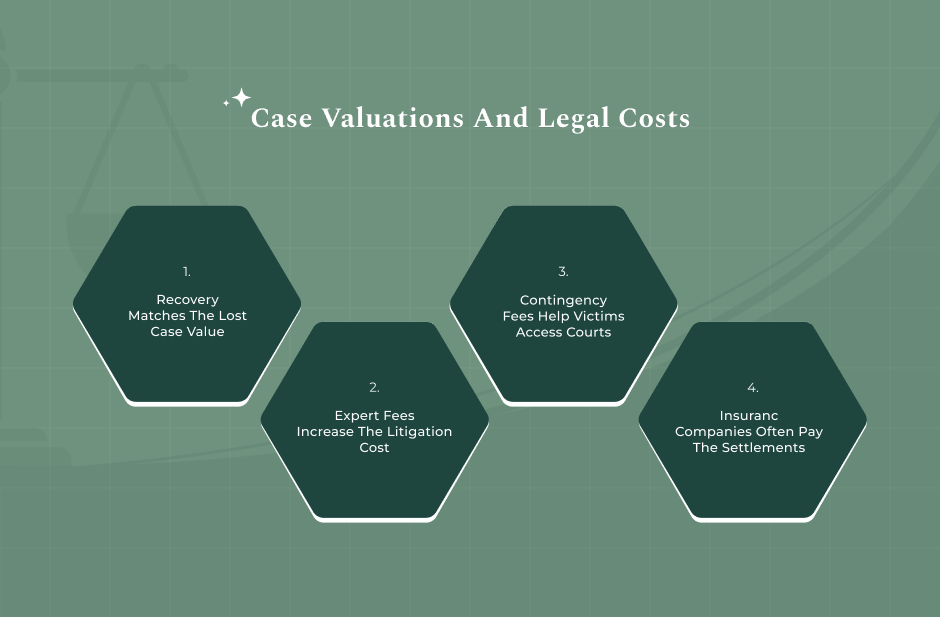
As part of considering the initiation of any lawsuit against a legal professional, you will have to think about the financial implications associated with legal malpractice cases, i.e., what does a legal malpractice case typically cost?
This cost will be the amount of the “lost opportunity,” or how much money you could have earned from your lawsuit had it been handled properly.
Insurance Limits And Insurance Coverage Realities
Just like doctors, lawyers will buy insurance against their mistakes. How much legal malpractice insurance is available in a given case?
You need to know how much is legal malpractice insurance for an entire law firm in order to determine your likely compensation in such a case.
Legal Malpractice Litigation Costs
Malpractice cases cost a lot of money. Expensive legal experts and many pages of documents must be provided in order to prove your claim. A majority of victims will take on the legal costs using a contingency fee.
Settlement Values And Court Settlements
Most insurance providers would choose to settle a case rather than go to a trial where there is no guarantee of winning. Legal malpractice cases usually settle instead of going to court.
Questions To Help You Understand Legal Malpractice Claims
These paragraphs answer common questions about lawyer mistakes and how one should go about fixing them. The keyword legal malpractice has been used to make sure you are clear about what you are looking for.
Common legal errors that lead to legal malpractice include failing to observe the statute of limitations, not conducting proper discovery, and conflicts of interest.
In 2026, legal malpractice cases due to data breaches and artificial intelligence have become common. For a claim to be termed legal malpractice, there must be a monetary loss.
Initially, you must obtain your entire file of documents. Next, meet with an attorney experienced in handling legal malpractice cases.
Your attorney will determine whether your mistake was one of negligence and whether it caused any monetary damage to you.
A lawyer is considered legally liable for malpractice only when he/she gives unfavorable advice that is unreasonable. When there is an element of ambiguity in the law, giving unfavorable advice may not amount to malpractice. It is up to you to prove that the advice was in breach of your duties.
It is important to note that each legal malpractice claim varies according to its circumstances. A lawyer who loses a case involving a $1,000,000 personal injury lawsuit is likely to compensate for $1,000,000 worth of damages.