The dream of many legal practitioners who wish to serve in the public interest and know how to become a judge is an important career path.
This career path represents the pinnacle of the American legal system. In 2024 and 2025, many states have revised their judicial conduct rules to promote transparency.
Currently, there are many judicial vacancies under review in 2026, which can provide opportunities for many.
The vast majority of judges start out as attorneys before ever becoming a judge. The timeline can take twenty years from the beginning of law school to the first appointment.
In this article, we will elaborate on the following.
- The educational requirements for future judges.
- Essential legal experience and bar membership.
- The difference between federal and state judicial paths.
- The election and appointment processes in the USA.
Laws On Judicial Selection
The American judicial system follows a dual court system that outlines the steps to become a judge in different capacities.
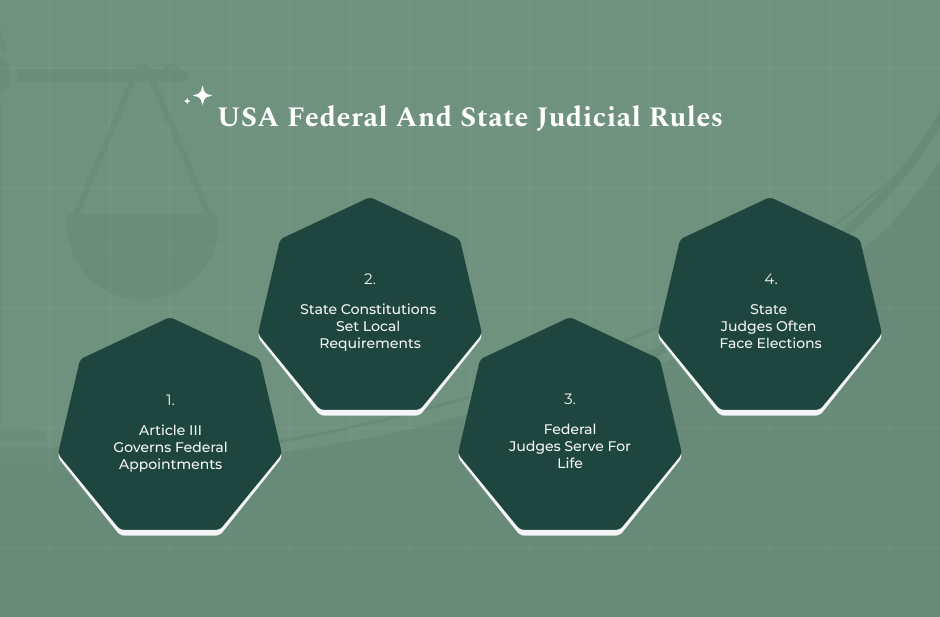
The power of federal judges is derived from Article III of the Constitution. State laws govern the selection of magistrates and superior court judges.
The Federal Judicial Appointment Process
The federal judges include those in the Supreme Court, appellate, and district courts. The President of the United States selects these judges. Once a nominee is identified, a hearing takes place before the Senate Judiciary Committee.
State Level Qualifications And Rules
The rules on how to become a judge in different regions are wildly different when viewed from a state perspective. In some regions, such as California, a candidate must have a minimum of ten years of law practice.
The Role Of Judicial Nominating Commissions
Many states use commissions to screen applicants before the Governor makes a choice.
These commissions assess a person’s integrity, legal knowledge, and temperament. They try to remove politics from the courtroom as much as possible.
Minimum Age And Residency Requirements
You must live in the area you serve, in most cases. You must be a citizen of the U.S. in almost all cases. There are some exceptions in local courts regarding age, but most judges are middle-aged professionals.
Educational Foundations For Aspiring Judges
It is not possible to learn about becoming a judge without first becoming a very skilled lawyer. The educational path is a long one that demands a massive commitment to academic excellence.

Undergraduate Degrees And Law School Prep
Most judges begin their education with a bachelor’s degree in political science, history, or philosophy. Although a particular major is not necessary, these fields will help you improve your analytical skills. You must have a high grade point average to attend a first-class law school (testmaxprep.com).
Earning Your Juris Doctor Degree
While in law school, you will be exposed to constitutional law, civil procedure, and ethics. You should also participate in law review or moot court to set yourself apart. This will demonstrate to a law school admissions committee that you can handle the research skills necessary to be a judge.
Specialized Legal Certifications
Some judges seek a Master of Laws degree after initially graduating. This is an additional year of education that focuses on a specific niche. It is a sign of a high level of expertise, which can be impressive to the appointing committee.
Continuing Legal Education Requirements
Once you have become a judge, there is a requirement for further education. In most states, judges are required to take further education on new laws on a yearly basis. This is to ensure that all judges are aware of any new changes in the legal world.
Gaining Necessary Legal and Professional Experience
If you wish to become a judge, you must first realize this is not a position that can be attained without a number of years of legal experience in the real world, having a reputation as a fair and knowledgeable individual in the law from your peers.
The Importance Of Trial Experience
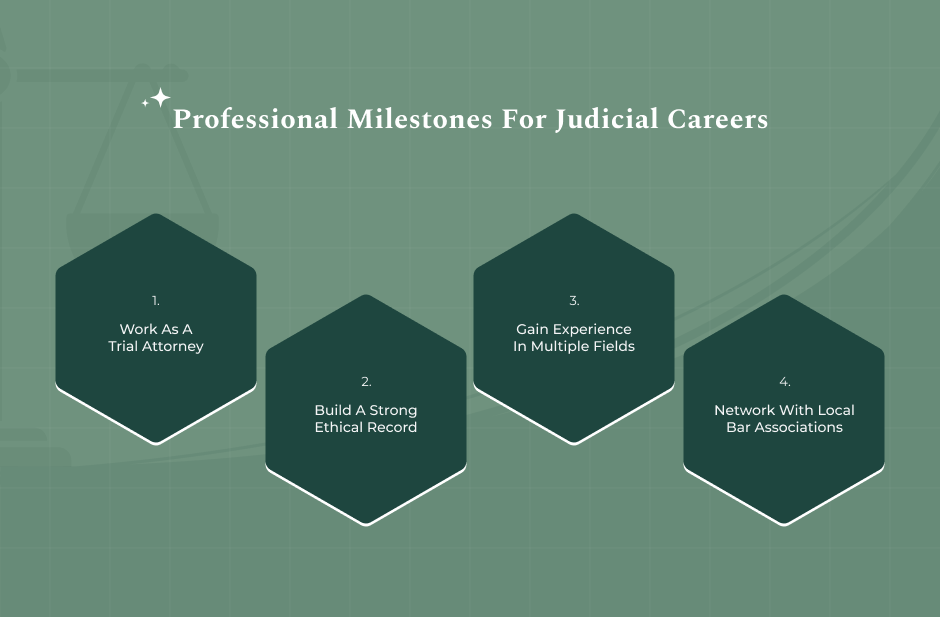
Most successful judicial candidates possess extensive experience in the courtroom as litigators. Whether you are a prosecutor or a defense attorney, it is important to understand the procedures.
This is important because it is essential to the question of how to become a judge successfully (pba.edu) [Palm Beach Atlantic University].
Serving As A Clerk Or Magistrate
Judges often start their careers as law clerks to high-ranking members of the bench. It is important to get the behind-the-scenes view of the decision-making process. It is also important to learn the temperament required to be a judge.
Achieving Partnership Or Senior Roles
Appointing bodies often look for candidates who have reached senior levels in their firms. Leadership roles prove that you can manage a heavy caseload and lead a team. It also demonstrates that you have the respect of other legal professionals.
Pro Bono Work And Community Service
Volunteering for legal aid or community boards helps build your public profile. Judges are public servants, so showing a commitment to the community is helpful. It also expands your professional network beyond the legal field.
The Appointment And Election Processes In America
The final step in how to become a judge involves either a political appointment or a public election. Each method has its own set of challenges and requirements for the candidate.
Running A Judicial Election Campaign
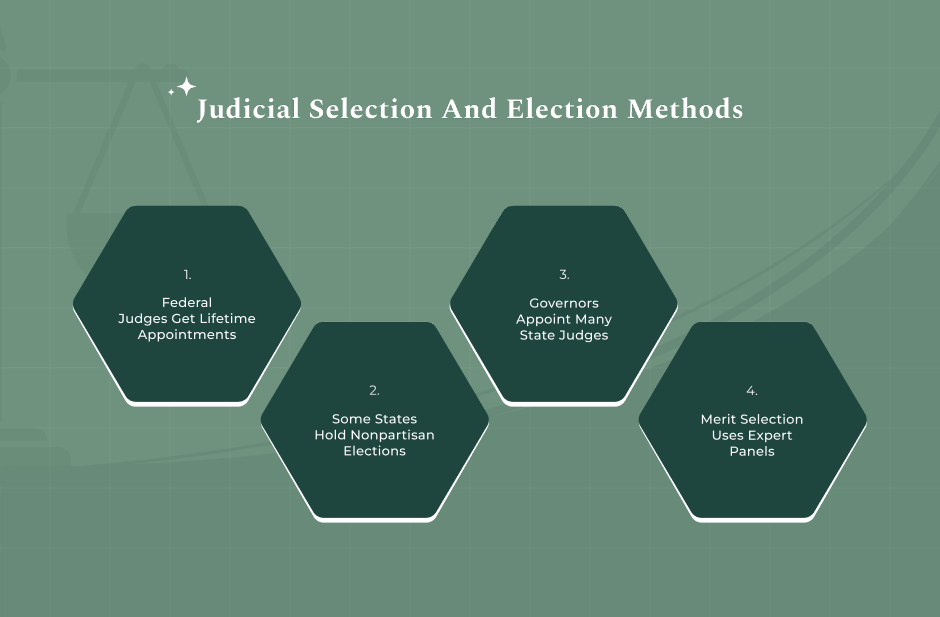
Some states allow voters to select judges in the general elections. This means that the candidate has to fundraise and campaign among voters. However, there are very strict ethical codes on what you can say in a campaign.
The Vetting Process For Appointments
When a Governor or the President appoints a judge, the process of evaluation is very rigorous. They will look at every case you have ever handled, every speech you have ever made.
Any indication of bias or poor judgment can mean the end of your judicial career before it has begun (Source: criminaljusticeprograms.com).
Partisan Versus Nonpartisan Elections
Some states even indicate the political party to which the judge belongs on the ballot. Other states prefer to maintain the ballot as non-partisan to emphasize the candidate’s qualifications. The controversy over “politicizing the bench” remains a burning issue even in 2026.
Retention Elections For Sitting Judges
In some states, the judge is appointed first and is subject to a “yes or no” vote later. It provides the public the option to oust a judge who is not functioning well.
Significant Case Law And Modern Judicial Trends
The law also determines the extent of power enjoyed by judges and how to become a judge. There have also been significant arguments in recent times concerning judicial ethics and outside money.
The Case Of Caperton v. A.T. Massey Coal Company
In 2009, the Supreme Court made a landmark decision concerning judicial bias. A judge had accepted huge donations to his campaign from an executive whose case was being heard in court.
The Supreme Court ruled that the judge should have recused himself to ensure a fair hearing. This case has greatly impacted how judicial candidates raise money for their campaigns.
The Current Challenges Facing Judicial Appointments
In 2025 and 2026, various states were facing legal battles concerning diversity on their benches. This has led to a number of states changing their selection committee to ensure that they reflect the diversity of their population.
Standards Of Judicial Conduct
The American Bar Association provides “Model Rules” that the states follow. These rules outline the behavior expected of judges both in and out of the courtroom. Breaking these rules can lead to being removed from office or losing one’s law license.
The Impact Of Social Media On Judges
In the current courts, the issue of judges using social media is being addressed. It is possible to be charged with bias if one puts up personal opinions on social media. This is one of the new areas of law that every aspiring judge needs to learn.
Frequently Asked Questions (FAQs):
Learning the process of how to become a judge requires answering many questions about the daily life of judges. Many people are curious about how these powerful people remain impartial during difficult trials.
In some very small courts, non-lawyers can be judges, but in almost all courts, you must be a lawyer.
Federal judges must be nominated by the President and then confirmed by the Senate through a long process.
The average pay for federal judges is over 230,000 dollars, but the pay for state judges varies depending on the state’s budget laws.