The 4 way stop rule helps in the safety of drivers at intersections where four-way stops are present. This ensures safety on the roads.
Most states follow the Uniform Vehicle Code. This code is used to ensure that there is consistency in the laws.
At present, many states are in the process of modifying their traffic laws in early 2026. For instance, new laws regarding autonomous vehicles are being framed.
Additionally, there is the presence of liability lawsuits that result from failure to follow these safety measures.
Missing a stop can lead to heavy fines or personal injury claims. In this article, we will elaborate on the following:
- The fundamental order of movement at a four-way intersection.
- Legal requirements for a full stop versus a rolling stop.
- Specific state and federal guidelines for traffic control.
- How to determine liability in an accident involving stop signs.
Understanding The Basics Of 4 Way Stop Rules
4 way stop rules require every driver to come to a complete halt before the white line. These rules prevent collisions by creating a predictable pattern for every vehicle.

The First To Arrive Rule
The first of the 4 way stop rules is based on the first-to-arrive rule. Here, the first vehicle to arrive at the intersection has the right of way.
The first vehicle to arrive should move after a full stop. The rest of the vehicles need to wait for their turn based on the time they arrived at the limit line. (Source: ULG Law)
The Tie-Breaker Rule
There are times when two cars arrive at the stop sign at the same time. In this case, the driver who is to the right has the right of way.
This is part of the main rules of a 4-way stop sign. If you are to the left, you must yield to the driver who is to your right. This logic is simple but effective in preventing confusion. (Source: nhtsa.gov)
The Legal Requirement Of A Full Stop
Many drivers fail to follow 4 way stop rules by performing a rolling stop. This habit is illegal and can lead to expensive traffic tickets in every state.

Definition Of A Complete Stop
When you make a complete stop, your wheels have to come to a complete stop. The police check for a ‘bounce’ in the car. If you roll through a stop sign, you have violated the 4 way stop sign rules. The majority of states require you to count to three. (Source: exchange.aaa.com)
Consequences Of A Rolling Stop
If you receive a ticket for making a rolling stop, you will receive points against your license. This will cause your insurance premiums to increase over the course of several years.
Additionally, in the event of an accident, the individual responsible is the one making the rolling stop.
This is because the court considers making a rolling stop a breach of duty. This makes the individual responsible for all damages.
Federal And State Laws Regarding Stop Signs
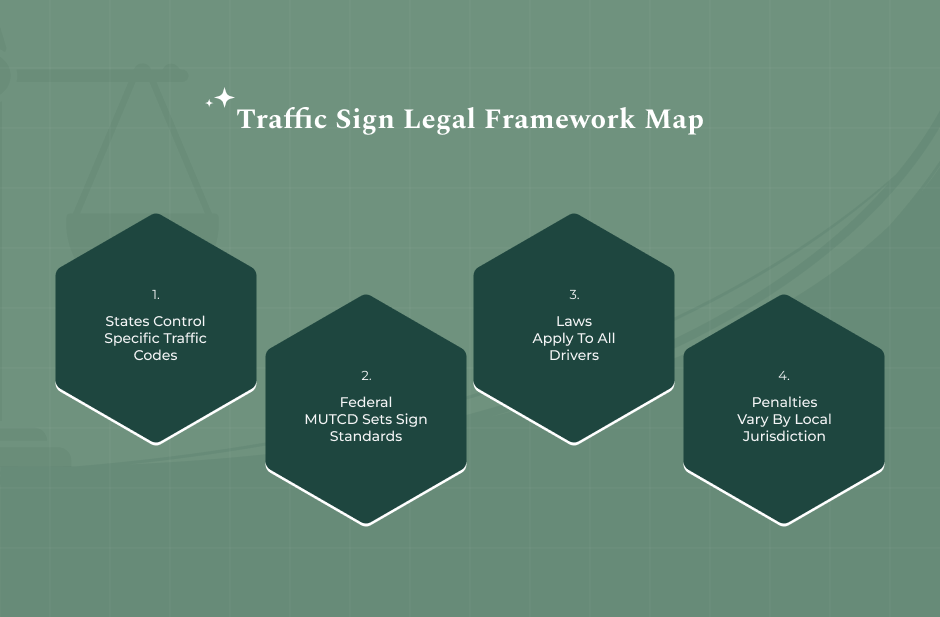
While the federal government gives guidelines, it is actually the state that gives the laws regarding 4 way stop. Every individual must know the specific code regarding their home state.
The Manual On Uniform Traffic Control Devices (MUTCD)
MUTCD is a federal publication that outlines the standards for stop signs. The standards are based on the design and color of the sign and its placement.
Therefore, a driver from Maine would know what to look out for in California. The importance of uniformity cannot be overemphasized with regard to road safety in the USA.
Without such standards, it would not be easy for a driver to know the dangers in an area that is not familiar.
State Vehicle Codes
Each state has its own set of vehicle codes, e.g., California Vehicle Code Section 22450. The codes clearly outline the 4 way stop rules applicable to an area.
In some cases, the state allows cyclists to use the yield sign as opposed to the stop sign. This is commonly known as the Idaho Stop. However, this is not applicable to other types of vehicles.
Right Of Way In Straight Vs. Turning Scenarios
Applying the 4 way stop rules is complicated if the driver intends to turn. Communication is key in such cases.
- Right turns yield to straight.
- Left turns yield to all.
- Signals must be used early.
Straight Traffic Priority
However, if the cars arrive at the stop at the same time from opposite directions, the rules differ. A driver going in a straight line has the right of way compared to a driver turning left.
This is part of the 4 way stop rules for busy roads. A turning driver has to wait until the way is clear. This prevents head-on and T-bone collisions in the middle of the road.
Left Turn Hazards
The most dangerous maneuvers in the 4 way stop rules occur when making a left turn. A left turn has to yield to both straight and right-turning traffic.
Signaling at least 100 feet before the stop is a legal requirement. This gives other drivers a chance to know your intentions. Signaling is part of the 4 way stop rules.
Pedestrian Rights And Intersections
4 way stop rules are not just for vehicles on the road. Pedestrians always have the legal right of way at marked or unmarked crosswalks.
Duty To Yield
Drivers must wait for a pedestrian to clear the entire lane. You cannot start moving while someone is still in your path.
This is a fundamental part of all 4 way stop sign rules. Failing to yield to a walker often results in criminal charges. According to Nolo, pedestrian safety is a top priority for local police departments.
Unmarked Crosswalks
Every intersection is legally a crosswalk, even if no paint exists. Drivers often forget this part of the 4 way stop rules. You must treat every corner as a place where people might cross.
Always look for pedestrians before you take your turn to move. This habit prevents tragic accidents in residential neighborhoods.
Accident Liability And Traffic Evidence
When a crash happens, the 4 way stop rules help determine who is at fault. Insurance companies use these rules to settle claims between drivers.
Determining Fault
The driver who failed to yield is almost always liable for the crash. Evidence like dashcam footage is becoming very common in 2026. This footage can prove who reached the sign first. Following the 4 way stop rule perfectly protects you from legal liability. If you move out of turn, you assume the risk of the collision.
Comparative Negligence
In some states, both drivers might share the fault for an accident. For example, one driver might speed while another rolls through a sign.
The court will assign a percentage of fault to each person. This affects the final payout for car repairs and medical bills. Knowing the 4 way stop rules helps you stay in the right.
Expert Tips For Safer Intersections
Safety at a stop requires more than just following the 4 way stop rule. You must also practice defensive driving to handle other people’s mistakes.
Eye Contact And Communication
Try to look at the other drivers before you move. If they are looking at their phone, they may not see you. This is a practical tip for applying 4 way stop rule daily.
A quick wave can confirm who is going next. Clear communication reduces the stress of a busy four-way intersection.
The Two-Second Pause
Wait two seconds after the car has moved. This gives you time to scan for runners or stray pets. It is a best practice for the rules for 4 way stop intersections. Taking your time prevents “rabbit starts” that lead to accidents. Patience is your best tool for staying safe on the road.
4 Way Stop Rule Recapped!
The 4 way stop rules offer the guidelines necessary for safe American roads. By stopping completely and yielding correctly, you avoid legal problems.
The 4 way stop rule protect your wallet from fines and your life from danger. The state and federal laws cooperate to ensure these intersections are consistent for everyone. Remember to always yield to the right and to pedestrians.
Defensive driving techniques will ensure you account for people who do not follow the rules. Being informed about your local vehicle code is a civic duty for every driver. Follow the order of arrival to ensure smooth traffic flow without conflicts.
Read Also: How Long Does A Speeding Ticket Stay On Your Record?
Frequently Asked Questions (FAQs):
Understanding the legal aspect of traffic rules is important for every U.S. citizen. The following questions cover the common issues concerning 4 way stop rules and road safety.
If a 4 way stop sign is not there, you should follow the 4 way stop rules anyway. This is the safest way to use 4 way stop rules in an emergency situation. Legal standards usually state that uncontrolled intersections require drivers to yield to the right. Always report a missing sign to the local public works department immediately.
Yes, but emergency vehicles have the absolute right of way. You must yield to an ambulance or fire truck even if you arrived first. This is a special exception to the standard rules for 4 way stop procedures. Always pull to the right and stop until the emergency vehicle has passed.
In Idaho Stop states, cyclists can use a stop sign as a yield sign. They do not need to stop if there is no one in the intersection. They must, however, follow the traditional 4 way stop sign rules in terms of order of arrival. If someone is already there, they must stop and wait their turn.