Cease and desist refers to an effective method of asserting one’s legal rights without waiting until a legal battle makes its way to the courts.
In America, this term stands for the official demand to end any actions that can be perceived as unlawful.
This procedure is popular when dealing with such problems as copyright violations, harassment, and contract violations.
The most important current cases concerning cease and desist notices include those involving disputes in the digital sphere as of April 2026.
The most recent lawsuit, Andersen v. Stability AI Ltd. (3:23-cv-00201), concerns letters demanding that the use of the AI model for copyrighted art.
Another recent case that uses cease and desist letters is the Consumer Financial Protection Bureau and The People of the State of New York v. StratFS, LLC dispute about predatory lending.
In this article, we will elaborate on the following:
- The legal definitions of cease and desist actions.
- Key differences between lawyer letters and court mandates.
- Common grounds for issuing these legal demands.
- Step-by-step instructions on how to handle receiving a notice.
Defining The Basics: What Is Cease And Desist Exactly?
What is cease and desist? The definition of cease and desist requires that one understands its dual nature as an injunction.
“Cease” means that the accused must halt whatever actions they are engaging in. “Desist,” on the other hand, implies that they must refrain from undertaking such acts again.
The Legal Definition Of A Cease And Desist Action
In legal parlance, a cease and desist action entails sending a notice to the other party that your legal rights are at risk because of their actions. Such documentation serves as a valuable record, particularly in court cases.
Establishing Notice In The Legal System
Notice is essential in American jurisprudence since it ensures that the accused cannot claim ignorance of the harm they are causing. This form of actual notice can result in punitive measures for those who do not heed the warnings.
The Crucial Difference Between A Letter And An Order
There is considerable confusion among individuals regarding the distinction between a letter and an order.
Nevertheless, both documents carry distinct weight. One represents a personal appeal, whereas the other carries the authority of the state.
What Is Cease And Desist: The Formal Notice
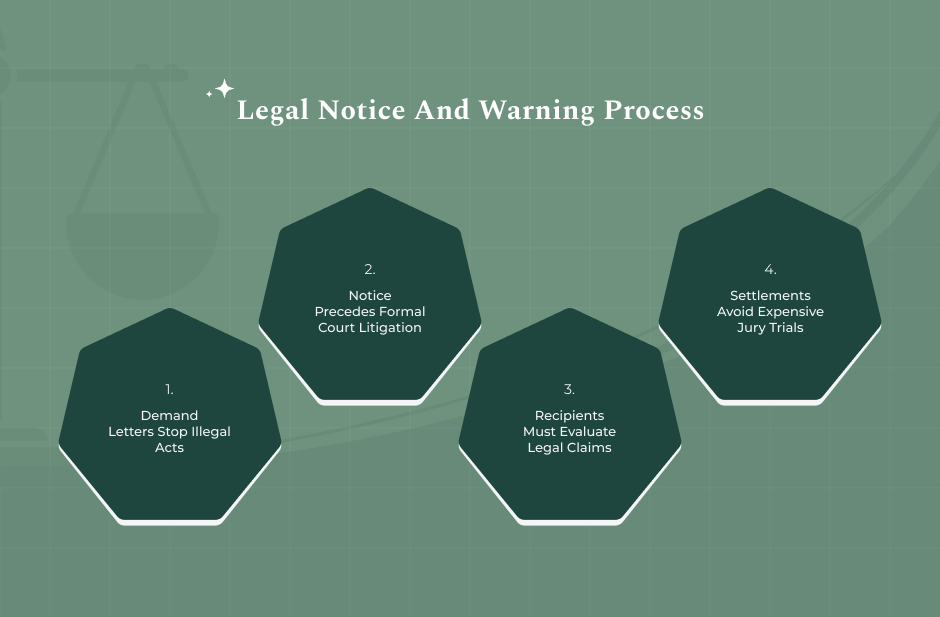
This type of letter is normally sent by an attorney who wants to solve any dispute between the parties involved as quickly as possible.
It is not a legal order that forces anyone to comply, but failure to respond may result in litigation against you, causing substantial financial losses.
Cease And Desist Orders: The Official Order Of Court
The issuance of this order is always done by a judge or the appropriate government body. Compliance with this order comes with the full backing of the law. Failure to comply with such an order will result in the person being found in contempt of court.
Common Legal Grounds For Issuing A Cease And Desist
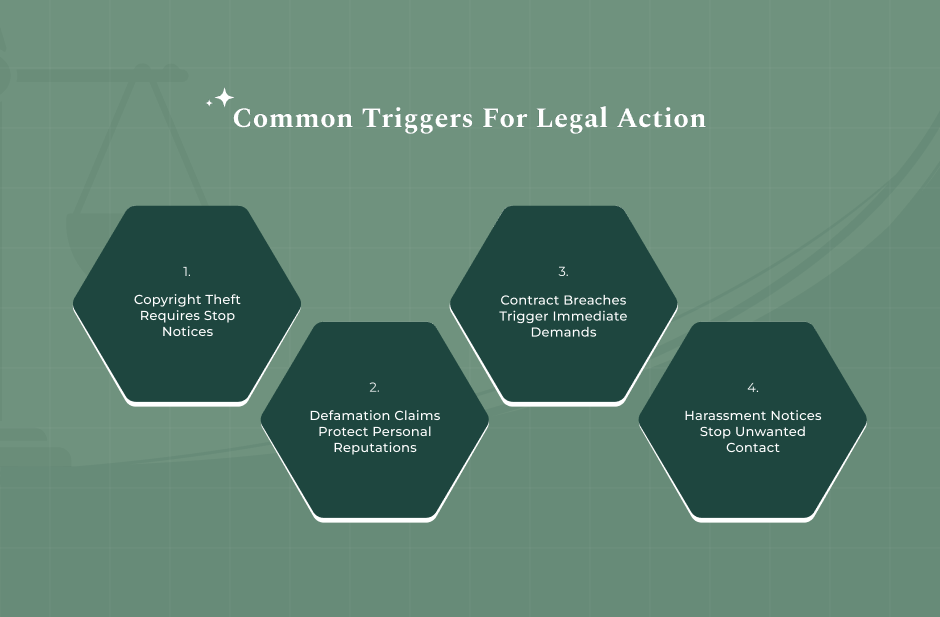
For a lot of various reasons, lawyers may send these notices. However, most of the cases have to do with protecting either a trademark, someone’s reputation, or private contracts.
Intellectual Property And Trademark Infringement
For a notice what is cease and desist used for the most commonly? Well, trademarks and copyrights need to be protected by law.
Otherwise, you will lose your trademark. Allowing others to use your company or logo without compensation makes you lose ownership.
Protecting Copyrights In The Age Of AI Training
What is the future of a what is cease and desist letter? Many people write them in 2026 as they try to protect their copyright from AI training. It’s becoming increasingly popular as the field itself grows rapidly.
Harassment Defamation And Online Character Attacks
Sometimes the person starts defaming you online. What is the function of a what is cease and desist notice here? Lawyers can stop such a situation from developing further, asking for an apology and posting corrections.
Non Compete Clause
When an employee resigns from his current job to join another one in the same business, he is likely to get a letter reminding him about the non-compete or non-disclosure clause. The letter goes on to warn him that theft of trade secrets will lead to legal action.
Federal And State Laws On What Is Cease And Desist
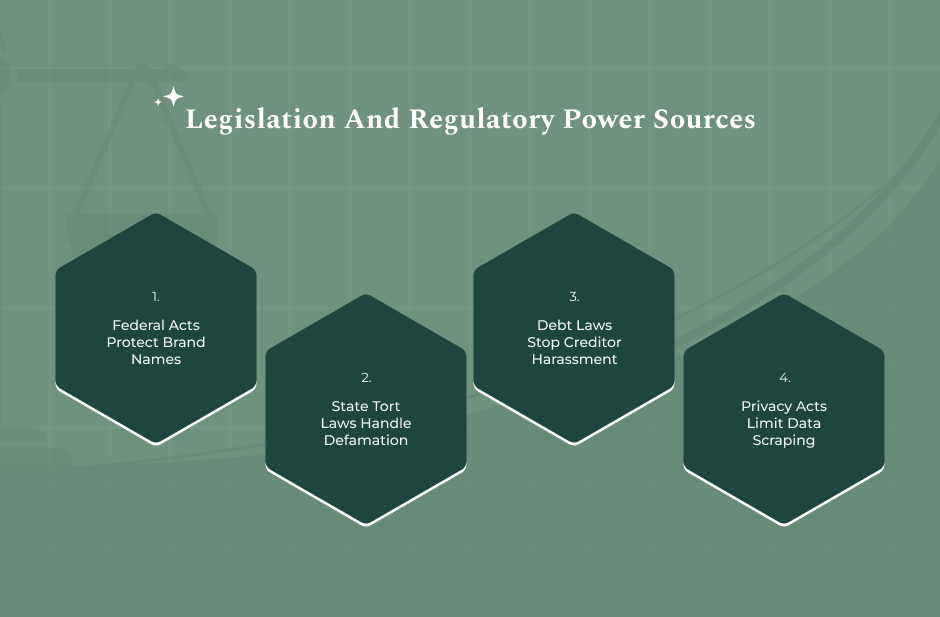
However, there is no one Cease and Desist Act. There are various federal and state statutes that provide individuals with the ability to issue these notices.
State Tort Laws In Defamation Actions
All states have tort laws regarding libel and slander. These tort laws empower victims to demand the withdrawal of false statements.
Notice of Cease and Desist is usually the best means to begin such an action in states like California and Florida.
Federal Statutes: Lanham Act & Copyright Act
The Lanham Act offers protection for trademarks at the federal level. Similarly, the Copyright Act provides protection to literary works, musical pieces, and computer software.
Both of these acts empower the owners to send notices to stop infringers from exploiting their efforts illegally.
Fair Debt Collection Practices Act (FDCPA) Protections
FDCPA is one of the strongest federal laws. It empowers consumers to send notices to debt collectors to stop making any further calls.
After receiving such a notice, the debt collector may only contact the consumer to inform them that they are not going to take any further action against them.
Step By Step: How To Respond To A Cease And Desist Letter
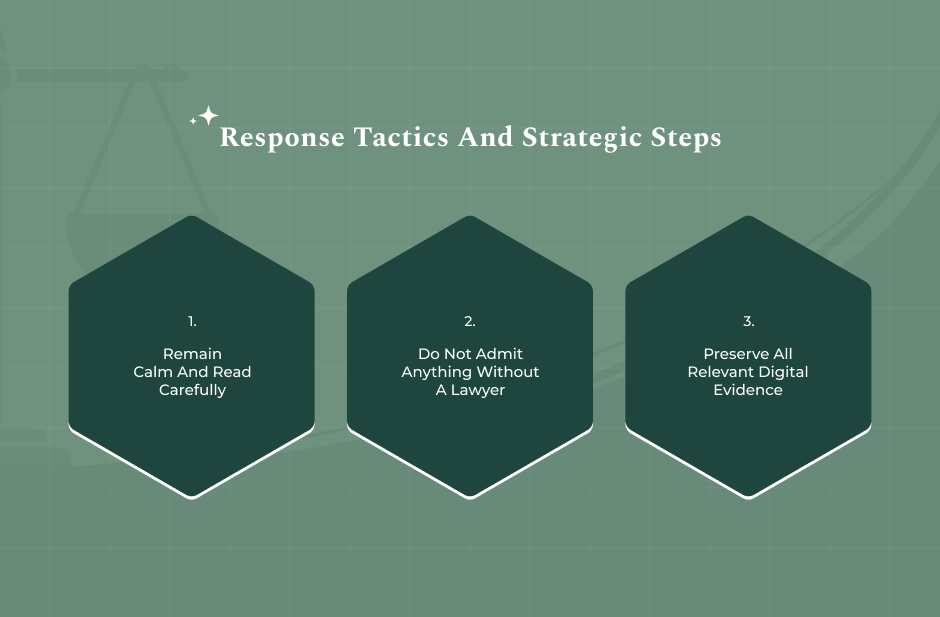
Getting a letter of notice from a lawyer is frightening, and you cannot afford to make mistakes now. Everything depends on how you handle yourself during those initial days.
Immediate Actions-The First 48 Hours After Receipt
Take your time to process your reaction. At all costs, avoid removing any material from your computer.
It is extremely important to preserve all emails, posts, and documents related to your case. This is very important for cease and desist procedures.
Why You Should Never Ignore A Formal Legal Notice
By ignoring the letter, you appear as if you were willful in violating the rights of another individual. This can be used against you and result in higher fines if the ruling is made against you in court.
Preserving Evidence And Avoiding Spoliation Claims
Deleting the relevant materials constitutes spoliation in legal terms. You will face very serious consequences because of that in court. Therefore, leave everything in place until you consult an expert.
Analyzing The Validity Of The Legal Demand
Not all letters issued by lawyers are valid. They are often issued as threats or intimidation. You have to verify whether or not this individual owns rights to those intellectual property items.
Recognizing Copyright Trolls & Legitimate Legal Threats
These trolls send out thousands of letters in an attempt to gain fast cash. They try to convince you to pay off a small amount simply to get rid of the letter. A lawyer will be able to inform you whether or not the letter is authentic or a scam.
Questions Regarding Cease And Desist
Many Americans encounter these problems and have some common questions that arise from such situations.
Look for any information on a law firm or even a signature in the letter itself. It is best to look into the legality of the law firm.
The letter should cite certain laws and court decisions. If they ask for a payment using gift cards, the letter is definitely fraudulent.
The answer to this question depends on the nature of such posts. The letter states that those posts constitute defamation.
In addition, the author of the letter threatens to seek monetary compensation for such defamation if it does not stop.
This method is extremely common in the case of bullying via the Internet or revenge porn cases.
It should be noted that neither a cease and desist letter nor any other type of letter constitutes a contract or a court order.
Nevertheless, it is a form of notice that might be used by the plaintiff in court to prove his knowledge of the situation.
While both cease and desist and restraining orders require a signature of the judge, the former can only relate to property issues, while the latter concerns personal safety.
The cost may range from $300 to $1,000, depending on the amount of research work the lawyer needs to conduct. A properly written letter could help you avoid expensive lawsuits since the letter acts as an early solution to the problem.
Yes, the lawyer is legally allowed to file a suit against you at any time he or she wants. The letter acts as your last chance to solve the problem amicably. There is no law requiring the lawyer to wait for your reply.