So, what is a child entitled to when a parent dies without a will? What a child inherits when a parent has passed away without a will is a topic many people are concerned about in their worst times of need.
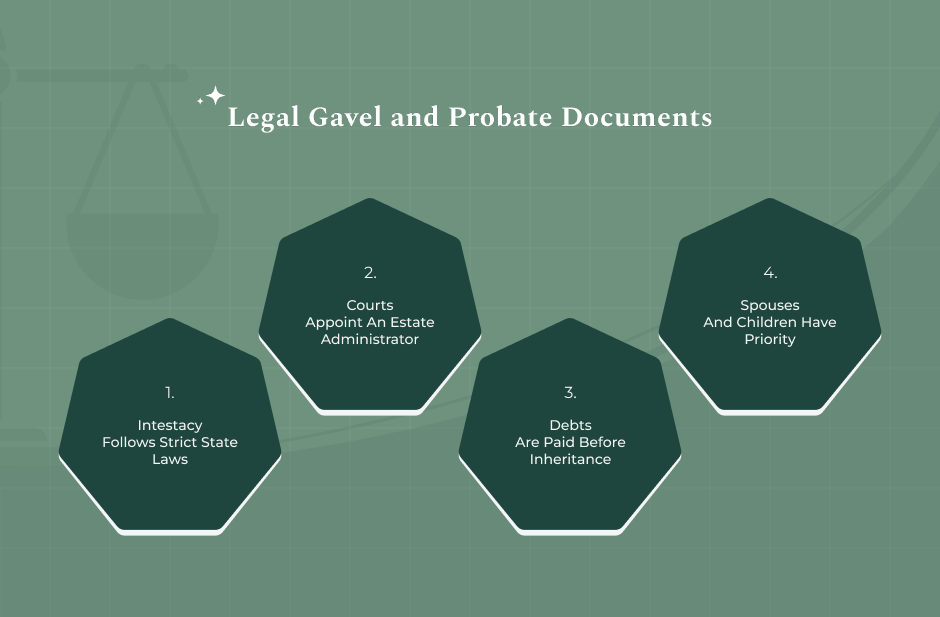
If a person dies without leaving a valid legal document called a testament, he or she is said to have died ‘intestate.’
In this case, the law in the state in which he or she has lived will determine who inherits the home, bank accounts, and family treasures.
It does not consider which child was the parents’ favorite or who took care of the parent the most. Rather, it follows a very specific set of laws called intestate succession.
These laws are designed to protect the direct heirs, but the results are often unexpected for those in need of a little solace.
Currently, there are many “blended family” cases being heard in probate courts all over the country. However, there is very little room for variation in inheritance laws.
Timelines for these cases are crucial. Most states require an estate to be opened within months of death to protect the rights of the children.
In this article, we will elaborate on the following:
- The legal definition of intestacy and how it triggers state laws.
- How different family structures change the child’s share.
- The difference between probate and non-probate assets.
- Specific case laws that shaped what is a child entitled to when a parent dies without a will.
What Is A Child Entitled To When A Parent Dies Without A Will? Intestacy Definition
To understand what is a child entitled to when a parent dies without a will, we need to elaborate on the concept of Intestacy.
Intestacy refers to a situation where a person dies without a legally enforceable will to guide the disposal of their property. Each state has a set of laws to deal with this situation, which mostly favors the closest relatives.
The Legal Framework
In the case of intestate succession, the court appoints an administrator who is required to follow the laws to the letter, settling all debts before any penny is given to a child. (Source: Cornell Law School)
The Hierarchy Of Heirs
State laws establish a “line of succession.” In most cases, the spouse and children are at the top of the hierarchy.
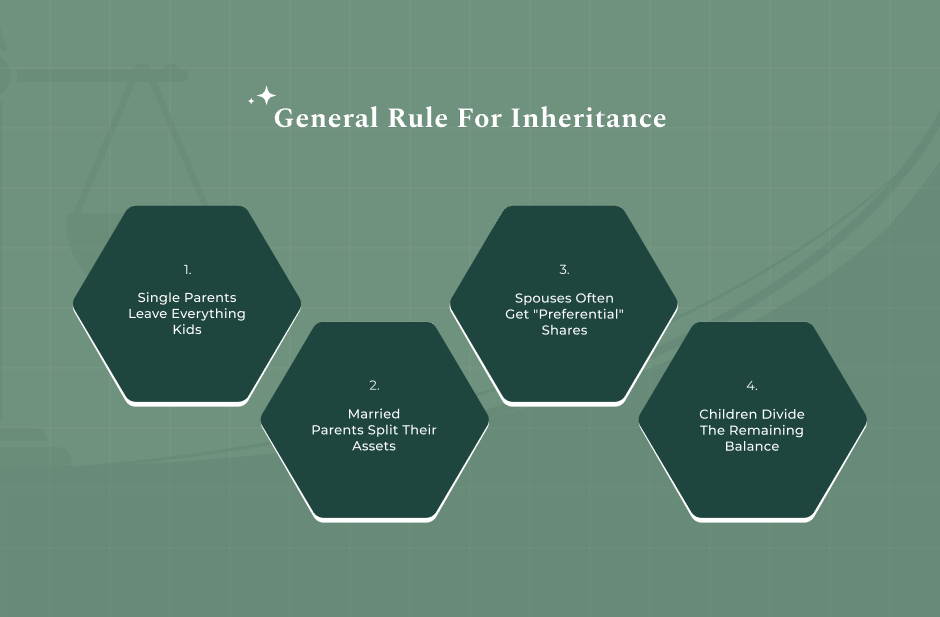
If there is no spouse, the law normally stipulates that the children inherit the estate equally.
How Children Are Defined For Inheritance Purposes
Not all people who consider the deceased “mom” or “dad” are automatically entitled to a share of the inheritance.
The law has a very specific definition of what makes a child a person entitled to a share of a parent’s estate in the event of the parent’s death without a will.
Biological And Adopted Children
What is a child entitled to when a parent dies without a will? Biological children are automatically entitled to a share of the inheritance, according to the law of intestacy.
Legally adopted children are in the same position as biological children in terms of entitlement to a share of the inheritance. (Source: FindLaw)
Stepchildren And Foster Children
Stepchildren are not entitled to a share of their deceased parent’s estate in the absence of a will, unless the parent has adopted them legally.
What A Child Is Entitled To – General Rules
What is a child entitled to when a parent dies without a will? The actual amount of money a child inherits may depend on whether or not the deceased parent was married at the time of death. These are just a few examples, and the math follows a very predictable pattern in all of them.
Scenario – No Surviving Spouse
If the parent was single, divorced, or a widow, the children will share all of the money. If there are four children, each child will receive 25% of the remaining money.
Scenario – Surviving Spouse Present
If there is a spouse, the children will share the money with the spouse. In many states, the spouse gets the first $50,000 to $100,000, and then shares the remaining money with the children.
Significant Case Laws Regarding Intestacy
Case laws assist in understanding the interpretation of the phrase “what is a child entitled to when a parent dies without a will”.
These are the foundations of the decisions made by contemporary judges on the issue of DNA status.
1. Astrue v. Capato (2012)
Case Number: 11-159.
In this landmark case, the U.S. Supreme Court made a ruling regarding whether posthumously conceived children, i.e., children born after the death of the parent, would be eligible for inheritance.
In the final ruling, it was stated that the children had to be eligible heirs under the intestacy laws before they could receive Social Security survivor benefits.
2. Estate of Griswold (2001)
Case Number: S087882.
A case from California involving a child out of wedlock who sought inheritance from his biological father, who did not know of his existence. The ruling was that the child was entitled to an inheritance because his father had acknowledged paternity in another legal case.
3. Kimble v. Martel (2018)
Case Number: 18-0422.
This case involved the rights of an adult adopted child who had been given up for adoption. In this case, the court found that the adopted child loses the right to inherit from the biological parents after the child has been legally adopted by another family.
What Assets Are Covered by Intestacy Laws

Most people believe that the court has the final say in the distribution of the assets. However, many assets are passed on directly, avoiding the question of who is a child and entitled to something if the parent passes away without a will.
Probate And Non-Probate Assets
Probate assets are the individual assets that belonged to the deceased, such as a personal bank account or a car. Non-probate assets, such as life insurance, are passed on directly to the beneficiary despite the will.
If the parent owned a house with a spouse as a “joint tenant with right of survivorship,” then the house goes to the spouse.
What is a child entitled to when a parent dies without a will in this case? The children have no claim to that property under intestate law because it never goes through probate.
Special Considerations For Minor Children
If the child is a minor, they cannot just go into a bank and pick up their money. The court takes special steps to protect the money for them until they are adults.
Guardians And Trustees
The court appoints a guardian or a trustee to manage the money. He/she has a fiduciary responsibility to use the money only to provide for the health, education, and support of the child until the child turns 18 or 21.
Uniform Transfers to Minors Act (UTMA)
What is a child entitled to when a parent dies without a will? Many states employ the UTMA to simplify this process.
It enables the estate to place the inheritance within a protected account that the child can withdraw from when a certain age is reached.
There are many tall tales going around about what a child is entitled to when a parent dies without a will. It is good to know the real facts so that your expectations are managed accordingly.
The Myth Of “The State Takes It All”
The rumor that the government takes all your money if you die without a will is a complete fallacy. The government takes the money, also known as escheat, only when it cannot find a single relative.
The Myth Of “Equal Rights For Partners”
If your parents were living together for 30 years without getting married, the surviving partner does not inherit anything. In this case, the children inherit everything, leaving the partner with nothing.
Frequently Asked Questions (FAQs):
It is not easy to comprehend the probate process while grieving. The questions below will help clarify what a child is entitled to when a parent dies without a will for those currently in the middle of a legal battle.
In the majority of states within the United States, half-siblings will inherit just as much from a parent as a full sibling would. The laws do not differentiate between “half” and “full” blood siblings regarding inheritance from a parent.
If the child passes away before the parent, the children that the child had (their grandchildren) will inherit the amount. This is called “inheritance by representation” or “per stirpes.” This ensures that the money remains with that particular part of the family tree.
No, a child cannot be disinherited, regardless of whether there is a will or not. Unless the parent has a valid will stating that the child will receive nothing, the law will always provide the child with their rightful share.