The difference between bailment and pledge is one of the most important principles in US law regarding personal property and business deals.
Although both terms involve the transfer or giving up of possession of certain items or goods, they have entirely different uses and confer entirely different rights to each party involved in either case.
In the US, these two principles are regulated by common law and the Uniform Commercial Code (UCC), specifically Article 9 regarding security interests.
The distinction between pledge and bailment is essential knowledge for any business deal, whether it involves getting one’s clothes cleaned or getting a bank loan with collateral in the form of physical assets.
The issue has been at the forefront of US law lately, especially with cases in 2025 and 2026 involving the tokenization of physical assets and how possession works in relation to blockchain technology.
In this article, we will elaborate on the following:
- The legal definitions of bailment and pledge under US law.
- Key distinctions in the purpose and usage of the goods.
- The rights of sale and possession held by the recipient.
- Federal and state legislation governing these property transfers.
What Is A Bailment Under US Law?
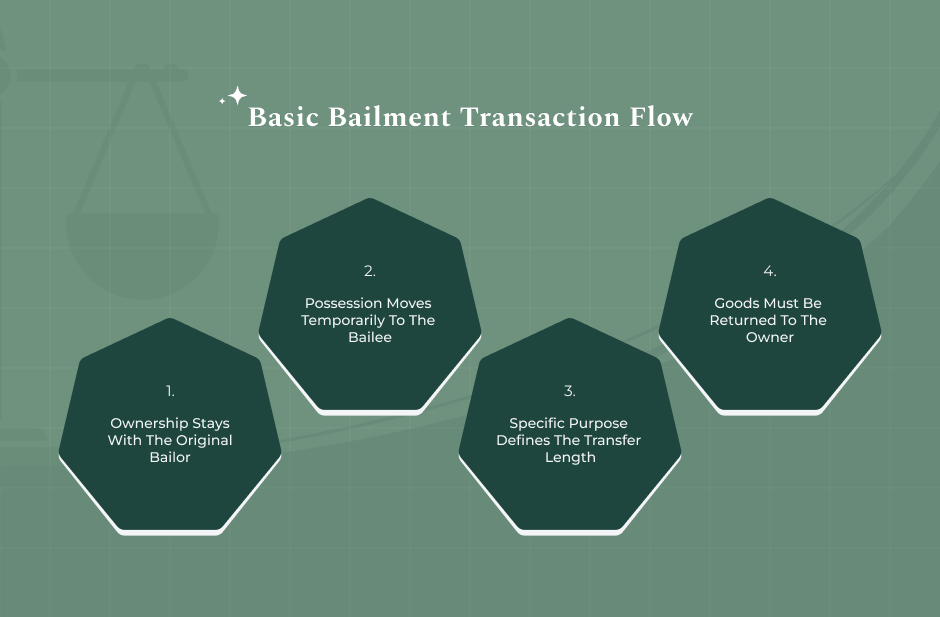
Bailment is defined as a situation wherein a person, referred to as the bailor, transfers his or her personal property to another person, referred to as the bailee, for a particular purpose.
The Role Of The Bailor And Bailee
The bailor retains ownership of the properties involved throughout the process. On the other hand, according to Investopedia, the bailee obtains physical possession and care of the properties involved while discharging his or her obligation to perform a particular task.
Common Examples Of Bailment
You are entering into a bailment every time you park your car and give it to a valet or take a suit to a dry cleaner.
In both cases, you are not giving up ownership, but giving someone else a responsibility for your property for a certain period of time.
What Is A Pledge In Commercial Practice?
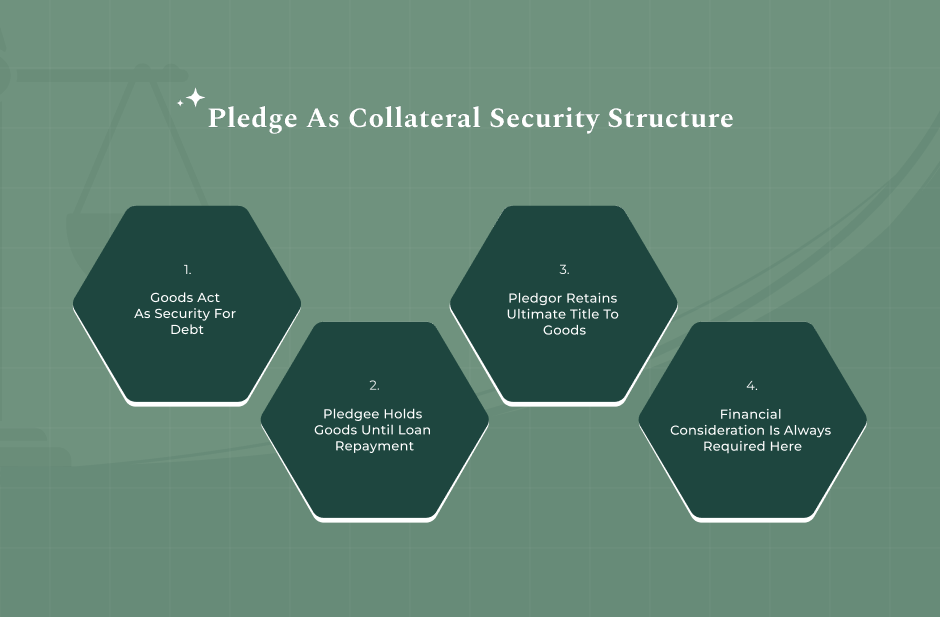
A pledge is a special form of bailment in which goods are delivered for the purpose of providing security for a debt or a promise. In legal circles, a pledge is termed a “pawn” in the case of individual consumers and lenders.
Security For Debt
In a pledge, the main objective is to provide security to the pledgee, or the lender, in the form of collateral.
This is so that in case the pledgor, or the borrower, defaults in paying the debt, the pledgee has a physical asset that can provide him with a measure of security. (Source: Nolo Legal Encyclopedia)
The Right Of The Pledgee
Unlike a general bailee, a pledgee has a “special property” interest in the goods that are pledged to him. This interest is such that the pledgee has a claim on the value of the goods until the debt is fully paid.
The Primary Difference Between Bailment And Pledge
The primary difference between bailment and pledge is the intent behind the delivery of the goods.
All pledges are bailments, but not all bailments are pledges because not all of them involve a debt.
Purpose And Intent
The common purpose of a bailment is to render service, repair, or safekeeping to the goods involved in the bailment.
However, the primary purpose of a pledge is to render service to a financial obligation. Thus, the primary difference between bailment and pledge is that of commercial necessity and utility.
Right To Use The Goods
In some cases of bailment, the bailee has the right to use the goods involved in the bailment, such as when a person rents a car.
However, in the case of a pledge, the pledgee has no right to use the goods involved in the pledge unless it is necessary to preserve the goods involved in the pledge.
Distinguishing Possession From Security Interests – A Quick Wrap
Let’s have a quick summary of what we just learnt about the difference between bailment and pledge.
- A pledge always involves a financial debt.
- Bailment can be for repair only.
- Usage rights differ between these contracts.
- Consideration is optional in some bailments.
Right Of Sale And Default Highlighting The Difference Between Bailment And Pledge

One of the key differences between bailment and pledge is in relation to a breached contract or an unmet obligation. The legal recourse available to the party holding the goods is far different between the two.
Bailee’s Lack Of Sale Rights
The bailee does not have a right to sell the goods bailed to him if he is not paid for his services. However, he can keep the goods through a lien.
He needs to go through a legal process to sell off the goods to recover his costs. (Source: Uniform Commercial Code Article 7)
Pledgee’s Power Of Sale
The pledgee inherently has a right to sell off goods pledged to him in the event of a defaulted loan.
While he is obligated to notify the debtor of his intent to liquidate the goods, he does not necessarily have to go through a legal process to recover his money.
Federal And State Laws In The USA
This section of the article will primarily deal with the Legislative Framework for Property Law.
- UCC Article 9 governs most pledges.
- State statutes define bailee liability limits.
- Common law provides the duty standards.
- Federal laws oversee interstate commercial shipping.
The distinction between bailment and pledge is also governed by various state and federal laws. Though common law is the foundation for bailment, various commercial laws have brought uniformity in its application.
The Uniform Commercial Code (UCC)
The Uniform Commercial Code is a uniform set of laws that governs commercial transactions in all states.
Article 9 of the UCC deals with secured transactions, which include a pledge. It outlines how a pledge can be perfected to give a higher claim over other creditors.
State-Specific Regulations
Various states have their own laws regarding professional bailees, i.e., warehousemen or hotel keepers. Such laws regulate their liabilities and the specific duty of care owed to the bailor’s goods.
Duty Of Care And Liability
Both relationships demand that the party in possession care for the goods, but the level of care may change according to the varying levels of bailment and pledge, as well as the beneficiary of the relationship.
Standards Of Negligence
In the case of mutual benefit, the bailee is required to exercise ordinary care. If the bailment is solely for the benefit of the bailor, the bailee may be liable for gross negligence, but in the case of a pledge, the bailee is required to exercise a high level of reasonable care.
Liability For Loss Or Damage
In the event that the goods are destroyed through no fault of the bailee/pledgee, the bailee/pledgee is not liable.
However, the pledgee has to make sure that the collateral is in good condition because if it is not, it will not be as valuable for the loan.
Expert Tips For Managing These Contracts
Here are some tips for you to easily understand the difference between bailment and pledge.
Whether you are a businessperson or a consumer, here are some expert tips to help you safeguard your interests in a bailment or pledge contract.
Document Everything In Writing
The first step is to enter into a written agreement that outlines the purpose for which you are giving up possession of your goods.
While in a pledge contract, you are giving up something in exchange for a loan. You can also outline the terms and conditions under which your goods can be sold.
Verify Insurance Coverage
Before you give up valuable goods in a bailment contract, check if the recipient has insurance coverage. In a bailment contract for repairs, the insurance cover should include fire or theft.
Read Also: Understanding Bail Forfeiture In The USA: Legal Implications, Procedures, And Remedies
Conclusion
The difference between bailment and pledge is a key component of American property law that provides for a clear understanding of business transactions.
Both concepts involve the transfer of goods from one individual to another. A pledge provides a level of financial security that is not present in a bailment agreement.
By understanding whether you are entering a bailment agreement for service or a pledge agreement for credit, you can gain a better understanding of your rewards and risks.
Read Also: How Much Do You Have To Be In Debt To File Chapter 7 Protection?
FAQs Regarding The Difference Between Bailment And Pledge
The following section provides an overview of common questions that U.S. citizens have regarding bailment and pledge in everyday life.
No, a bailment cannot automatically turn into a pledge. In order for bailment and pledge to stop being different concepts, a new agreement between the parties is needed.
For instance, if you have a mechanic’s bill to pay and you sign a document stating that he can keep your car as collateral for a loan to pay for repairs done on your car, then a pledge exists.
In most cases, no. In the US, when you put money in a bank, you are in a relationship as debtor and creditor, not bailor and bailee.
The bank is not required to make a specific delivery of the same money you put in. However, when you put items in a safe deposit box, a bailment exists because you are requiring a specific delivery of those items.
If a pledgee sells collateral without notice in violation of state law or UCC notice provisions, he or she is subject to a claim for conversion.
Conversion is a legal term that means a pledgee wrongfully took an action that deprived you of your property.
You can sue for the full value of the goods plus damages. This is why you should understand the difference between bailment and pledge.