Today’s topic: Can you get a DUI on a horse?
Can you get a DUI while riding a horse? This may sound like a long way of answering a trivia question you heard at the bar. But it is true – in some states you can, and in others you cannot.
A lot of places will allow you to have a horse under the Pacific Coast Highway’s “vehicle” laws to be legally impaired when operating a horse (or other non-motorized vehicle).
Although horses are not operated by machinery, they travel down public roadways with cars, pedestrians, and bicycles.
Therefore, there may be issues with public safety. This has been an issue litigated by courts and legislatures for decades, with varying results.
As per legal analyses found on FindLaw and various state DUI codes, riding while intoxicated can still get you into serious trouble even if it does not fall under the category of a DUI.
Quick Legal Answer: Can You Get A DUI On A Horse?

Yes, you can get a DUI on a horse in certain U.S. states, but not everywhere. The legality of riding a horse while intoxicated will depend upon how each state's DUI laws define the term "vehicle"/"conveyance".

Some states will allow DUI charges for operating a horse under the influence while on public roads, while some states typically will exclude horses from their DUI laws.

However, there may be other criminal statutes, such as Public Intoxication or Reckless Endangerment, that could apply.
What Is A DUI?
DUI (Driving While Intoxicated) refers to a criminal act against a person who is driving under the influence of illegal drugs or alcohol.
The laws regarding DUIs were intended to apply primarily to automobiles. However, more recently, they have expanded to include any vehicle that is capable of transporting passengers.
“Some jurisdictions prohibit impaired driving across the entire state, while others limit the prohibition to public roadways and areas open to the public,” according to the Legal Information Institute.
Legally, a DUI typically requires two elements:
- Impairment, and
- Operation or control of a vehicle or conveyance.
Furthermore, the complexity arises in defining what counts as a vehicle and what qualifies as an operation.
Legal Elements Of A DUI
Here are some of the elements that you need to know about:
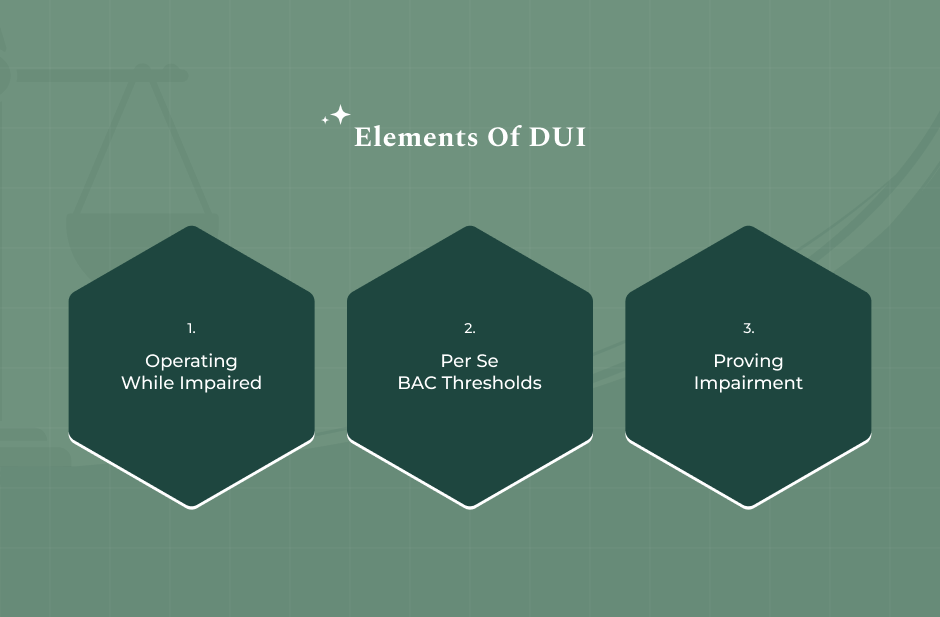
1. Operating While Impaired: Firstly, most states define impairment as being unable to operate safely due to alcohol, drugs, or a combination of both. Importantly, “operation” does not always require movement – actual physical control can be enough.
2. BAC Thresholds: Secondly, for adults, the standard blood alcohol concentration (BAC) limit is 0.08%, per National Highway Traffic Safety Administration (NHTSA) guidance. Besides, some states apply per se intoxication rules regardless of the conveyance used.
3. Proving Impairment: Finally, law enforcement may rely on:
- Field sobriety tests
- Breath or blood tests
- Observational evidence (slurred speech, unsteady posture, erratic behavior)
Vehicle vs. Non-motorized Conveyances
This is where horseback DUI questions emerge.
Some legal codes define a “vehicle” broadly as any device capable of transporting a person on a public roadway. Others limit DUI strictly to motor vehicles.
For instance, courts have addressed similar issues involving:
- Bicycles.
- Electric scooters.
- Horse-drawn buggies.
- Farm equipment.
However, it is important that you understand that judicial interpretations can vary dramatically.
In the sense, some courts explicitly exclude animals. On the other hand, others treat them as roadway conveyances subject to DUI enforcement.
Can You Get A DUI On A Horse? General Legal Landscape
The short answer: sometimes. The long answer depends entirely on state law, statutory language, and court interpretations.
Take a look at what Scheuerman Law has to say about this:
“Many states use expansive definitions. A typical formulation defines a vehicle as “every device by which any person is transported upon a highway.”
Other states use narrow definitions. A motor vehicle is typically “self-propelled,” excluding conveyances powered by animal force.”
This shows how different states vary this law and the offense differently. Now, let us take a look at this in detail:
States Where Horseback DUI Is Possible
In states with broad DUI statutes, horseback riding while intoxicated can result in a DUI or equivalent charge.
According to these laws, a vehicle is basically any means of conveyance on a public roadway. And that is regardless of whether it’s motorized or not.
For instance, some examples include:
- States where courts have ruled that controlling an animal on public roads poses similar risks as driving.
- Jurisdictions that apply DUI laws to horse-drawn carriages extending logic to mounted riders.
Additionally, there are some courts that emphasize public safety over technical definitions. In cases like that, they argue that impaired riders can cause traffic accidents just as easily as impaired drivers.
States Where It’s Not Considered A DUI
Other states limit DUI statutes strictly to motor vehicles.
For example:
- Utah courts have ruled that horses are not vehicles under DUI statutes.
- North Carolina has confirmed through legal guidance that riding a horse drunk is not a DUI, but may trigger other criminal charges.
In these jurisdictions, lawmakers have intentionally excluded animals from DUI enforcement, often due to historical or agricultural considerations.
Ambiguous Or Mixed Jurisdictions
Some states fall into a gray area:
- Statutes are vague.
- Case law is inconsistent.
- Enforcement depends heavily on officer discretion.
Besides, in these cases, prosecutors often rely on alternative charges when DUI applicability is uncertain.
The table below shows how different U.S. states treat DUI charges for horseback riding while intoxicated:
| State | DUI on Horse | Statute Basis | Penalty Notes |
| California | Possibly | Broad DUI language | Often alternative charges |
| Texas | No (DUI) | Motor-vehicle focused | Public intoxication likely |
| Florida | Possibly | Broad roadway definitions | Fact-specific |
| Utah | No | Court exclusion | Other offenses apply |
| North Carolina | No | Confirmed interpretation | Disorderly conduct common |
When Does Riding A Horse While Intoxicated Become Illegal?
Riding a horse while intoxicated may result in criminal charges when:
- State DUI laws define vehicles broadly
- The rider is on a public roadway
- The rider shows signs of impairment
- Public safety is endangered
- The animal’s welfare is compromised
Alternative Legal Consequences If Not DUI
Even where DUI doesn’t apply, riding a horse while intoxicated is far from consequence-free.
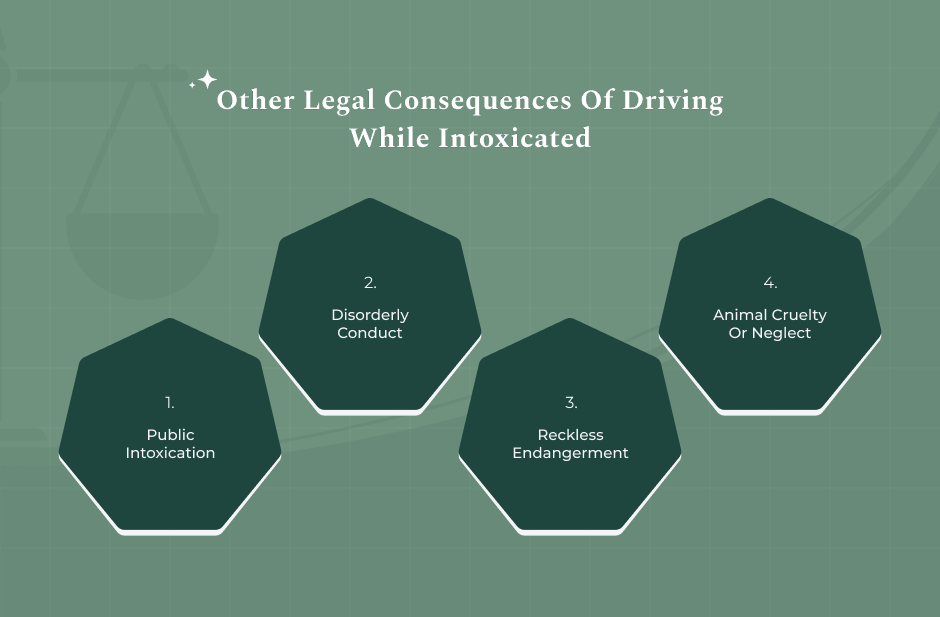
1. Public Intoxication
Firstly, a lot of states consider it illegal for a person to be visibly drunk in or on public property. And this includes the streets and sidewalks.
2. Disorderly Conduct
Secondly, when an intoxicated person behaves in a dangerous manner, makes noise, or creates a traffic hazard, that person can be charged with disorderly conduct.
3. Reckless Endangerment
Thirdly, and typically, an intoxicated rider on public streets will be charged with reckless endangerment as his actions create a very high risk of injury to other people.
4. Animal Cruelty Or Neglect
Finally, in extreme cases, prosecutors may argue that riding while intoxicated:
- Endangers the horse.
- Constitutes neglect.
- Violates animal welfare statutes.
Penalties & What To Expect
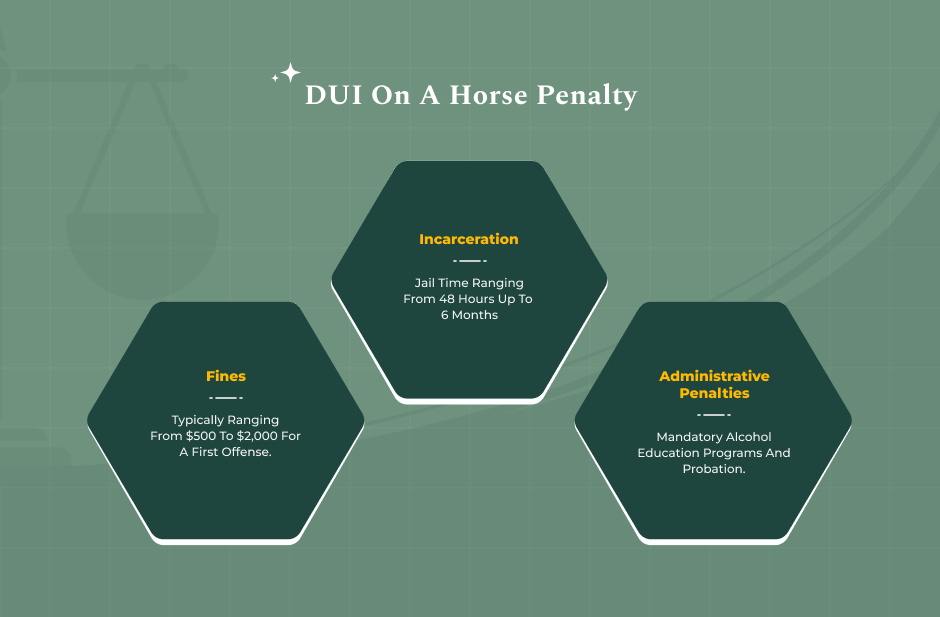
Penalties for horse-related offenses when riding under the influence of alcohol can vary greatly and may include:
- Fines.
- Short jail sentences.
- Probation.
- Community service.
- Mandatory alcohol education programs.
In most cases, unlike traditional DUI, horseback riding offenses usually do not impact your driver’s license.
However, they can still result in a criminal record, which is something that can have long-term implications for your employment and housing.
Moreover, continued offenses or violations along with the presence of aggravating factors – such as injuries, traffic accidents, or children – may lead to a significant increase in penalties.
Defenses & Legal Strategies
The most usual defenses are:
- Riding on private property (no access to public roadways).
- Legal interpretation (horse, not a vehicle).
- BAC under legal limit.
- Wrong field sobriety test.
- No probable cause.
A skilled defense lawyer may also dispute the use of officer freedom, the requirement of evidence, or abuse of power by the prosecutor.
Safety Considerations & Best Practices
It is never safe to ride under the influence of alcohol or any other substance. And that is regardless of the legality of such an act.
Risks Of Riding A Horse Under The Influence
- Loss of balance and hence inability to control the situation.
- Unpredictability of the horse.
- Accidents with road users.
- Severe wounds or death.
- Ethical damage to the animals that rely on the rider for judgment and reason.
Horses depend on signals, balance, and calm behavior from their leaders or the ones riding them. And drinking affects all these aspects.
Best Practices:
- Do not ride after drinking.
- Get someone else to handle/drink the horse.
- Keep horses off the streets at night.
- Focus on the well-being of the animal.
Even where legal loopholes exist, safety and responsibility should always come first.
Disclaimer: DUI laws vary significantly by state. Courts and law enforcement interpret horseback riding differently depending on statutory language, roadway access, and public safety considerations.
Frequently Asked Questions (FAQs):
We hope that now you have the answer to “Can you get a DUI on a horse?” Here are some of the questions that people often ask about the possibility of getting a DUI charge for riding a horse:
Yes. It is less expected for a person riding a horse intoxicated to be arrested for DUI. However, police officers may still file charges such as public intoxication, reckless endangerment, or disorderly conduct if they see the rider’s actions creating a safety hazard.
The simple answer is no. Yet, in some areas, the term “vehicles” has been interpreted so widely that horses, which are non-motorized forms of transportation used on public ways, may be included.
Typically, a driver’s license would not be affected. It is almost always the case that the law enforcement agencies only consider motor vehicles when they issue DUI tickets.
Therefore, as long as no motor vehicle is involved, a riding horse under the influence charge should not be the reason for your driver’s license to be taken away.
The answer is usually positive. This is because it also depends on whether the animal is going to be used in a way that could endanger or jeopardize the public.
Besides, there could be regulations against animal abuse/neglect. However, these would be applicable in both cases. Irrespective of whether a rider is sober or intoxicated.
Different penalties apply to individuals who are physically impaired due to drinking alcohol, and riders may face fines, probation, community service, or jail, depending upon the jurisdiction and the specific charge.