How old do you have to be to get a tattoo? This is a question that multiple young adults ask these days, and even their parents.
It is important to note that a tattoo is a decision that will stick with you for a while. It is not only a decision that impacts you medically.
Rather, it can also impact you legally. In the US, there are state laws governing the rules and regulations of body art.
The question of “how old do you have to be to get a tattoo” has different answers in different states of the US. Certain states prohibit minors from acquiring a tattoo.
In other states, a minor can get a tattoo, but after fulfilling certain conditions. These rules about “how old do you have to be to get a tattoo are designed to keep you safe.
In the US, there are many laws governing health concerns, particularly because of the rising trend of home tattooing.
For the Midwest, the government is making laws that will require complete documentation to stop unsafe and fraudulent activities in tattooing.
In this article, we will elaborate on the following:
- The main legal rationale for age restrictions.
- State-by-state differences in law within the United States.
- The process for parental consent and documentation.
- Why studios have their own age restrictions.
Why Age Restrictions Exist For Tattoos
The laws regarding tattoos for minors are designed to prevent them from making rash decisions that may affect them for the rest of their lives.
It is also to ensure that the individual is of legal age to enter into a contract with a service provider.
Legal Consent And Contracts
A tattoo is not just artwork. It is a contract between the artist and the client. Since minors are not allowed to enter into legal contracts, the laws can stop their license to work as a tattoo artist. In some areas, tattooing a minor is considered a misdemeanor crime.
Parental Consent: Rules And Documentation
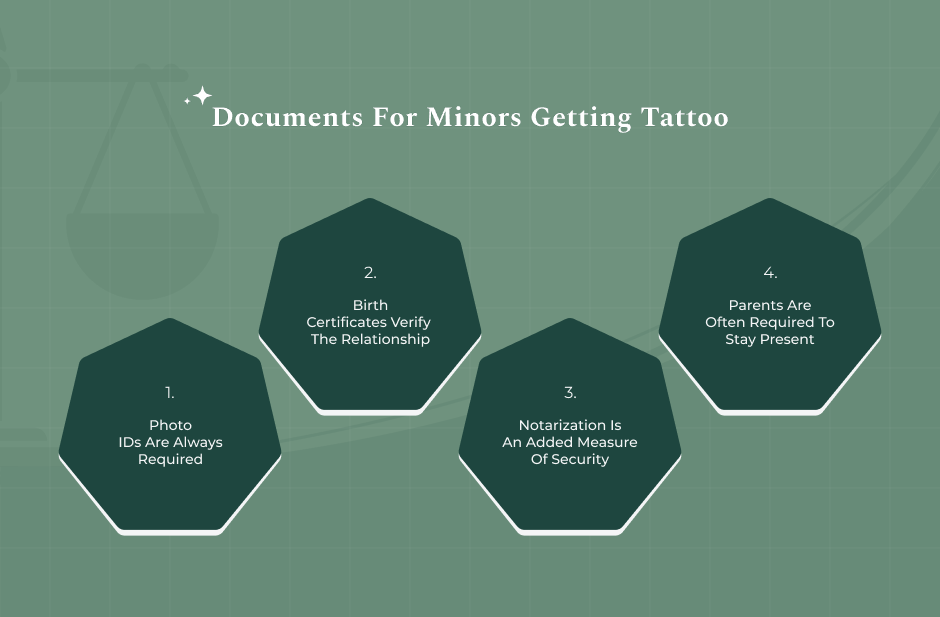
If you reside in a state where tattooing minors is legal, the process is not as simple as presenting the signed permission slip.
The legal system demands a high level of verification to ensure the party giving permission is the legal guardian.
Required Identification And Paperwork
Most tattoo parlors require the parent and the minor to present identification. This is usually a photo ID for the parent and the minor. A birth certificate is also often required to satisfy the state inspectors, according to Florida Health.
Notarized Statements And Presence
Some states require the parent to be present throughout the entire tattooing process, while other states might allow the parent to provide a written statement, which has been notarized, if the parent cannot be present for the appointment to set the legal age at 18 years old. (Source: Thomson Law Injury Lawyers)
Health And Developmental Risks
Younger skin is still evolving, and the immune systems of teenagers respond differently to foreign pigments.
The health department has age restrictions to help minimize the risk of infection or allergic reaction in the developing body.
Tattoo Age Laws In The United States
There exists no federal law that specifies the age requirements for individuals looking for how old do you have to be to get a tattoo in the United States.
Each state has the sole responsibility for establishing the age requirements for the tattoo industry.
States With Strict 18+ Tattoo Laws
In states such as California and New York, the answer to how old do you have to be to get a tattoo is quite simple.
An individual has to be 18 years old before receiving a tattoo. This is the case with or without parental consent (Source: Safe Body Art Act).
States Allowing Tattoos With Parental Consent
There are many other states, such as Florida or Texas, which permit minors to get inked if certain conditions are satisfied. In such areas, the answer to how old do you have to be to get a tattoo with parental consent is “minimum of 16 years”.
Penalties For Violating Age Laws
Tattoo artists or a tattoo parlour who tattoo minors have to pay heavy fines or losement.
Tattoo Studio Policies Vs. Legal Minimums
While the law might allow a 16-year-old to receive a tattoo, the tattoo shop itself might prohibit it. Business owners can set higher standards for themselves than the law requires.
Reasons Why Artists Do Not Tattoo Minors
Many artists in the industry have chosen not to work with minors because they feel that most people regret their first design choices. This is an ethical move, and it helps the shop build a reputation for quality and maturity within the community.
Insurance And Liability Problems
Insurance companies tend to charge more to shops that tattoo minors, and to avoid paying high insurance, many shops have chosen to have an 18+ policy, regardless of what the laws state.
Health And Safety Considerations Related To Age
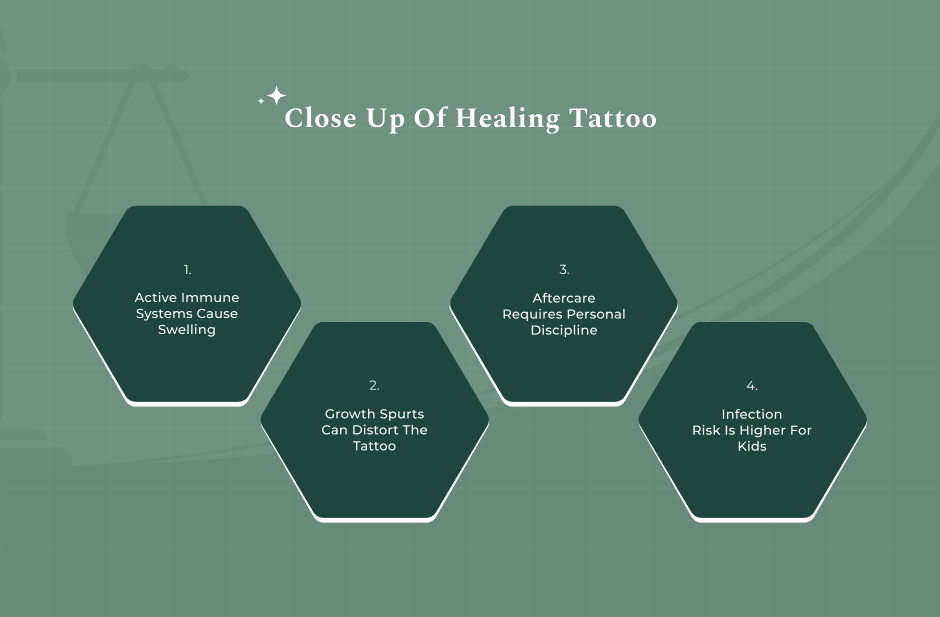
The immune system responds to the tattoo process differently at different ages. Younger people might be more sensitive to the metals used in the tattoo pigments.
Immune System Response
Teenagers tend to have more active immune systems, which can cause greater swelling. It’s also more difficult to follow aftercare instructions for a tattoo, which makes scarring and faded lines more likely. (Source: Mayo Clinic)
Long-Term Placement Changes
Teenagers are growing at this time, so a tattoo placed at the age of 15 might look distorted at the age of 25. It’s recommended to wait until the growth spurts stop.
Read Also: Is It Illegal To Not Let A Student Go To The Bathroom
Myths Vs. Facts About Tattoo Age

There are many common myths going around the internet regarding how old do you have to be to get a tattoo. This can result in serious legal consequences for the parents and the unlicensed artists.
The Myth Of “Parental Notes”
One common myth going around the internet is that a simple handwritten note from the parent can get the job done.
However, almost every state that requires consent also requires identification with the official seal of a notary public to avoid forgery.
The Myth Of Emancipated Minors
Can an emancipated minor can get tattoos without any restrictions? According to the law, an emancipated minor can be treated as an adult in many cases.
However, state health boards require that a person turn 18 before they can get any form of body modifications, including a tattoo.
Frequently Asked Questions (FAQs):
If you are wondering “what is the legal age to get a tattoo”, here are some additional questions that you must know the answers to.
Yes, there are. A medical reason that requires one to get radiation therapy may allow a minor to get a tattoo. However, this tattoo has to be done by a physician.
Married minors can get tattoos, but may require parental consent in some states.
However, a person who is serving in the military is mostly allowed to get tattoos, but these should not be “extremist, indecent, sexist, or racist”. Moreover, a tattoo on the face, neck, and sometimes hands are not allowed.
A shop risks being closed down immediately, facing large fines, and the artist losing his or her permit. The parents of the minor can sue the shop for battery, which can result in costly civil lawsuits.