The topic of the day: Juvenile lawyer.
The prospect of high-stakes litigation and constitutional advocacy is one of the many things that often attract a large number of law students to the legal profession.
Juvenile law provides a special combination of the two and is a niche within the criminal justice system that focuses mainly on rehabilitation instead of punishment.
But working in this area is more than just having compassion. It is also about having a deep knowledge of a procedural system that is quite different from that of the adult criminal court.
In this blog, we will talk about the following things:
- What is a juvenile lawyer?
- The major responsibilities of a juvenile lawyer.
- Salaries and market demand.
- Skills to become a juvenile lawyer.
Therefore, keep reading!
What Is A Juvenile Lawyer?
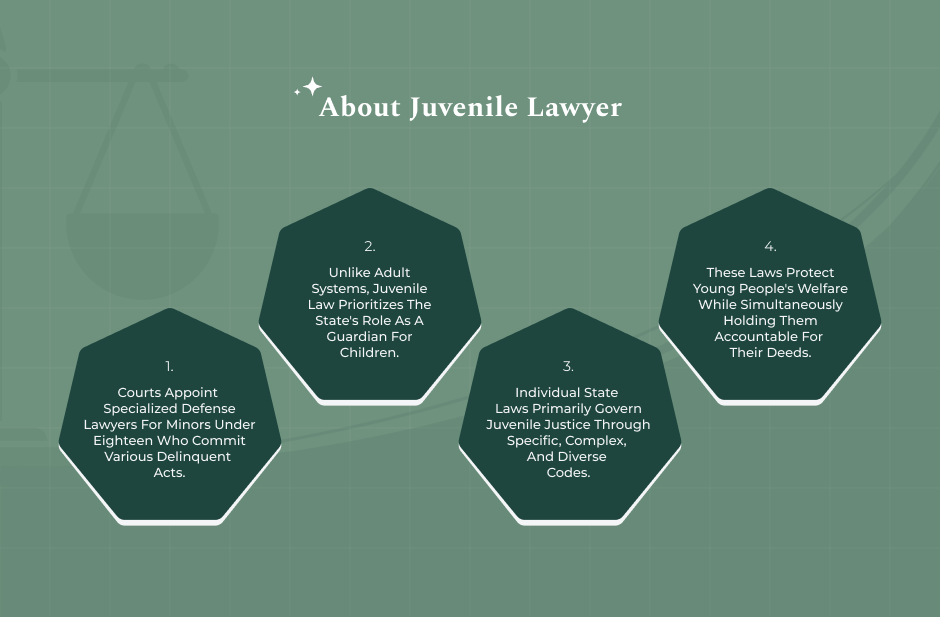
In the juvenile justice system, the court appoints a criminal defense lawyer to defend minor children. These children are usually less than 18 years old. And they appear in the courts if they have committed “delinquent acts.”
In a lot of ways, the juvenile justice system differs from the general law that provides justice to people above the legal age.
In fact, the juvenile justice system differs from the adult system when it comes to punishment. The former one is based on the parens patriae doctrine, i.e., the state acts as a guardian for those who are unable to take care of themselves.
Understanding US Juvenile Law
Juvenile law, being a complex and diverse legal field, mainly involves minors and their welfare in connection with the legal system. It is “mainly governed by state law and most states have enacted a juvenile code,” states the Legal Information Institute.
It not only safeguards the rights and well-being of young people but also makes them responsible for their deeds. (Source: Humanium)
It is essential to know and follow juvenile law to keep up a strong social foundation as this law covers the topics of delinquency and criminal liability of minors, as well as child welfare and protection.
Key Procedural Distinctions
To participate effectively in court, a student will need to learn the specialized language of the juvenile court:
- Adjudication vs. Conviction: The court does not consider juveniles “guilty.” Instead, their behavior is “adjudicated delinquent.”
- Disposition vs. Sentencing: During the “disposition” stage, the focus is on the “best interests of the child.” This usually means that the child will not be sent to prison but instead could be put on probation, provided with counseling, or admitted to a residential facility.
- Narratives vs. Grand Jury Indictments: A criminal proceeding usually starts with the “petition” after the government submits it. Not a grand jury indictment, a formal document.
The Core Responsibilities of Juvenile Counsel
The role of a juvenile defender is multifaceted, often requiring the attorney to act as a bridge between the legal system, the client’s family, and educational institutions.
1. Due Process Advocacy
After the historic Supreme Court decision In re Gault (1967), juveniles were granted many of the same constitutional rights as adults
These include the right to present a defense, the privilege against self-incrimination, and the right to question one’s accusers, among others.
Therefore, a juvenile attorney is the one who makes sure such rights are not compromised through the so-called “informal” procedures.
2. Holistic Representation
Today, juvenile defense uses a “holistic” approach that goes beyond just giving a legal defense to the issue.
Rather, it uncovers other factors such as Learning Disabilities (LD), trauma, or family disruption.
Besides that, educational and social work professionals are engaged to work jointly in preparing a thorough “Mitigation Package” for the disposition phase.
3. Transfer And Waiver Hearings
Besides that, one of the most important tasks of a juvenile defense attorney is to fight the “Transfer Motions”.
The latter hearings happen when the prosecution tries to get the juvenile’s case transferred to adult criminal court (which is also called “Direct File” or “Waiver”).
Usually, the difference between a rehabilitative result and a lifelong adult criminal record is averted transfer.
Educational And Professional Path
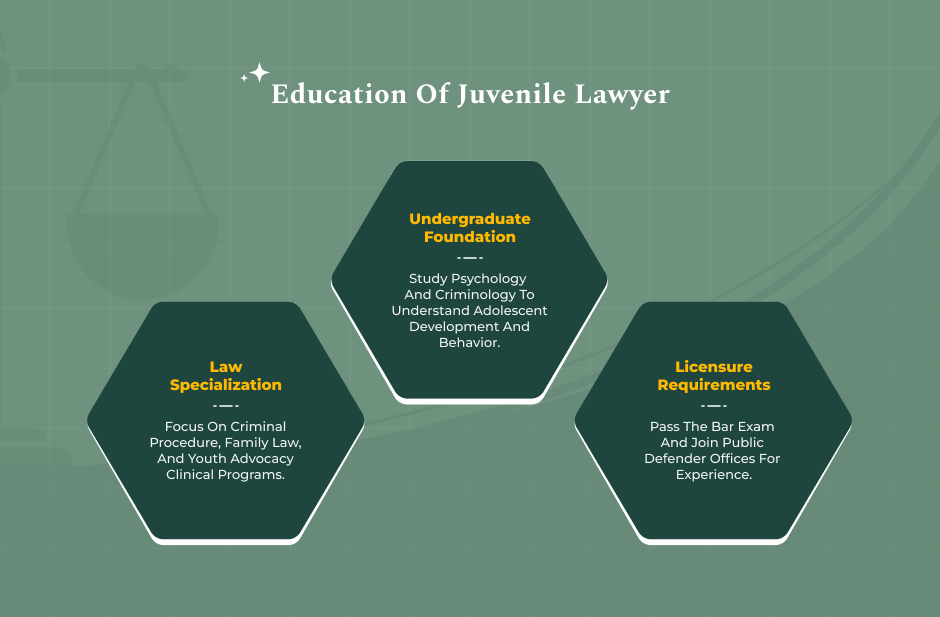
Becoming a juvenile lawyer requires a strategic approach to law school and post-graduate licensing.
Step 1: Targeted Undergraduate Study
While no specific major is required, coursework in Developmental Psychology, Sociology, and Criminology provides a necessary foundation for understanding adolescent brain development – a key factor in arguing for reduced culpability in court.
Step 2: Law School Specialization
During the Juris Doctor (JD) program, students should prioritize:
- Criminal Procedure: Essential for understanding Fourth, Fifth, and Sixth Amendment protections.
- Family Law & Education Law: Juvenile cases often overlap with school disciplinary hearings (the “School-to-Prison Pipeline”) and foster care issues.
- Clinical Programs: Most top-tier law schools offer “Youth Advocacy” or “Juvenile Justice” clinics. This is the most valuable asset on a resume, providing actual courtroom experience under a student practice rule.
Step 3: The Bar Exam And Licensing
After graduation, candidates must pass the Bar Exam in their intended state of practice.
In states like California or New York, the bar exam may include specific questions on family and juvenile codes.
Following licensure, many attorneys seek employment in Public Defender Offices, as these agencies handle the vast majority of juvenile delinquency cases.
Juvenile Lawyer Salaries And Market Demand

The financial reality of juvenile law varies based on whether an attorney enters the public or private sector.
In the United States, the salaries of juvenile lawyers vary significantly based on their experience level and sector (public vs. private). Juvenile defense is often among the lower-paying legal specialties.
Entry-Level (0-3 Years)
Initial salaries normally fluctuate between $71,000 and $100,000. The roles in the public sector, like Public Defenders or Assistant District Attorneys, are usually at the lower spectrum of the salary scale, somewhere between $40,000 and $70,000.
On the other hand, the newly graduated who join the small boutique private firms are the ones who more often than not enjoy the top starting offers from $75,000 to $110,000.
Mid-Career (4-9 Years)
With time and growing expertise, the lawyers’ average incomes soar to a range of $86,000 to $134,000. For instance, in highly sought-after areas such as the Northeast, it is not uncommon that a ten-year experienced lawyer settles in the band of $90,000 to $100,000.
The decision to stay in government service, where pay raises are less frequent and fixed or to switch to a better-paying private sector is what mainly leads to a divergence in earnings at this phase.
Specialized Consultants
Finally, those who have mastered the field earn a median of $112,000 as legal consultants and policy advisors, with their salaries ranging from $101,000 to over $207,000.
Senior consultant positions in specific or high-demand areas make it not only common but expected to be pulling in more than $177 000, the figure that corresponds to an expert with top-notch strategic and advisory skills in the juvenile justice system.
Loan Forgiveness Opportunities

Juvenile lawyers are often eligible for the Public Service Loan Forgiveness (PSLF) program. This is because many juvenile lawyers work in the public sector.

After 120 qualifying monthly payments while working for a government or non-profit agency, the remaining balance of federal student loans may be forgiven tax-free.
Strategic Skills For Success
A legal professional must develop a specific “soft” skill set to complement their “hard” legal knowledge. These would help them to excel in their field:
- Interviewing Minors: Learning how to build “attorney-client privilege” trust with a traumatized or defiant teenager is a specialized skill. This is not something that professors can teach in standard Evidence classes.
- Interdisciplinary Collaboration: You will work daily with probation officers, psychologists, and school administrators. Understanding their “language” is vital for successful negotiations.
- Resilience: The emotional toll of the juvenile system is high. Successful practitioners develop strong professional boundaries to prevent burnout.
In conclusion, being a juvenile lawyer is a challenging, high-pressure area of practice.
Working in it means you can be instrumental in the life of a young individual. Especially during their defining moment, and possibly prevent their exposure to the adult correctional system.
For law students, it is the shortest way to courtroom experiences and constitutional law.
The key to a solid, rewarding career in juvenile law is to build on your clinical work and become an expert in “best interests” advocacy. Additionally, you should get a good grip on the financial side of public service.