
The countries with no extradition treaty with US comprise a complicated scenario in diplomatic tensions and ambiguities in the law.
Although many people think that such countries provide a permanent haven for those who evade prosecution, there are very risky circumstances involved.
There are many cases now that involve intense legal fights among those who want to find asylum in such countries to escape federal charges.
These cases often highlight how diplomatic relations can shift, potentially turning a safe haven into a trap. In this article about countries with no extradition treaty with the US, we will elaborate on the following:
- The legal definition and mechanics of extradition treaties.
- A comprehensive list of which countries have no extradition with US by region.
- The difference between formal treaties and informal cooperation.
- Countries with no extradition treaty with the US.
- Strategic evaluation criteria for assessing legal safety abroad.
Countries With No Extradition Treaty With US – Understanding The Legal Concept Of Extradition
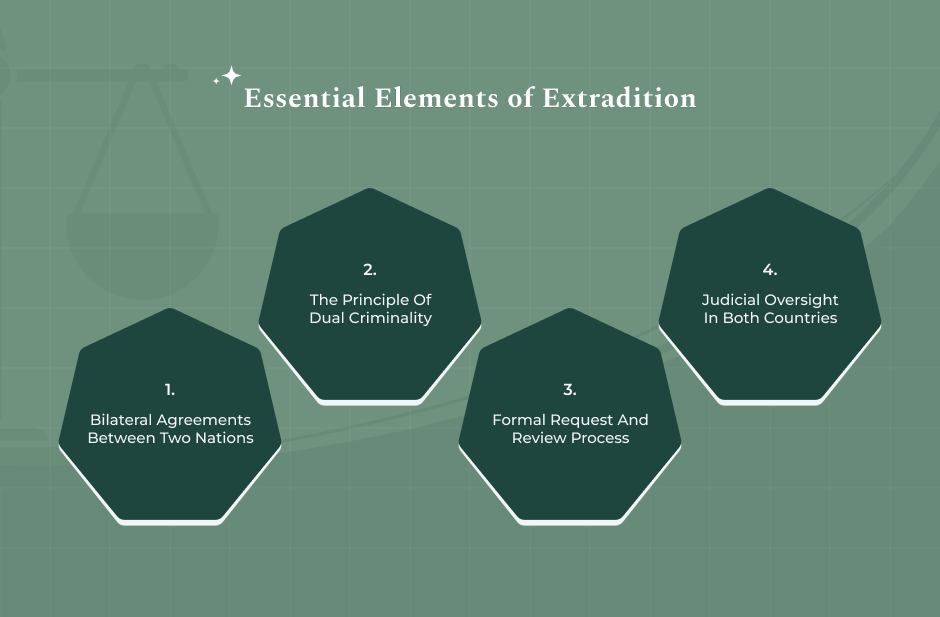
Extradition is a procedure by which one country hands over a person to another for punishment. If a treaty is not present, this procedure becomes an extremely complicated process because extradition becomes even harder.
A bilateral treaty is the basis of most international law enforcement activity. It defines the crimes that are subject to surrender, and what evidence must be supplied in support of a request. Yet it does not apply to those countries with no extradition treaty with US.
It doesn’t mean that those countries are not capable of assisting the U.S. It merely means that they are not obligated under an existing treaty to surrender an individual.
Why A Missing Treaty Does Not Guarantee Safety
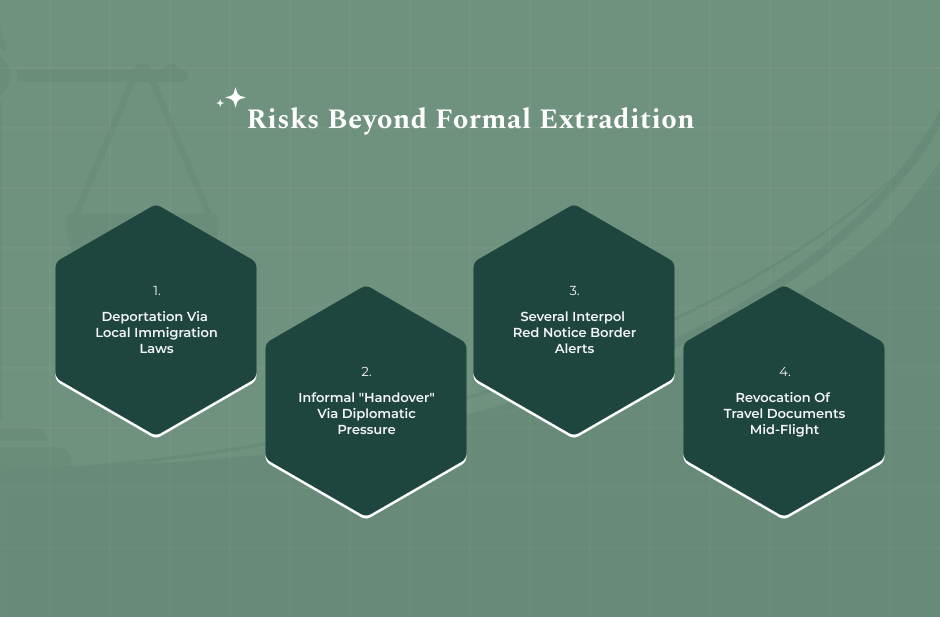
The myth is also very dangerous as it disregards other legal options the United States could apply in this case.
Even in countries with no extradition treaty with US, there’s always informal cooperation. A foreign government, for instance, might just deport an individual for an infraction in visa requirements.
According to MovingTo, a foreign government might decide to turn them over directly to United States authorities at the airport. Thus, this sort of extradition has become referred to as disguised extradition. Crossing borders becomes almost impossible because of Interpol Red Notices.
Comprehensive List Of Non Extradition Countries
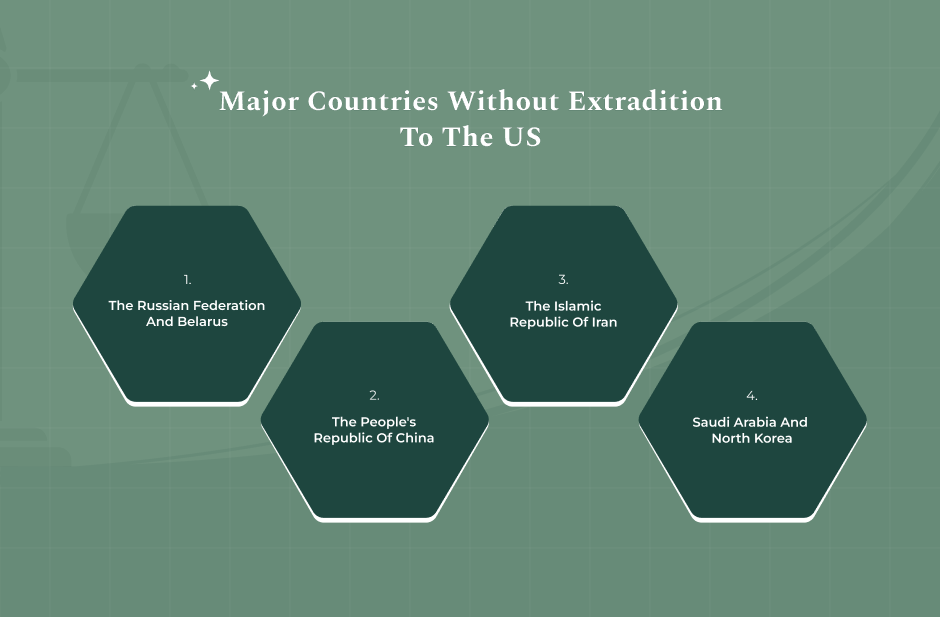
The countries that we do not have an extradition treaty with involve several continents and different politico-relational settings. These might be based on historical tensions or might lack diplomatic relations.
According to Newstrail, Russia and China are the most celebrated cases of countries with no extradition treaty with the US.
These states tend to deny such requests in matters of national sovereignty. In the Middle East, Iran, as well as the nation of Lebanon, also lacks such treaties.
Moreover, many African and Southeast Asian nations fail to engage in active treaties. It is important to look up the present status of the Treaties in Force.
Regional Trends In Global Extradition Law
Geographical patterns tend to appear when exploring which countries have no extradition treaty with the US. The trend typically conforms to regional patterns of alliances and economic systems.
For example, the whole Western Hemisphere and Europe have very good extradition relations with the U.S. On the other hand, the countries in Eastern Europe and some in Central Asia have no extradition treaty with the US.
On the African continent, the absence of an extradition treaty is sometimes because of a lack of administrative capacity rather than an antagonistic relationship with the US.
Nevertheless, the U.S. has been trying to enter into more Mutual Legal Assistance Treaties to fill these gaps.
Practical Realities Of Living In A Non-Treaty State
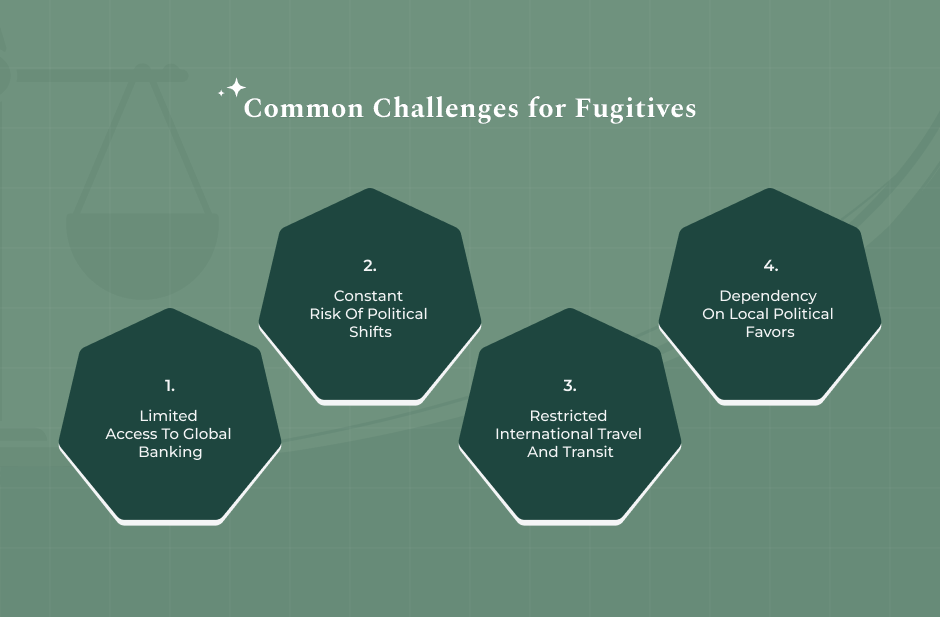
Existing life in a country without a treaty contains much more than simply staying under the law. Many times it entails dealing with uncertain governments and limited travel.
People tend to realize that their assets are frozen or not easily accessible. Banks in countries with no extradition treaty with US will certainly honor sanctions issued by the U.S. Treasury.
In many cases, you might have to live in poor conditions or without human rights for your protection.
A particular government might determine that you have become more of a problem than an asset, in which case, they will kick you out in an instant. Thus, camaraderie in exchange for security might not always be beneficial.
Strategic Evaluation For Legal Advisors
Lawyers have to apply certain parameters when advising clients about countries with no extradition treaty with US. Not all non-treaty countries offer the same practical protection.
First is the Rule of Law index of the host country. A country having a solid, independent judiciary is more likely to follow its own laws and not accede to the U.S.’s behest. Second would be the advisors checking the diplomatic relationship between the two nations.
If a country desires a trade deal with the U.S., it may be extremely eager to present a fugitive as a gift. Finally, the capacity of local law enforcement is a big factor in determining how likely an arrest is to take place.
Frequently Asked Questions (FAQs):
Understanding the role of countries without an extradition treaty with the US requires examining the finer points of international law. The following questions address common concerns for those researching these jurisdictions.
Yes, it can. Though there is no official treaty, there is a chance for “comity” or “ad-hoc” treaties between these two nations.
This allows them to aid each other in one case. Possibly in exchange, there might be an offer of a favor, perhaps turning over someone in custody. So, there is no wall because there isn’t a piece of paper.
The United States Department of State may also cancel your passport at any time if you are a fugitive. When a passport is canceled, you become “stateless” for travel purposes.
That means you cannot enter another country with no extradition treaty with the US. They will most likely hold you if you try to go through a border.
Yes, this happens fairly commonly. Some treaties have an exception for political offenses, and some countries will not extradite a suspect if the suspect may be sentenced to death.
Even with an extradition treaty in place, however, it must be approved by a local judge. And if a local judge thinks that there isn’t enough evidence or if the prosecution against a suspect is unfair, the suspect will be spared from extradition.
If you are facing legal challenges abroad, you should seek immediate counsel from a specialized international attorney to understand your rights and risks.