What is the role of an expert witness in a trial is a question that finds itself at the very heart of many complicated lawsuits that are being litigated throughout the country on a daily basis.
Whether it is a med malpractice lawsuit, forensic science, or pharmaceutical fraud, expert witnesses function as a conduit between complex facts and jury-friendly testimony.
Today, with high-stakes lawsuits being filed and litigated concerning environmental and pharmaceutical issues, their importance is becoming better understood. They not only impart facts. Rather, they interpret facts based on their training and experience.
In this article, we will elaborate on the following:
- The legal definition and admissibility of expert testimony.
- The fundamental duties of an expert witness toward the court.
- The step-by-step process of using an expert in litigation.
- What is the role of an expert witness in a trial
- The strategic differences between civil and criminal expert roles.
What Is The Role Of An Expert Witness In A Trial – Understanding The Expert Witness: Legal Definitions
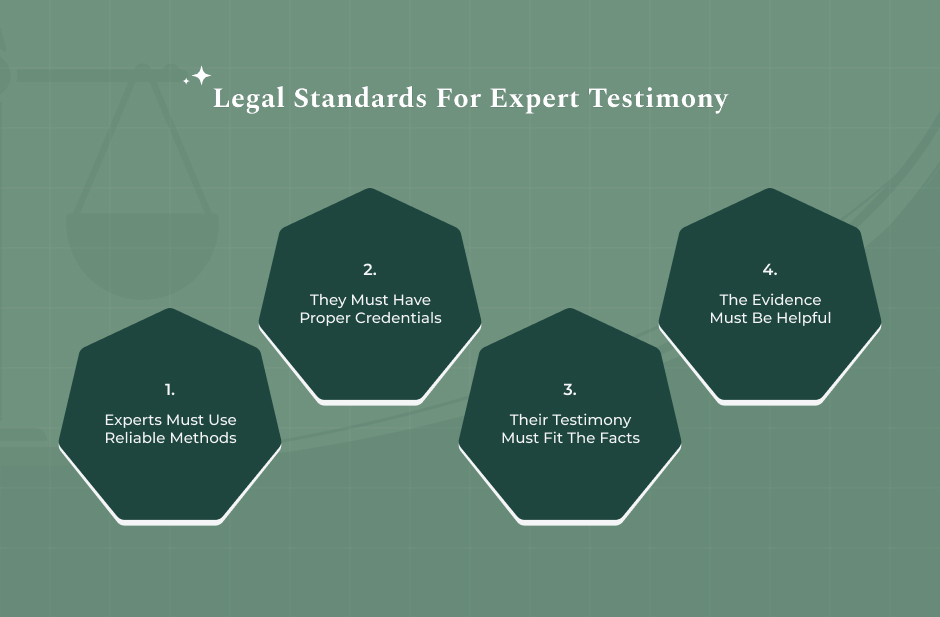
An expert witness can be considered an individual with knowledge in a particular field, who assists the court in interpreting complicated evidence. What is the role of an expert witness in a trial? Unlike an ordinary witness, they can express their opinions on the basis of their expertise.
The trial expert witness function is governed by particular legal rules. In federal trials, expert witness testimony is governed by Federal Rule of Evidence 702.
This rule ensures that the witness is qualified through “knowledge, skill, experience, training, or education.” (National Institute of Justice).
Judges serve as gatekeepers to guarantee the methods being used are reliable. It thus eliminates the possibility of “junk science” entering the jury box. If the evidence fails to shed light on the case or assist the judge/jury in comprehension, it is normally rejected.
What Is The Role Of An Expert Witness In A Trial – Core Duties
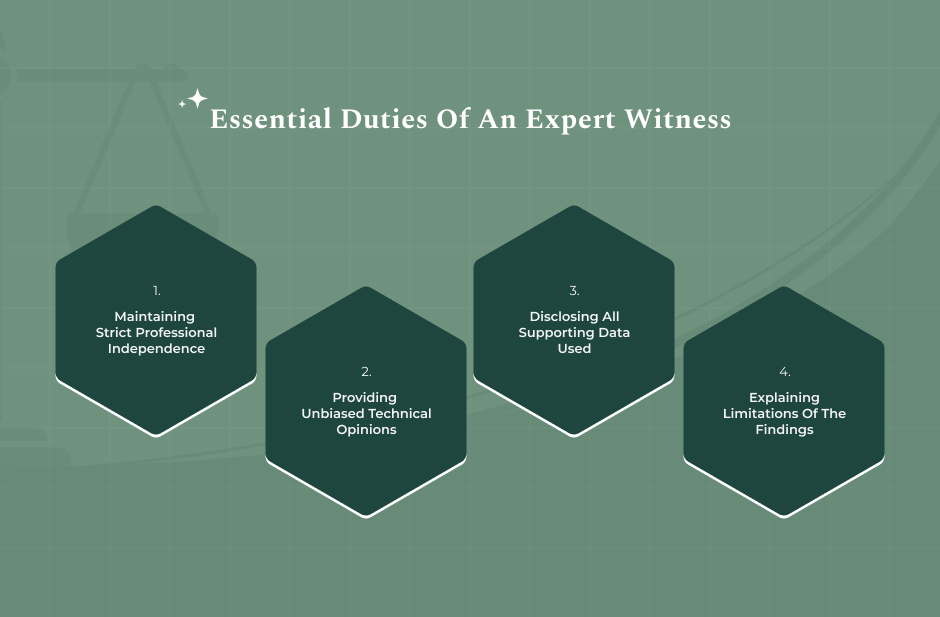
What is the role of an expert witness in a trial? The basic purpose of any expert is to be impartial and to aid the trier of fact. They have to place the interest of the truth over the interests of the attorney hiring them.
One of the primary responsibilities of an expert witness is the tendering of an independent opinion. They are not attorneys for the plaintiff or the defendant. Their allegiance is to the court.
Legal analysts indicate that they need to identify any facts and assumptions upon which they based their testimony.
They also need to acknowledge that a specific question is beyond their narrow expertise. Transparency about the limitations in their conclusion creates trust with the jury.
The Timeline of an Expert Witness in Litigation
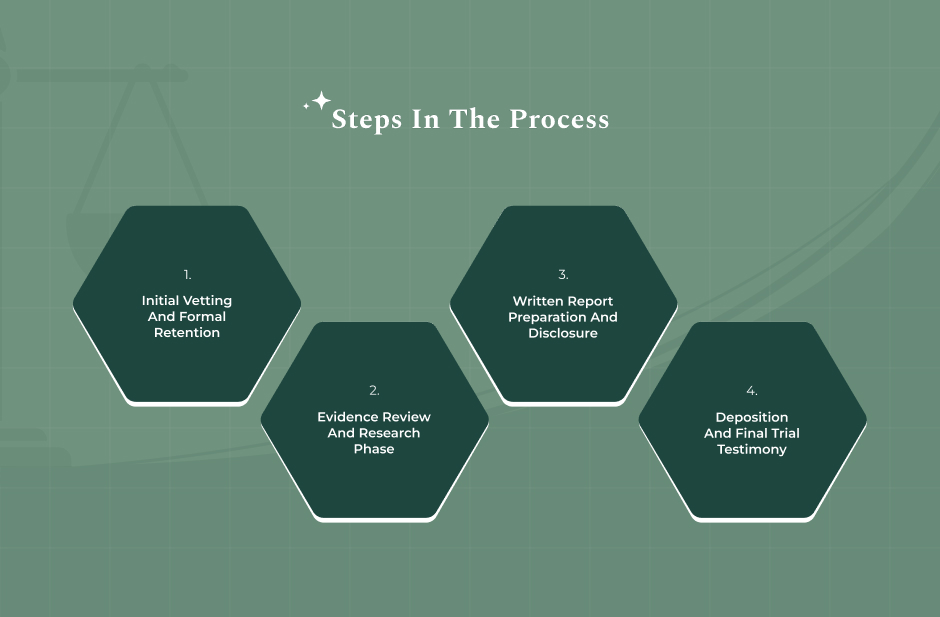
Working with an expert is a long process that occurs before the trial.
Attorneys are forced to scrutinize these professionals in order to determine whether they can withstand cross-examination.
First, the attorney retains the expert and gives the expert all the information from the case that is pertinent to the situation.
The expert is then allowed to examine all the evidence and assert their own opinions and tests that they may have conducted on the issue at hand.
After that, the expert writes up a final opinion letter. During the time of the trial, the expert gives their opinion during the deposition and the direct and cross-examination phases of the trial.
What Is The Role Of An Expert Witness In A Trial- How Expert Witnesses Shape Trial Outcomes
An expert can completely turn around a case by communicating an intricate matter easily. This persuasiveness largely relies on the professional image he holds.
A jury may find scientific or financial information too much to handle. Thus, one does not need a scientific or financial analyst during a trial because the job of an expert witness is that of a teacher.
The expert witness breaks down concepts such as “the role of an expert witness in a trial” into manageable chunks of information. A biased or cocky expert witness may have a jury not take any of their statements seriously.
Good experts communicate with visualization techniques. The credibility of an expert is what a case is built upon.
Selecting And Vetting The Right Expert
Although a trial involves basic functions irrespective of a venue, there are high standards according to different types of courts. In criminal trials, there are stricter standards concerning the admission of scientific evidence.
For a civil case, there is a focus on “causation” and “damages.” For instance, in a medical case, a doctor may state how a car accident led to a particular spinal injury.
In a criminal case, there is a focus on forensic specialists such as DNA specialists or ballistics specialists.
In instances such as these, the role of an expert witness in a trial may be one of liberty or life. Both prosecution and defense hire experts to prove or disprove beyond a reasonable doubt.
Using the wrong person may result in a disastrous outcome for the client. Lawyers need to see beyond impressive credentials to identify a person who is articulate even when under pressure.
What Is The Role Of An Expert Witness In A Trial If He Or She Is Not Able To Communicate Effectively?
A super smart scientist who is not capable of describing scientific concepts will be ineffective at a trial. Counsel must check an expert witness’s “Daubert” background to determine if any of their previous trial testimony has been barred. Counsel must also determine if any of their witnesses display “hired gun” characteristics.
Common Pitfalls And Admissibility Challenges
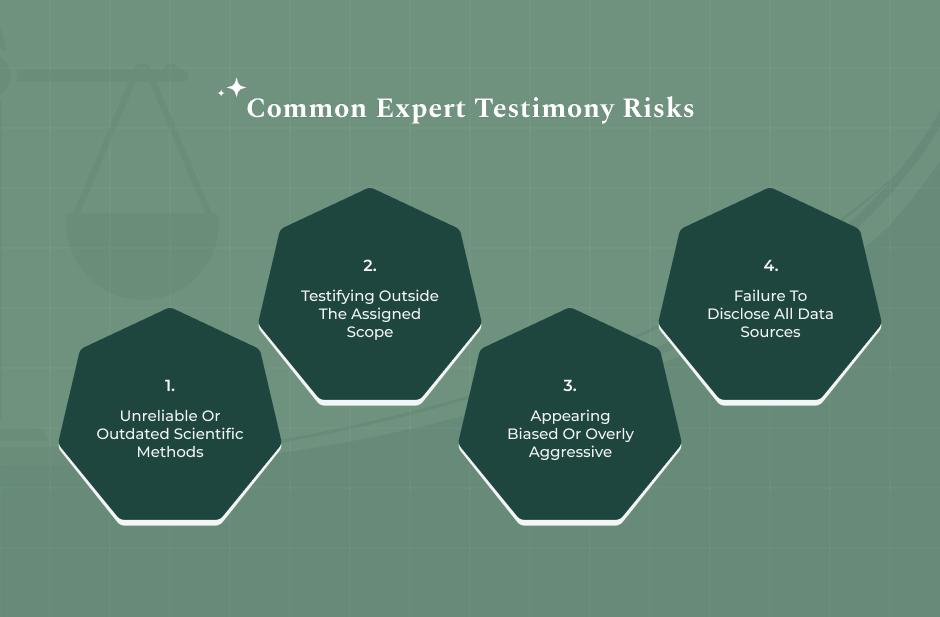
Even the most qualified expert may find themselves in circumstances that should preclude them from becoming an eyewitness in a case. Attacking lawyers will look for a single flaw in order to successfully have the testimony excluded.
Lawyers also make use of “motions in limine” to prevent an expert from speaking at all. This is normally necessary if their approach is not generally accepted by their community of expertise.
Another problem may arise due to expert shopping. In this case, an attorney questions numerous experts till they locate one to testify to whatever they need to hear.
Such a situation might result in biased accusations during cross-examination. Moreover, if an expert strays out of their area, a judge can prevent any mention of their testimony.
Read Also: Detention Hearing Explained – Purpose, Procedure & What To Expect
What Is The Role Of An Expert Witness In A Trial – Frequently Asked Questions
Understanding the role of an expert witness in a trial helps citizens navigate the legal system with greater confidence. Below are some additional details regarding the role of an expert witness in a trial and its practical impact.
Generally speaking, experts have “witness immunity” for anything they say during a trial. They can feel free to speak their mind without worrying about novel-of-the-month club defamation lawsuits against them.
However, they can still be sued by their retaining party for professional malpractice if they are negligent. If they perjure themselves, then they can even be prosecuted under criminal statutes for perjury.
This can range from reasonably inexpensive to very expensive, depending on the expert’s field of expertise and case difficulty. Most experts charge an hourly rate for research (available for questioning by the other side) and a flat daily fee for actual court appearances.
Experts in highly specialized fields, such as neurosurgeons or national-class economists, may charge thousands of dollars per day. Normally, the hiring party pays these fees.
In small claims court, there are simpler rules of law and fewer instances of expert testimony. Yet, a judge can consider expert testimony when a matter is of a technical nature, such as with a bad roof or a broken machine.
In this instance, an expert must normally prove to the court that he or she has adequate credentials to testify. Most people do not use expert testimony at small claims court because an expert witness fee is greater than the lawsuit award.