“What is expungement, and how can it change your life?” This is a question asked by many Americans seeking a second chance after finding themselves caught up in the law. This is a precursor to introducing why it is an important tool for millions seeking a new life after finding themselves on the wrong side of the law. Some states have introduced “Clean Slate” initiatives, making it easier to do so in the year 2025.
There are things you must be aware of in this process. These are what we will talk about in this article.
- Fresh Start Policy: This usually gives it to you, allowing you to truthfully check a box on applications for work or housing to indicate that you have never been convicted of a crime.
- What Does Expungement Mean And It’s State Variations: Each state has its own set of laws for what kinds of crimes are eligible and how long the wait period is.
- Automatic versus Petition: Whereas some states have implemented automatic clearing, other states have implemented by petition.
- Limitations: Though highly effective, it is not always able to remove records from government files or change an individual’s immigration status.
What Is Expungement? Definition & Legal Meaning
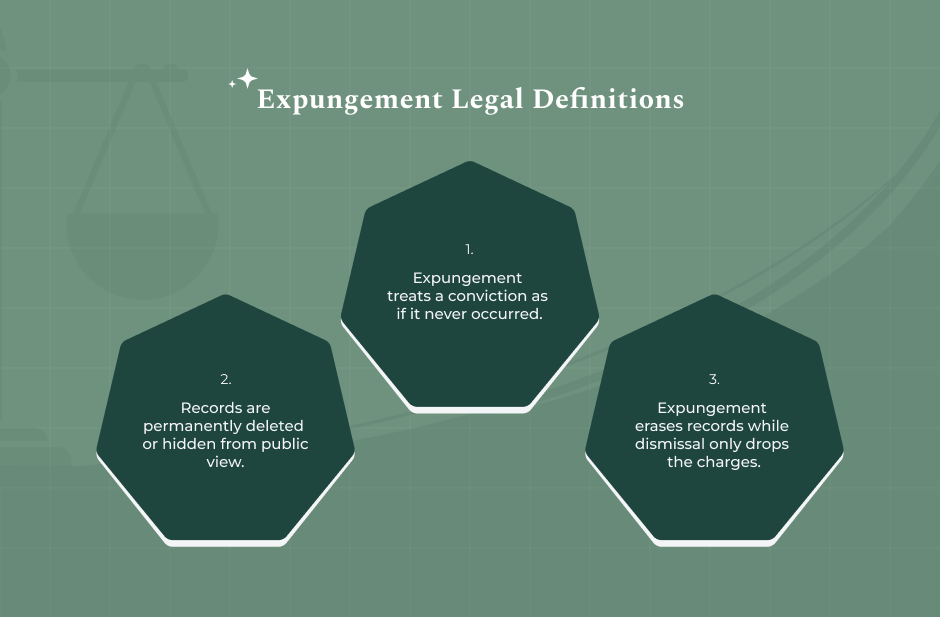
In order to comprehend what is expungement, it is necessary to examine the court system and how they handle previous offenses. According to the American Bar Association, it is simply: “The process the court orders when it treats a person’s crime conviction as if the crime never happened.”
Legal Definition of Expungement
“Expunge” is a legal term that means to strike out, obliterate, or indicate deletion. Once a judge signs an order, the record is no longer visible to the public. In many cases, the actual records are deleted or permanently discarded. However, “dismiss” is a different legal term, where the record reflects that you have been charged, but the charges have been dismissed (Source: Justia Legal Dictionary).
Expungement vs. Sealing vs. Dismiss
Each of the mentioned conditions is prone to confusion with the others, and it seems relatively simplistic to distinguish among them:
What Is Expungement – How Does Expungement Differ From Expunction Or Sealing?
Expungement tends to mean that the record no longer exists. Sealing expunged records conceals them from public access but allows the records to be available to the police and certain governmental bodies (Source: FindLaw).
Dismissal
This occurs during the trial. It signifies you were not convicted for the offense, but the arrest record will remain until you pursue further action to eliminate that record.
Pardon
A pardon is described as “forgiveness” by a Governor or by the President. A pardon is not a removal of a record, but a statement recognizing that you have been pardoned.
Why People Seek Expungement – Benefits & Limitations
The first reason you should want to know about “What is expungement?” is that it can help improve the quality of your life. This is because having a criminal record can result in certain ‘collateral consequences’ even after you have fully served a sentence.
In their post about Collateral Consequences of Criminal Convictions, the ABA states:
“Lesser-known collateral consequences include ineligibility for public benefits, such as food stamps; ineligibility for government-sponsored student loans and grants; restrictions on certain types of employment or occupational licenses; and ineligibility to provide foster care to minor family members.”
Main Advantages For Jobs And Housing
Most private employers and landlords run background checks. Having an old conviction, even from something trivial, results in an instant rejection. Now that you have an expunged record, you are allowed to answer “No” when questioned whether or not you have been convicted of any crime on most applications.
Here’s what the official government website states in its study of EXPUNGEMENT OF CRIMINAL CONVICTIONS:
“Today, approximately 19 million Americans have felony conviction records, and an unknown—but presumably much larger—number have misdemeanor conviction records.
In recent years, policymakers, civil rights advocates, and scholars have paid increasing attention to the substantial barriers to employment, housing, and social integration that these records can pose, not to mention the hundreds of collateral legal consequences that typically flow from criminal convictions, such as restrictions on public benefits eligibility and occupational licensing. Taken together, these hurdles have been described as amounting to a “new civil death.”
According to research from the National Institute of Justice, people who expunge their records experience a substantial increase in wages, at times by as much as 22% in the first year. Additionally, it provides the opportunity to obtain licenses to practice professions such as nursing, real estate, and teaching.
What Is Expungement And What Are Its Limitations?
It is vital to handle the issue from the perspective of expectation management. It is important to know what expungement is by understanding its limitations.
Federal Records
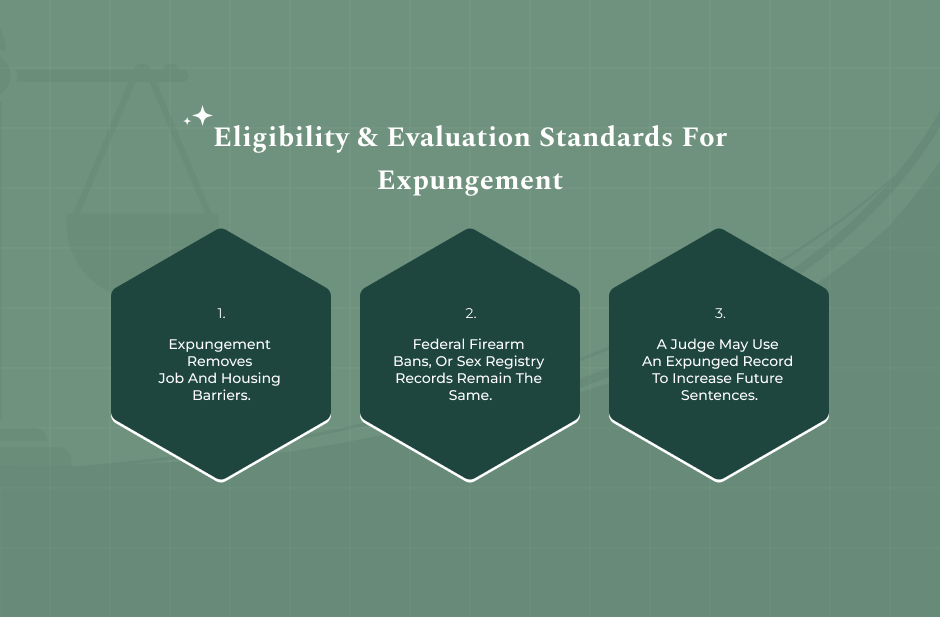
An order on the state level seldom affects the FBI databases on the national level or the immigration records.
Firearm Rights
Expunging a felony record may not necessarily mean that you have the right to own and possess a firearm in some states.
Sex Offender Registry – Expunging an Underlying Crime
Expunging an underlying crime will seldom erase an offender from a mandatory sex offender list.
Enhancement Of The Sentence
In case the defendant gets arrested again, the judge is often in a position to access the ‘erased’ record and use it to enhance the punishment for the next offense.
Eligibility And Evaluation Criteria In Various States
You can’t just ask for a clean record. You have to demonstrate that you deserve one. Whether a person is qualified is strongly tied to where the crime took place.
Common Eligibility Criteria For Expungement
What is expungement and what is its criteria? Most states consider three primary aspects:
Offense Type
For non-violent misdemeanors and low-level felony offenses, expungement is the easiest.
The Waiting Period
You must wait between 3 to 10 years from the time you have served your term (probation, jail time, and fines) with no other arrests.
Your Record
One mistake is much more likely to be approved than repeat offenders.
Offenses Usually Excluded From Expungement
To understand what is expungement, we must also know what offenses do not qualify for expungement. Almost all states do not allow expunging:
- violence crimes,
- sexual crimes, and
- crimes committed against children.
Many other states, such as Maryland and Illinois, may have certain guidelines related to DUI that do not allow a DUI offense to be completely expunged.
The Expungement Procedure – A Guide
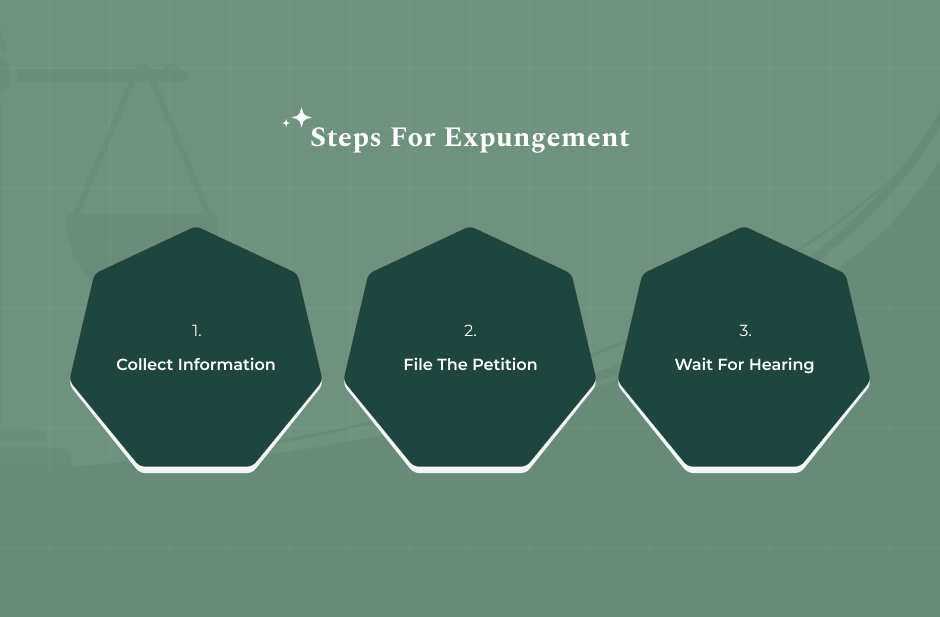
If you are asking what expungement means in terms of your daily calendar, you are in for some paperwork. Assuming you do not live in one of the “Clean Slate” states which have an automatic process, you must do the following:
1. Collect Your Information
You need a Certified Record of Conviction from the clerk of the court where your conviction took place. You cannot file a petition unless you know the specific charge, date, and case number.
2. File Petition
You must now file a petition with the court. This will involve a filing fee, which may vary between counties but will typically be between $100 and $500.
As a poor person, you may request a waiver from the court regarding the fee through Fee Waiver.
3. The Waiting Game and Hearing
After this, the District Attorney’s office examines your petition. They can object to it if they believe that you haven’t been fully rehabilitated. There could be instances where a judge holds a hearing where you must convince him with your reasons for having a fresh start.
What More Will You Be Able To Do Once Your Record is Expunged?
After the judge has signed the order, it is then dispatched to different institutions. It is here that the response to what is expungement actually occurs. In most states, you receive the Right to Deny.
This means that in most interviews, you will not be required to explain your background. It is still best, though, in government service or in high levels of security clearance. They tend to be granted the chance to inspect the behind the sealed curtain.
It would also be a good idea to check the private background check sites. These companies do have outdated information at times. They may require you to send them a copy of the court order to make sure their databases are updated.
Common Pitfalls – Cost Timing Error
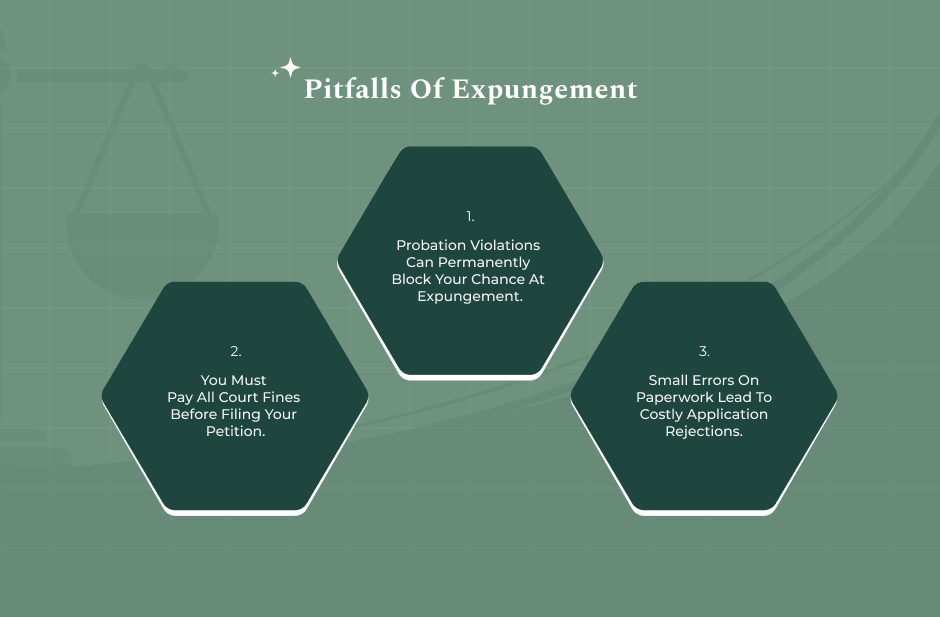
Lots of people have not succeeded because they did not understand the technical aspect of what expungement is.
In some states, a single probation violation will forever bar a person from expunging that record.
Exemplary Fines
You cannot receive an expungement if there are outstanding fines that you need to pay. You must pay every single dollar of restitution and court cost.
Incomplete Petitions
An error in the case number can result in the judge not accepting your petition, meaning that you end up repaying the fee to file the petition.
Frequently Asked Questions – What Is Expungement?
Understanding the nitty-gritty of what is expungement will help avoid common court troubles.
The time span permitted varies greatly from state to state as well. There are some states, like New Jersey, where you will be dealt one-time dismissals for some felony crimes. Multiple misdemeanors are allowed to be expunged if all those crimes have some connection with an incident.
To the contrary, however, it appears that the overwhelming majority of states will view candidates who make numerous expungement petitions unfavorably if these expungement petitions were produced over a period of several years.
Yes, legal effect follows you. If Ohio expunges your record, this record is not available to a prospective employer in the state of California through a normal background search.
However, when looking for employment with the federal government or seeking the required professional license, such as an attorney license or a physician’s license, in another state, the licensing board of that state might ask for the original charge, even though the charge is expunged in Ohio.
Typically, no. Time waits are what are considered statutorily required waiting periods. In some circumstances, however, Good Cause waivers may apply if you can demonstrate that your records are causing severe and proven hardship both to and for you or others.
How to get a clean record is a process that involves answering ‘What is expungement’ and then taking action. Whether it is pro se or with attorney representation, the value of investing in your own future is worth it.