“Res ipsa loquitur” is a legal doctrine or rule, considering which, a court of law can presume negligence of a party in certain circumstances. In such cases, the circumstances against the defendant are self-evident.
In a tort matter/civil injury, the case against the defendant will depend on the specific evidence that the plaintiff provides against the defendant’s negligence.
However, in these special circumstances, injuries are so apparent that it is legally possible (through Res Ipsa Loquitur) to conclude that the accident was a result of the defendant’s negligence. Currently, in the year 2026, we are witnessing the emergence of many complicated cases relating to the use of robots in medical malpractice cases.
Since the patient cannot know what happened behind the curtain, they rely on this specific Latin rule to seek justice. In this article, we will elaborate on the following:
- The historical background and fundamental definition of the doctrine.
- The three essential elements required to establish a claim.
- Cases in which the burden of proof shifts from one party to another.
- Additionally, we will also be talking about case studies.
Defining Res Ipsa Loquitur And Its Legal Purpose

The Latin term “res ipsa loquitur” translates to “the thing speaks for itself.” Through it, injured parties can demand justice even when there is no direct evidence. The doctrine helps the court consider clear circumstantial proof that a tort occurred.
Byrne V. Boadle (1863): The First Recorded Application Of Res Ipsa Loquitur
Although this is an English case, this is ‘the founding father’ of the doctrine, widely referenced in virtually every USA Law School and Court.
The Facts
A man got injured when a barrel of flour fell on his head. He was walking on the street, and this barrel fell from the second floor.
The Ruling
The court decided that barrels don’t just magically appear flying out of the window by themselves. The mere occurrence of the incident was sufficient to presume that the warehouse owner was careless despite the lack of a witness to describe the nature of the specific error.
Escola V. Coca-Cola Bottling Co. (1944): The First Recorded US Application Of Res Ipsa Loquitur
Many call it the case of the Exploding Bottle. This is one of the most popular cases in the US that concerns product liability.
The Facts
Gladys Escola was a waitress who was placing glass Coke bottles into a refrigerator. One of the bottles exploded in her hand, resulting in a five-inch cut. She couldn’t testify about the condition or bottling process regarding the defect.
The Ruling
In this case, the California Supreme Court ruled that “as Coca-Cola had exclusive control over the bottling process and given that sound bottles do not ordinarily explode,” the doctrine applied.
This historical case is also known for its concurring opinion, which paved the way for modern Strict Liability law.
The Latin Root And Translation
To decipher what is meant by res ipsa loquitur, one has to revert to its literal translation from Latin: an accident so obviously caused by carelessness probably could not have happened any other way.
The Core Intent In Tort Law
The best explanation for the rule is that it is a rule of fairness, since a defendant has all of the information concerning an accident. The rule cannot allow defendants to escape liability simply because the plaintiff was not in a position to witness the particular act of negligence.
The Three Core Elements Of The Doctrine
You cannot just say that there was res ipsa loquitur because an accident occurred. The law mandates you fulfill three requirements to proceed on this presumption.
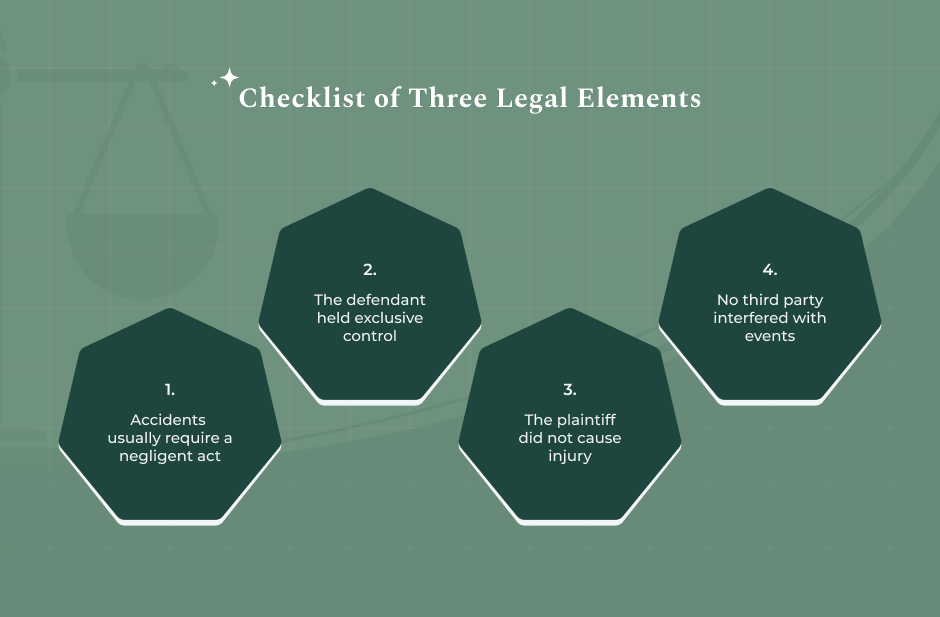
1. The Accident Does Not Happen Without Negligence
This requires the courts to concur that the incident is not an ordinary event. For instance, planes do not normally fall out of the sky, nor do elevators normally plummet to earth without some party being blameworthy.
2. Exclusive Control By The Defendant
The object or situation causing harm must have been in the complete control of the defendant you are suing as a plaintiff. The company maintaining a construction site on which a brick has fallen is very likely to have exclusive control over it.
3. No Contribution By The Plaintiff
The party filing the lawsuit cannot be the party that caused the accident in the first place. If you had broken a machine before it malfunctioned and injured you, you cannot file under this doctrine.
Read Also: What Is Expungement? The Complete Guide To A Clean Slate
Shifting The Burden Of Proof
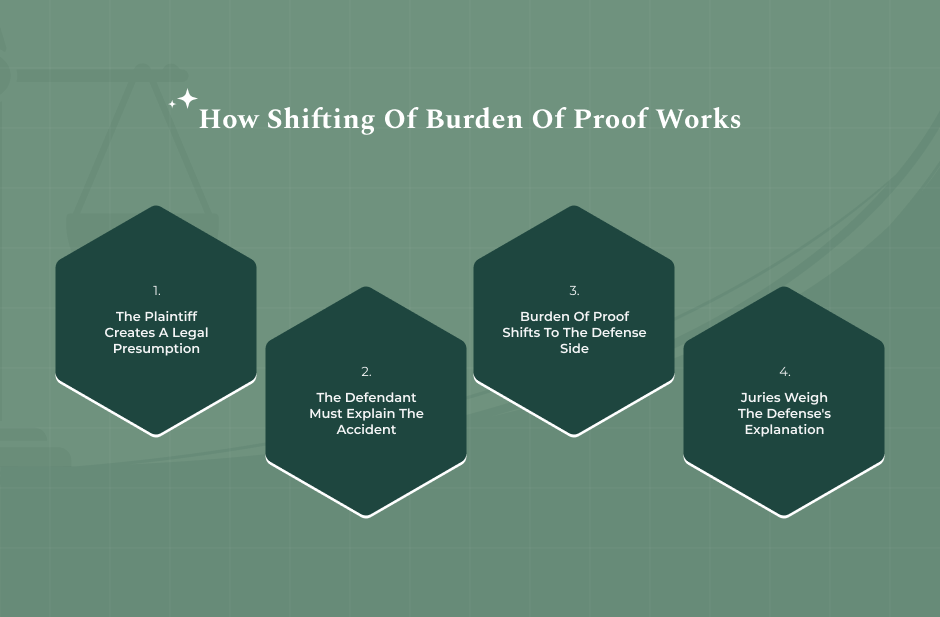
The standard trials that take place usually hold the plaintiff responsible for proving the allegations that they brought against the defendant in a lawsuit.
Under the res ipsa loquitur, a doctrine governed by the law of Torts, responsibility is inherently of the defendant’s.
This is because the nature of the tort or accident clearly points to the defendant’s negligence even without the plaintiff providing sufficient evidence.
How The Shift Works In Court
Once the judge accepts the doctrine, the “burden of production” shifts to the defendant. He must now show a non-negligent reason why the accident happened [Ovid].
Rebutting The Presumption
A defendant may defend themselves by proving that the accident was an “Act of God” or based on a latent defect that they could not have seen. If they present sufficient evidence, the jury may yet find them not liable.
Classic Real-World Examples Of Law
The best description of res ipsa loquitur will be done by examining famous historical and modern cases. These examples will give a clear view of how the rule applies both in everyday life and at work.
The Barrel Case: Byrne v. Boadle
This is the most famous of all res ipsa loquitur examples.
Medical Malpractice – Ybarra v. Spangard
This case involved a patient who went in for an appendectomy and woke up with a permanent shoulder injury. Since he was unconscious, he could not prove who hurt him, but the court applied the doctrine against the entire medical team.
Modern Surgical Errors
In 2026, we see this used when surgical robots malfunction. If a robot causes a tear in an organ that is not part of the surgery site, the doctrine helps the patient hold the hospital or manufacturer accountable.
Res Ipsa Loquitur In Medical Malpractice
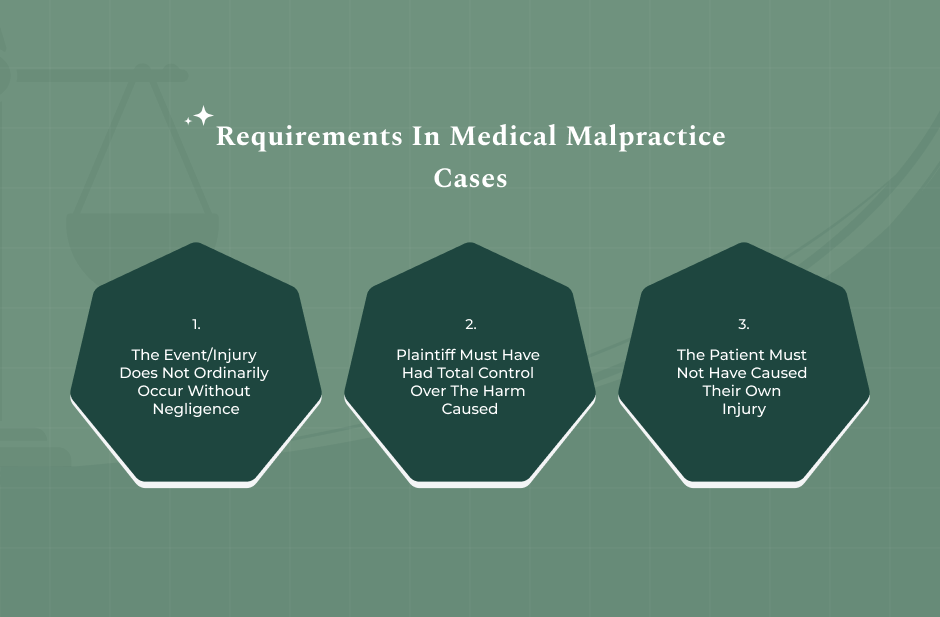
Healthcare provides a unique environment for this rule because patients are often sedated. It is one of the most common areas where the “thing speaks for itself.”
When The Rule Applies In Hospitals
The rule applies when a doctor makes a mistake that is so obvious even a person without medical training can see it. Leaving a clamp inside a patient is a perfect example.
Challenges In Healthcare Cases
Defense lawyers often argue that some injuries are known risks of surgery. If an injury is a common complication that happens even with great care, res ipsa loquitur will not apply.
Global Jurisdictional Differences
While the root is Latin, different countries handle this rule in their own way. Some see it as a strong presumption, while others see it merely as a hint for the jury.
United States Application
Most American states follow the Restatement of Torts. This means they treat it as a way for the jury to reach a logical conclusion.
England and Commonwealth Law
Finally, in the UK, the focus is often on whether the defendant had a “duty of care” and if the accident was “prima facie” evidence of a breach. The terminology is slightly different, but the logic remains the same.
Defenses And Limitations Of The Doctrine
Defendants are not helpless when facing this rule. They have several strategies to prevent the court from using a presumption of negligence against them.
Plaintiff’s Contributory Negligence
If a defendant can prove the plaintiff was distracted or misused a product, the claim usually fails. The doctrine requires the plaintiff to be a passive victim of the event.
Intervening Acts
If a storm or a random trespasser caused the object to fall, the defendant is not responsible. The chain of “exclusive control” is broken by these outside forces.
Read Also: Detention Hearing Explained – Purpose, Procedure & What To Expect
Frequently Asked Questions (FAQs):
Before concluding, we must address some specific questions regarding res ipsa loquitur. This section will help explain how the rule applies in different legal contexts.
Yes, it can be used on more than one defendant, but it is harder. In the case of Ybarra, it was used against a group of doctors and nurses in the famous case, as they were all responsible for protecting the patient. If the group of defendants were not acting in concert, one must prove who had control of the object in question.
These are rare in car accidents because, in most cases, there are too many variables. For instance, weather conditions or the operation of other motorists. But if a car suddenly rolls down the hill and damages the house where it was parked, then the rule can apply since a car is supposed to remain fixed if the brakes are in place.
If the defendant provides evidence that they followed all safety protocols, the presumption of negligence can no longer stand.
At that point, the case returns to a normal state where the plaintiff must prove exactly what went wrong. The jury will look at both the accident itself and the defendant’s safety records to reach a final verdict.
If you believe your injury was caused by obvious negligence, contact a qualified personal injury attorney to discuss your options.