An easement appurtenant is, in essence, a description of how two properties will relate to each other in real estate. It is a vital right which is closely tied to the land in question and doesn’t relate to a person.
Such a right is extremely important to understand for homeowners, developers, and investors to better safeguard their value for property value, as well as rights for access.
Here is what you will learn from this article:
- An easement appurtenant has its relationship with rights tied to the property.
- The benefit of the property is reaped by the dominant estate.
- The legal burden falls on the servient estate.
- Such rights automatically transfer to new owners of properties.
- The agreements should be recorded in written deeds concerning properties.
- The easement can be extinguished through merger or abandonment.
What Is An Easement Appurtenant?
An easement appurtenant is a legal interest in which the owner of one property has the right to use another’s land for a particular and limited purpose. This right is created for the benefit of the enjoyment of the benefited property and is an integral part of the value of real estate.
Legal Definition And Scope
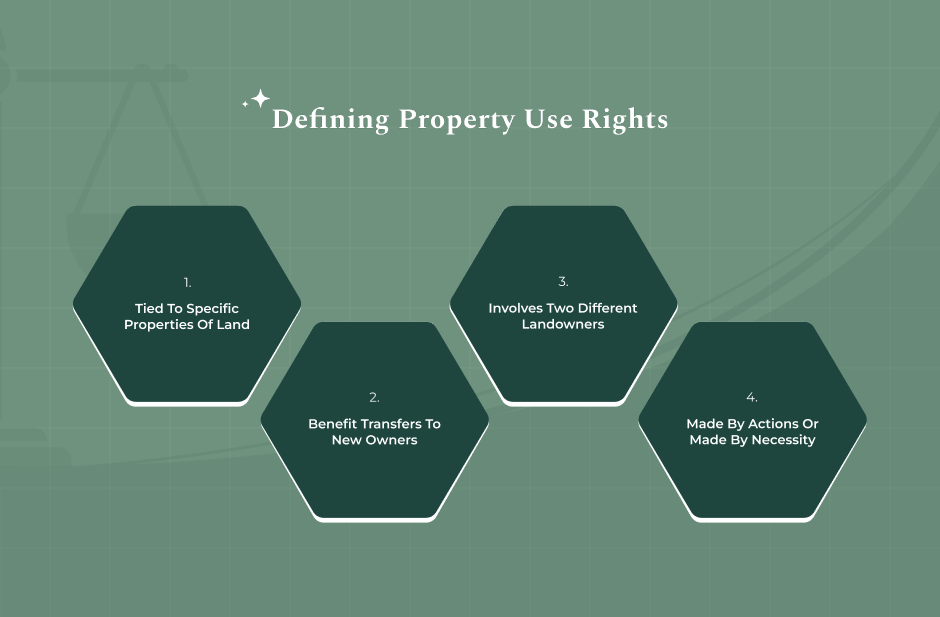
An easement appurtenant, by definition and by virtue of being a legally recognized easement, involves two separate and distinct parcels of land belonging to different parties.
An easement can neither exist nor function solely on a parcel of land. Rather, it functions for the purpose of enhancing or utilizing the adjacent land, such as a path leading to a public way.
The Constituency Agreement
The parties normally establish the easement appurtenant in a written deed, while courts may create the easement appurtenant by use over a lengthy period, depending on whether the land is being landlocked.
Essential Features Of Easement Appurtenant
The easement appurtenant will only be clear after understanding the relationship between the two parcels of land. Such elements will provide predictability and enforceability of the right for several decades.
Dominant And Servient Estates
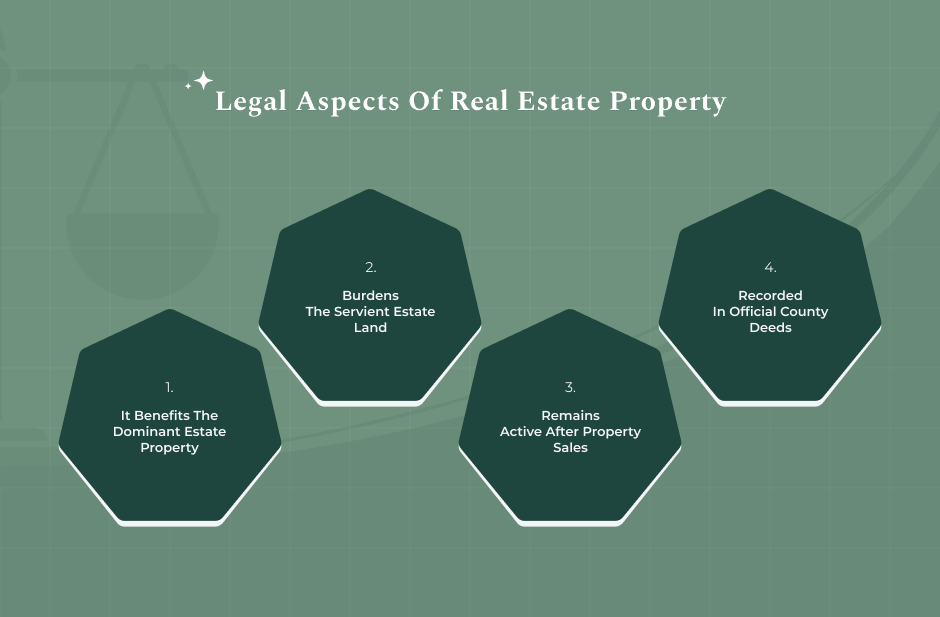
Generally, every easement that is Appurtenant has a Dominant Estate and a Servient Estate. The Dominant Estate is regarded as the property that benefits; on the other hand, the Servient Estate is the one that is used or “burdened” by the easement.
“Runs With The Land” Doctrine
One of the most essential elements in an easement appurtenant is that it “runs with the land.” This means that the new owner of the dominant estate automatically acquires the rights in it upon the sale of the dominant estate without needing a fresh agreement in relation to the easement.
Transferability And Duration
Since the right belongs to the land, the easement appurtenant is typically permanent. Even if the servient estate is sold, the owner of the new estate must recognize the easement, as long as it is recorded in the public records.
Typical Examples Of Easement Appurtenant
An easement appurtenant can be commonly seen in any residential area and even in rural areas. Such arrangements fix many problems that can make a land unusable.
Scenarios Of Access And Use
The most popular form of an easement appurtenant would be a shared driveway. If a house is located behind another house and lacks access roads, then an easement is given by the front house for the driveway. It could also be a path that leads to a private beach or a pipe that carries water from a neighbor’s land to a house.
Solar And View Rights
Currently, a solar easement appurtenant may be employed to cover a property’s access to sunlight to be utilized in solar panels. The easement will prevent the neighbor from constructing something to prevent sunlight from reaching them at all in any manner, to preserve the value of the dominant property.
Legal Aspects And Requirements
There is more to a friendly handshake between neighbors to create an easement appurtenant. There are strict legal procedures involved if the resulting easement is to be valid in a court of law.
Formalizing The Right
In order to be valid, according to the Statute of Frauds, an easement apportenant must be recorded in writing. A written agreement must exist that specifies where the easement is and what rights exist for those in the dominant estate.
Easement Appurtenant And Easement In Gross
It is necessary to distinguish between an easement appurtenant vs. easement in gross. An appurtenant easement is, in fact, connected with land, whereas in the case of an easement in gross, there is no such relationship.
Rather. It is person or company-bound, like electric companies’ use of power cables, and so on. Easement in gross vs. appurtenant, in fact, is not necessarily transferable when land is sold, whereas in the case of easement appurtenant, it is transferable.
Termination And Disputes
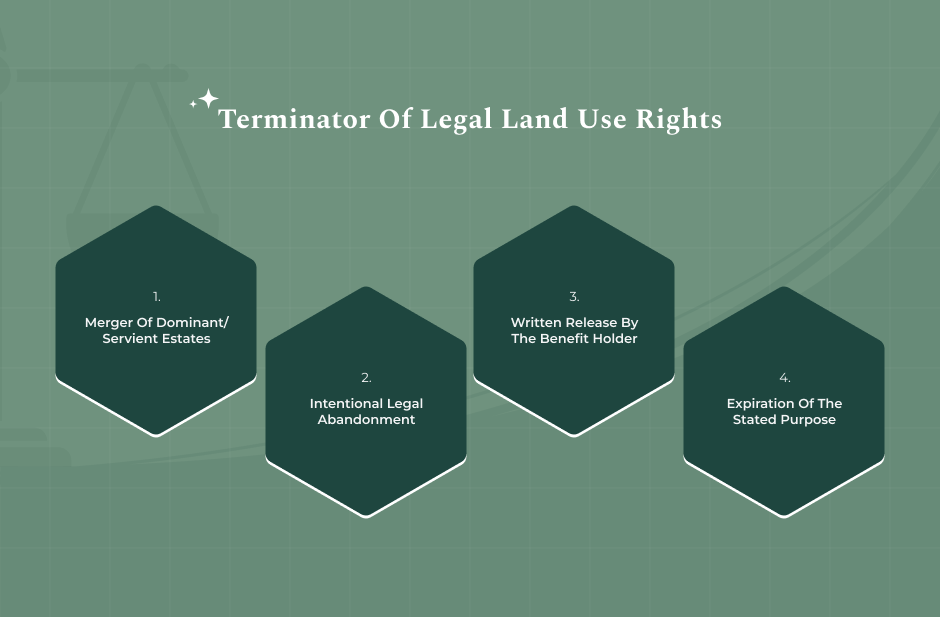
Although an easement appurtenant is considered permanent, there are particular circumstances regarding the legal end that may arise. Most of these disputes occur when the servient estate owner feels that the easement is being excessively used or that it is no longer required.
Ways Of Termination
One of the ways that an easement appurtenant can be terminated is by something that is referred to as a “merger.” This can happen if one party acquires possession of both parcels of land.
This will cause the easement to no longer exist because it is not possible to have a right on one’s own property. This can also result from a possible abandonment of the easement.
Property Dispute Management
In case of the neighbor’s obstruction of your easement appurtenant, you will be required to go to court to obtain an injunction to be able to get back to using the easement.
Of course, the courts will uphold the interest of the dominant party, provided they use the easement for its originally intended use.
Expert Tips & Best Practices
An easement appurtenant needs a dynamic method of handling the property. Small mistakes during the recording process may cause costly legal battles in the future.
First, it is essential to hire a surveyor to determine the boundaries of the easement appurtenant within your land to avoid the problem of “encroachment,” whereby the other party builds a fence or a shed on the easement area.
Secondly, it is important to verify the list of existing easements in your title insurance policy to ascertain their existence.
Thirdly, make sure the easement area is kept free from vegetation, or the other party may claim that you have abandoned the easement.
Read Also: What Is Expungement? The Complete Guide To A Clean Slate
Frequently Asked Questions (FAQs):
In summary, an easement appurtenant is a very useful legal tool to ensure functionality and usability of any property. Whether you are the beneficiary of the right or the party giving the right, you will have to be aware of the long-term nature of those right agreements. Keeping good records and staying within the limits of the dominant and servient estates will help you avoid common problems.
To put that in easier terms, an easement appurtenant is simply a right one property has to another. Suppose the only way for your neighbor to access his house is through your driveway. This means that your neighbor has an easement appurtenant on your property. Again, this would follow the house, even if the owner sells the property to another person.
One of the major differences between an easement appurtenant and an easement in gross is that an easement appurtenant is owned by the dominant estate-whereas an easement in gross is owned by someone or perhaps a corporation, such as the electricity company. An appurtenant easement stays with your house when you sell it, but an easement in gross can expire, or at least must be reassigned.
The owner of the servient estate can’t easily revoke an easement appurtenant. An easement appurtenant is a recorded right on property and, as such, cannot easily be revoked, absent a court order or a formal agreement signed by the Dominant Estate Owner.
It is much more difficult to rid oneself of than is a license, which is merely permission for the temporary right to enter someone’s property.